
Securing a low deposit home loan in Hobsonville can feel tough when your credit history is far from perfect. Many first-time homebuyers in New Zealand face similar challenges and wonder if poor credit will close the door on refinancing opportunities. This guide walks you through practical steps like assessing your credit record, gathering evidence, and connecting with lenders who specialise in supporting borrowers with unique financial journeys. You’ll get clear advice on building a stronger application and boosting your chances for a fresh start.
Table of Contents
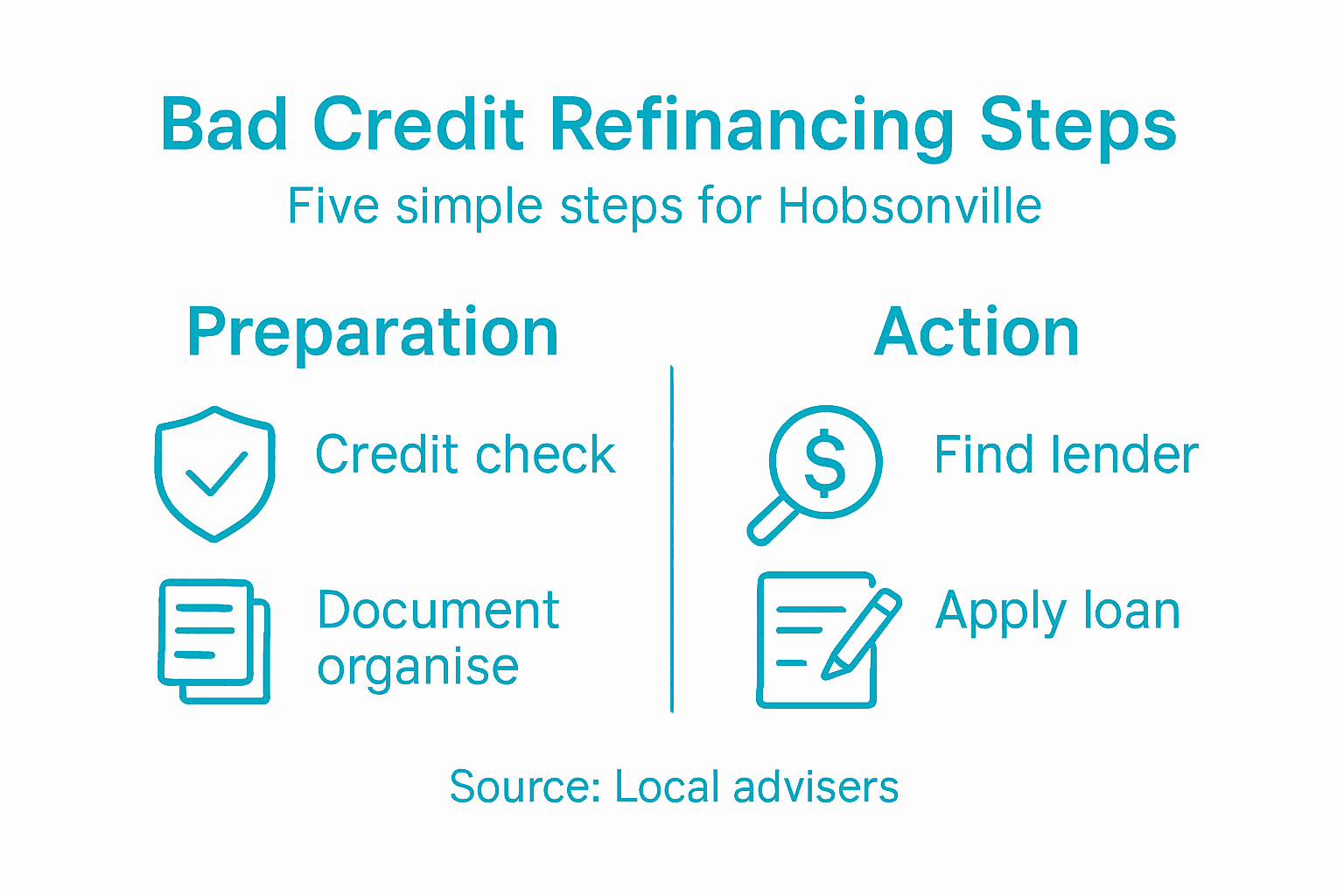
- Step 1: Assess Your Current Credit Situation
- Step 2: Gather Documents And Financial Evidence
- Step 3: Find Lenders Specialising In Bad Credit Refinancing
- Step 4: Present Your Application Effectively
- Step 5: Confirm New Loan Terms And Approval
Quick Summary
| Important Insight | Clarification |
|---|---|
| 1. Assess Your Credit Situation First | Obtain your credit report to understand your financial standing and identify areas for improvement before refinancing your home loan. |
| 2. Gather Necessary Financial Documents | Compile proof of income, bank statements, and identification to present a solid case for refinancing to potential lenders. |
| 3. Seek Lenders Specialising in Bad Credit | Research specialised lenders who understand unique financial circumstances and offer flexible refinancing options for those with bad credit histories. |
| 4. Present Your Application Effectively | Create a transparent and well-structured application that highlights your financial improvements and addresses past challenges clearly. |
| 5. Review Loan Terms Carefully | Confirm all details of the new loan agreement, focusing on interest rates, repayment amounts, and any fees before signing the contract. |
Step 1: Assess your current credit situation
Assessing your credit situation is the critical first step towards successfully refinancing your home loan in Hobsonville, even with a challenging credit history. By understanding exactly where you stand financially, you’ll be better equipped to develop a strategic approach to improving your mortgage prospects.
Begin by obtaining a comprehensive credit report from authorised credit reporting agencies in New Zealand. These reports provide a detailed overview of your financial history, including credit accounts, payment records, defaults, and overall credit score. You can check your credit record for free through official government resources, which will help you understand your current financial standing.
When reviewing your credit report, look for these key elements:
- Existing credit accounts and their status
- Any missed or late payments
- Current credit score
- Outstanding debts
- Potential errors that might be negatively impacting your score
If you discover discrepancies or areas needing improvement, consider seeking financial mentoring. Ngā Tāngata Microfinance offers no-interest loans and financial guidance to help New Zealanders manage their finances more effectively.
Adviser tip: Always request a copy of your credit report at least three months before applying for refinancing to allow time for potential corrections or improvements.
Here’s a summary of key credit reporting agencies and their unique strengths:
| Agency Name | Access Method | Distinct Features |
|---|---|---|
| Centrix | Online request | Fast response, user-friendly tools |
| Equifax NZ | Online or mail | Comprehensive record, dispute options |
| Illion | Online enquiry | Useful fraud alerts, broad coverage |
Step 2: Gather documents and financial evidence
Collecting comprehensive financial documentation is crucial when refinancing with a challenging credit history in Hobsonville. This step involves systematically compiling evidence that demonstrates your financial reliability and potential for successful loan repayment.
To prepare a robust application, you’ll need to collect detailed financial records that showcase your current financial standing. Your documentation package should include:
- Proof of income (recent payslips, tax returns)
- Bank statements from the past 3-6 months
- Current employment verification letter
- List of existing debts and monthly obligations
- Recent credit report
- Identification documents
- Proof of assets
Organisations like Ngā Tāngata Microfinance recommend being transparent about your financial situation. This means including documentation that explains any past financial challenges, such as reasons for previous defaults or income interruptions.

When compiling these documents, ensure they are current, clearly legible, and organised chronologically. Lenders appreciate well-presented documentation that tells a clear financial story, demonstrating your commitment to financial responsibility.
Adviser tip: Create digital and physical copies of all documents, keeping them securely stored and easily accessible for quick submission.
Step 3: Find lenders specialising in bad credit refinancing
Locating lenders who understand and work with bad credit scenarios is a critical step in your refinancing journey. Not all financial institutions are willing to support borrowers with challenging credit histories, so you’ll need a targeted approach to finding the right partner.
Specialist lenders in New Zealand offer more flexible options for those with less-than-perfect credit profiles. These non-traditional financial providers understand that a credit score doesn’t tell your entire financial story. Look for lenders who:
- Offer non-standard loan products
- Provide personalised credit assessments
- Have experience with bad credit refinancing
- Show willingness to understand individual financial circumstances
Organisations like Good Shepherd NZ specialise in ethical lending for individuals facing financial challenges. They can provide alternative refinancing pathways that traditional banks might overlook.
Consider working with a mortgage broker who has established relationships with specialist lenders. These professionals can help match you with financial institutions that are more likely to approve your refinancing application despite previous credit difficulties.
Below is a comparison of standard and specialist lenders for bad credit refinancing:
| Lender Type | Typical Approval Criteria | Flexibility | Best For |
|---|---|---|---|
| Traditional Bank | High credit score, strict policy | Limited | Strong credit profiles |
| Specialist Lender | Holistic financial review | Higher | Challenging credit histories |
| Ethical Provider | Focus on wellbeing | Moderate | Financially vulnerable clients |
Not all lenders are created equal – seek out those who see your potential, not just your past financial challenges.
Adviser tip: Request multiple loan quotes to compare terms and ensure you’re getting the most favourable refinancing option for your specific situation.
Step 4: Present your application effectively
Preparing and presenting your refinancing application requires strategic planning and meticulous attention to detail. Your goal is to demonstrate financial reliability and overcome potential concerns about your credit history.
Financial mentors recommend a comprehensive approach to crafting a compelling loan application. This means providing a clear, transparent narrative that explains your past financial challenges and showcases your current financial stability:
- Prepare a comprehensive personal statement
- Highlight recent financial improvements
- Demonstrate consistent income and expenses
- Show clear debt repayment strategies
- Include evidence of financial responsibility
When presenting your mortgage refinancing details, transparency is key. Be upfront about previous credit difficulties, but focus on the positive steps you’ve taken to improve your financial situation. Explain any extenuating circumstances that led to past financial challenges and provide concrete evidence of your current financial stability.
Your application is more than numbers – it’s a story of financial resilience and commitment.
Adviser tip: Practise explaining your financial journey confidently and concisely, anticipating potential questions from lenders about your credit history.
Step 5: Confirm new loan terms and approval
The final stage of your refinancing journey involves carefully reviewing and confirming the specific details of your new loan agreement. This critical step ensures you fully understand the financial commitment you’re about to undertake.
Refinancing involves replacing your current mortgage with terms that better suit your financial situation. When reviewing your loan offer, pay close attention to the following key elements:
- Interest rate and its type (fixed or variable)
- Total loan duration
- Monthly repayment amount
- Any associated fees or charges
- Potential early repayment penalties
- Loan-to-value ratio conditions
Loan approval criteria require a comprehensive understanding of your financial obligations. Don’t hesitate to ask your lender to explain any terms or conditions that seem unclear. Request a detailed breakdown of all costs and ensure you’re comfortable with every aspect of the agreement.
Your loan terms are a legal contract – read every word carefully before signing.
Adviser tip: Consider having a financial adviser or trusted professional review the loan documents to ensure you haven’t overlooked any critical details.
Take Control of Your Refinancing Journey in Hobsonville with Expert Support
Refinancing with bad credit is challenging but not impossible. The article highlights crucial steps such as assessing your credit situation, gathering detailed financial evidence, and finding lenders who specialise in bad credit refinancing. At Mortgage Managers, we understand the emotional strain and complex decisions involved when your credit history creates hurdles. Our team of experienced mortgage advisers located right here in Hobsonville are dedicated to helping you navigate these challenges with personalised strategies focusing on your unique financial story and goals.
With Mortgage Managers you benefit from:
- Local knowledge combined with strong connections to specialist lenders
- Clear guidance through every step, from credit assessment to loan approval
- Tailored refinancing solutions designed to improve your mortgage prospects despite credit challenges

Don’t let a difficult credit history hold you back from securing better loan terms. Take the next step today and connect with your trusted Mortgage Managers to explore refinancing options designed around your situation. Discover how expert mortgage advice in Hobsonville can turn challenges into opportunities by visiting Mortgage Managers now and secure your financial future.
Frequently Asked Questions
What should I do to assess my credit situation before refinancing?
Begin by obtaining a comprehensive credit report from authorised credit reporting agencies. Review key elements such as your credit score, late payments, and outstanding debts to understand your financial standing and identify areas for improvement.
How can I gather the necessary documents for my refinancing application?
Collect detailed financial records that demonstrate your financial reliability, including proof of income, bank statements, and identification documents. Organise these materials clearly to streamline your application process, ensuring they are current and legible.
What types of lenders specialise in refinancing for individuals with bad credit?
Seek out lenders who offer non-standard loan products and personalised credit assessments. These lenders often understand that a low credit score does not represent your full financial story, making them more likely to provide options for refinancing.
How can I effectively present my refinancing application to lenders?
Craft a comprehensive personal statement that highlights recent financial improvements and strategies for debt repayment. Be transparent about your past financial challenges while focusing on the positive actions you have taken to enhance your financial stability.
What should I consider when reviewing the terms of my new loan agreement?
Pay attention to key elements such as the interest rate, loan duration, and monthly repayment amount. Ensure you fully understand all associated fees and any penalties before signing the agreement, and do not hesitate to ask your lender for clarification on unclear terms.
How long does the refinancing process typically take?
The refinancing process can vary, but generally, expect to complete the application and approval stages within 30–60 days. Be prepared to provide all necessary documentation promptly to facilitate a smooth refinancing journey.