
TL;DR:
- Veterans can use a VA loan for a second home only if it becomes their primary residence and they meet occupancy rules. The VA allows holding two VA-backed mortgages simultaneously if remaining entitlement is sufficient and occupancy requirements are satisfied. Proper documentation and adherence to rules prevent legal risks, with the most common strategy being occupying a new home for 12 months before renting out the previous one.
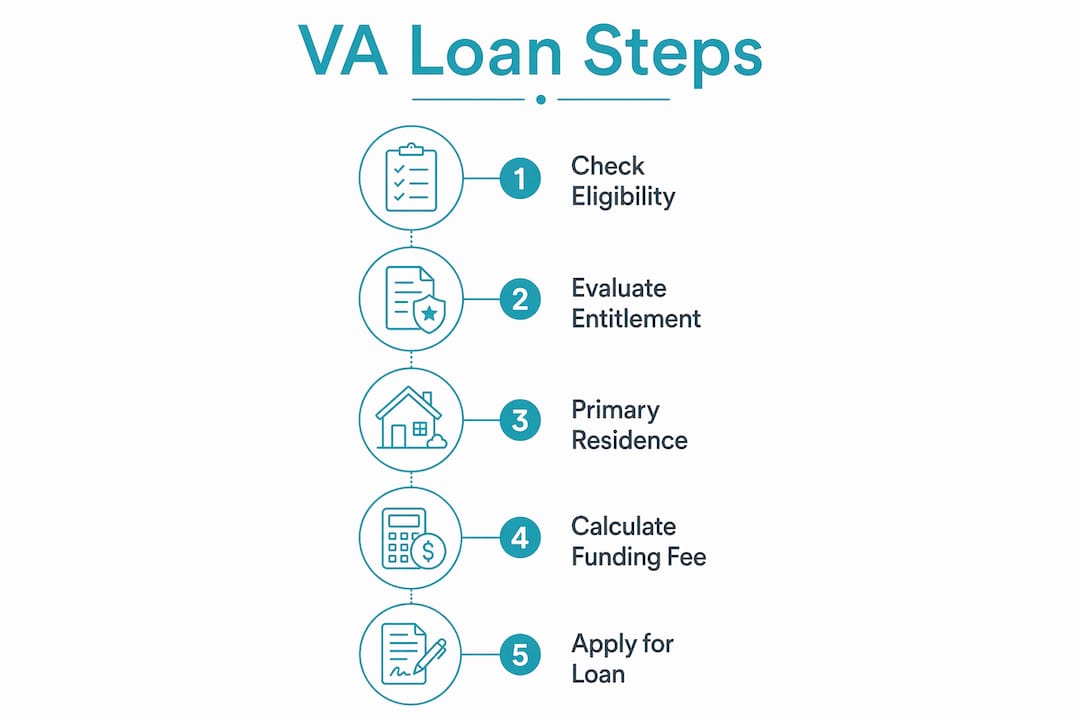
A VA loan for a second home is possible, but only when the new property becomes your primary residence and you meet the Department of Veterans Affairs’ strict occupancy and entitlement rules. Many veterans assume they can use a VA loan to buy a holiday retreat or an investment property. That assumption is wrong, and acting on it carries serious legal risk. What the VA programme actually allows is far more useful: you can carry two VA-backed mortgages at once, provided you have sufficient remaining entitlement and you genuinely intend to live in the new home. Understanding how entitlement, occupancy rules, and funding fees interact is the key to making this work in your favour.
What are VA loan entitlement and occupancy requirements for a second home?
VA entitlement is the dollar amount the Department of Veterans Affairs guarantees to your lender if you default. The VA guarantees up to 25% of the loan amount, which is why most VA loans require no down payment. When you already hold one VA loan, your “remaining entitlement” is what is left after the first loan’s guarantee is subtracted. That remaining figure determines how much of a second loan the VA will back without a down payment.

The occupancy rule is non-negotiable. You must certify that you intend to move into the new home as your primary residence within 60 days of closing. The VA also expects you to live there for the majority of the year. This is not a technicality. Misrepresenting occupancy intent constitutes federal mortgage fraud, and the consequences include loan acceleration, civil liability, and permanent loss of VA loan eligibility.
Key occupancy and entitlement facts every veteran should know:
- You must move into the new home within 60 days of closing.
- You must live there for the majority of the calendar year.
- Remaining entitlement, not your full entitlement, backs the second loan.
- A one-time entitlement restoration lets you restore full entitlement after paying off a prior VA loan, even without selling the property. This restoration is available only once.
- Further restorations after that single use generally require selling the prior property.
Pro Tip: If you have PCS orders or a documented reason for relocating, share that with your lender upfront. You are not legally required to provide a reason for using remaining entitlement, but clear documented reasons make the approval process considerably smoother.
How does the VA funding fee work for a second home loan?
The VA funding fee is a one-off charge that keeps the loan programme self-funded. For your first VA loan, the fee sits at 2.15% of the loan amount. For a subsequent VA loan use, that fee rises to 3.30%. You can pay it upfront at closing or roll it into the loan principal, though rolling it in means you pay interest on it for the life of the loan.
| Loan use | Funding fee | Disability exemption |
|---|---|---|
| First use | 2.15% | Exempt if ≥10% rating |
| Subsequent use | 3.30% | Exempt if ≥10% rating |
| Surviving spouses | 0% | Not applicable |
Veterans with a service-connected disability rating of 10% or higher are fully exempt from the funding fee. That exemption applies regardless of whether it is your first or fifth VA loan. If you are approaching a second home purchase and you have a pending disability claim, it is worth resolving that claim before closing. A confirmed rating could save you thousands of dollars.
Pro Tip: Check the VA funding fee rates before you lock in your loan. Funding fees increase with each subsequent use, so factoring this cost into your long-term mortgage planning is critical, especially if you plan to use VA loans more than twice.
What practical strategies let veterans use a VA loan for a second home?
The most widely used compliant strategy is the post-occupancy conversion. You occupy your new VA-financed home for at least 12 months, then convert your previous home to a rental. This approach satisfies the VA’s occupancy requirement and lets you build a rental portfolio without violating any rules. The 12-month occupancy threshold before converting to a rental is the standard lenders and the VA recognise as compliant.
Here is a practical sequence veterans use successfully:
- Confirm your remaining entitlement. Contact the VA or your mortgage adviser to get an exact figure. This tells you whether you need a down payment on the second loan.
- Establish a legitimate reason to move. PCS orders, a job relocation, or a significant family size increase all support your occupancy intent. Document these reasons clearly.
- Apply for the second VA loan. Lenders will assess your income, credit, and debt-to-income ratio alongside your entitlement position.
- Move into the new home within 60 days of closing. This is a legal certification, not a suggestion.
- Live in the new home for at least 12 months. After that period, you can legally rent out your previous VA-financed property.
- Convert the old home to a rental. At this point, you may be able to use projected rental income to support future loan applications.
Another strategy worth knowing is the multi-unit purchase. If you buy a duplex, triplex, or four-unit property with a VA loan and occupy one unit as your primary residence, you can rent the remaining units immediately. Rental income from other units typically counts at 75% of market rent toward your loan qualification, subject to a self-sufficiency test. This “house hacking” approach lets you generate income from day one while staying fully compliant with VA rules.
What are the eligibility and financial qualification requirements?
Buying a second home with a VA loan requires more than just remaining entitlement. Lenders apply full underwriting standards, and holding two VA loans simultaneously raises the bar on income and credit assessment.
Key qualification factors to prepare for:
- Remaining entitlement and down payments. If your remaining entitlement does not cover 25% of the new loan amount, you will need a down payment equal to 25% of the shortfall. Veterans often mistake this for a denial. It is simply the lender covering their risk on the unguaranteed portion.
- Credit score expectations. The VA sets no minimum credit score, but most lenders require at least 620. Some lenders who specialise in VA loans accept scores in the 580–619 range.
- Debt-to-income ratio. Lenders typically want your total debt-to-income ratio below 41%, though exceptions exist for strong residual income. Holding two mortgages makes this calculation tighter.
- Rental income as a qualifier. If your previous VA-financed home is already rented, lenders may count a portion of that rental income to offset the mortgage payment. This can meaningfully improve your qualifying position.
- Lender familiarity with VA rules. Not every lender handles multiple VA loans regularly. Working with a lender or mortgage adviser who knows VA criteria reduces the risk of delays or incorrect denials.
Understanding the entitlement calculation, including bonus entitlement and county loan limits, is the key to anticipating when a down payment becomes necessary. Most VA loans also close within 30 to 45 days, with appraisals taking one to two weeks, so the timeline is comparable to a conventional mortgage.
Key takeaways
A VA loan for a second home requires the new property to be your primary residence, sufficient remaining entitlement, and full compliance with the VA’s 60-day occupancy rule.
| Point | Details |
|---|---|
| Primary residence rule | The second home must become your primary residence, not a holiday or investment property. |
| Occupancy deadline | You must move in within 60 days of closing and live there for the majority of the year. |
| Funding fee increase | Subsequent VA loan use carries a 3.30% funding fee, up from 2.15% for first-time use. |
| Disability exemption | Veterans with a service-connected disability rating of 10% or higher pay no funding fee. |
| Post-occupancy conversion | Occupying the new home for 12 months before renting the old one is the most compliant rental strategy. |
What I have learned from veterans navigating second VA loans
Veterans come to me with the same misconception almost every week: they believe a second VA loan is a path to a holiday home or a passive income property from day one. The VA programme is genuinely generous, but it is built around housing veterans, not building portfolios on the government’s guarantee.
The veterans who get this right share one quality: they are transparent. They tell their lender exactly why they are moving, they document their PCS orders or family circumstances, and they do not try to bend the occupancy rules. The ones who run into trouble are those who treat the 60-day rule as a formality they can work around. The legal consequences of occupancy misrepresentation are severe and permanent. No rental income is worth losing your VA eligibility forever.
My practical advice: if you are planning to use a VA loan for a second home, get your entitlement position confirmed in writing before you start shopping. Know your remaining entitlement, know whether you will need a down payment, and factor the 3.30% funding fee into your budget unless you hold a qualifying disability rating. Working with a mortgage adviser who has handled multiple VA loans is not optional. It is the difference between a smooth approval and months of confusion.
— Stuart
How Mortgagemanagers can help you use your VA entitlement wisely
Navigating VA loan entitlement for a second property is one of the more complex areas of mortgage planning. Mortgagemanagers works with veterans to assess remaining entitlement, identify whether a down payment applies, and connect you with lenders who understand VA occupancy and funding fee rules inside out.

Our mortgage advisers act as your personal shoppers for the right loan structure. We compare lenders who regularly handle multiple VA loans, help you document your occupancy intent clearly, and make sure you are not paying a funding fee you are exempt from. If you are ready to talk through your second home financing options, reach out to the Mortgagemanagers team today.
FAQ
Can I use a VA loan for a vacation home?
No. A VA loan requires the property to be your primary residence. Using a VA loan for a vacation or holiday home violates the occupancy rule and constitutes federal mortgage fraud.
How much is the VA funding fee for a second home?
The VA funding fee for a subsequent loan use is 3.30% of the loan amount. Veterans with a service-connected disability rating of 10% or higher are exempt from this fee entirely.
Do I need a down payment on a second VA loan?
You may need a down payment if your remaining entitlement does not cover 25% of the new loan amount. The required down payment equals 25% of the difference between the loan amount and your remaining entitlement guarantee.
Can I have two VA loans at the same time?
Yes. You can hold two VA-backed mortgages simultaneously if you have sufficient remaining entitlement and the new property will be your primary residence.
How long must I live in the home before renting it out?
The VA expects you to occupy the home as your primary residence for at least 12 months before converting it to a rental property. This post-occupancy conversion is the most widely accepted compliant strategy for building a rental portfolio with VA loans.