
What does a home price calculator actually cover?
A home price calculator estimates the total cash you need to buy a property in New Zealand, not just the deposit. That distinction matters more than most buyers realise until settlement day arrives and the bills follow.
The deposit is the headline figure everyone saves toward, but it is only the largest piece of the puzzle. On top of it, you need cash ready for:
- Legal and conveyancing fees: $2,000–$3,500
- Building inspection: $500–$1,200
- LIM report from the council: $200–$400
- Registered valuation (lender requirement): $700–$1,500
- Mortgage registration: approximately $200
- House and contents insurance setup: $1,500–$4,000
- Moving costs: $500–$5,000
Add those together and upfront costs beyond the deposit typically run $8,000–$15,000 for most buyers in New Zealand. A buyer who saves only for the deposit and ignores these costs faces a real cash shortfall at settlement. Regional differences matter too. Auckland and Wellington properties carry higher associated costs than regional centres, simply because purchase prices and professional service fees are higher in those markets.
Pro Tip: Budget at least 10–15% above your estimated upfront costs as a safety buffer. Unexpected invoices at settlement are common, and running short on cash at that stage is one of the most stressful situations a buyer can face.
How to use a home price calculator effectively in New Zealand
Getting accurate results from a property price estimator depends entirely on the quality of the numbers you put in. Rough guesses produce rough outputs.
Work through these inputs carefully:
- Purchase price: use the actual asking price or your intended offer, not a round number.
- Deposit percentage: 20% avoids a low-equity premium; anything below that triggers additional lender costs.
- Legal fees: get a quote from a conveyancing lawyer before you estimate.
- Building inspection: factor in $500–$1,200 depending on property size and location.
- LIM report: allow $200–$400; councils set their own fees.
- Registered valuation: your lender will likely require one, so budget $700–$1,500.
- Insurance: confirm a quote with your insurer before settlement, as premiums vary by property type and location.
- Moving costs: get at least two quotes from removalists.
Once the calculator shows your total cash needed, use that figure to set your savings target, not just the deposit alone. If your borrowing capacity is tight, the calculator result also signals whether you need to adjust your purchase price range. A low-equity loan at 85–90% LVR adds 0.5–1.0% to your interest rate annually until you pay down to 80% LVR, so the deposit percentage you enter has a direct flow-on effect on your ongoing mortgage costs.

How do property value estimates work in New Zealand?
Understanding where a property value estimate comes from helps you use it correctly and avoid placing too much confidence in a free online figure.

Automated online estimators draw on recent sales data, council valuations, and suburb trends to generate an approximate price range. They are useful for a quick sense of the market but carry real limitations. Property condition, recent renovations, and unique site characteristics are invisible to an algorithm.
Lenders take a different view. A registered valuation from a certified valuer is what banks actually rely on for mortgage approval. That report inspects the property in person and produces a defensible figure the lender will lend against. If the registered valuation comes in below the purchase price, your lender may reduce the loan amount, which means you need more cash on the day.
Regional price variation across New Zealand is wide. The table below gives a general sense of median price ranges by region, based on publicly available market data.
| Region | Approximate median price range | Notes |
|---|---|---|
| Auckland | — | Highest prices; costs scale accordingly |
| Wellington | — | Strong demand in central suburbs |
| Christchurch | — | More affordable; growing market |
| Hamilton | — | Regional centre with steady demand |
| Dunedin | — | Lower entry point; active first-home market |
| Northland/Whanganui | — | Regional; lower associated costs |
Note: These are indicative ranges only. Actual prices vary by suburb, property type, and market conditions at the time of purchase.
Preparing financially for a home purchase in New Zealand
The deposit and the upfront fees are only part of the financial picture. Settlement day brings costs that catch buyers off guard when they have not budgeted specifically for them.
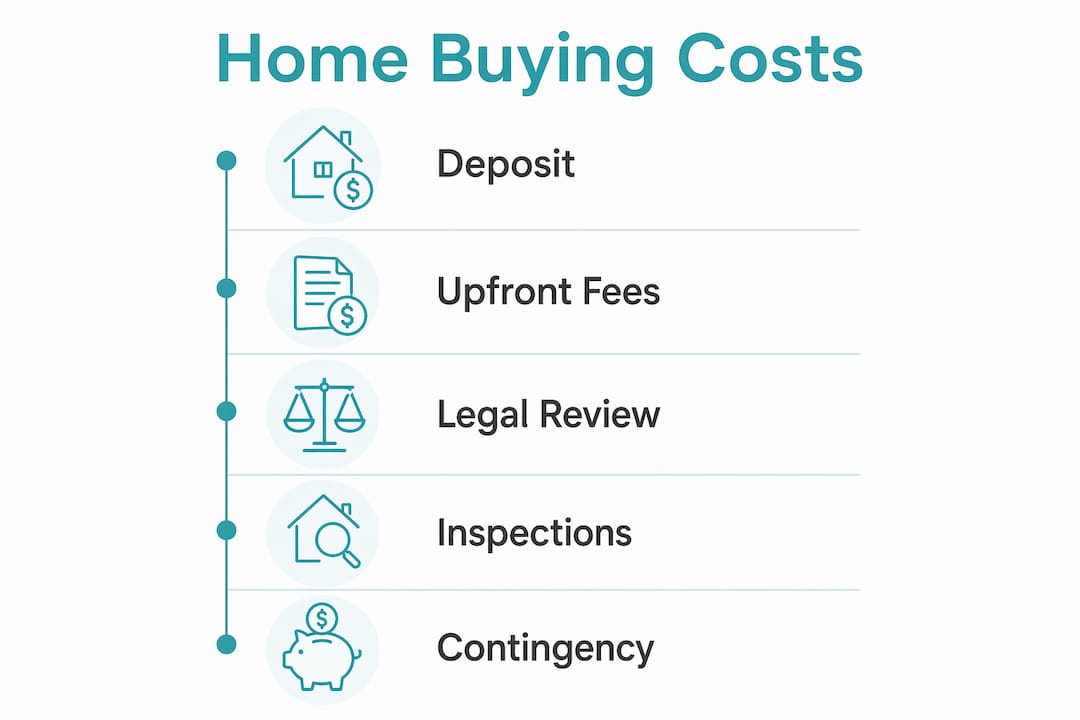
A full cost breakdown for a typical purchase includes:
- Legal and conveyancing: $2,000–$3,500 for a standard purchase
- Building inspection: non-negotiable for any property with a roof, plumbing, or wiring you cannot personally assess
- LIM report: reveals council records on the property including consents, drainage, and hazard notices
- Registered valuation: required by most lenders; confirms the bank’s security value
- Moving costs and initial setup: $500–$5,000 depending on distance and volume
- Insurance: your lender will require proof of cover at settlement
Consulting a lawyer before you sign anything is one of the most protective steps you can take. A legal review of the sale agreement and title documents can surface unconsented work, body corporate issues, or easements that affect both your ownership and your mortgage approval. Properties with unconsented additions sometimes fail lender criteria entirely, leaving buyers who have already paid for inspections and valuations out of pocket.
First-year ownership also brings costs that renters never face. A hot water cylinder replacement, a fence repair, or a leaking roof can add thousands to your first year’s expenses. Budget a contingency for these from the start.
Pro Tip: Treat your upfront cost budget and your deposit savings as two separate accounts. Mixing them is the fastest way to arrive at settlement short of cash.
A professional home inspection before you commit to purchase is one of the clearest ways to protect both your finances and your peace of mind.
Mortgagemanagers’ expert tips for using a home price calculator
Getting the most from a real estate calculator means pairing it with sound mortgage advice, not treating it as a standalone answer.
- Always model multiple purchase prices. Run the calculator at your target price and at 10% above it. The gap shows you how much buffer you actually need.
- Factor in your LVR position. If your deposit sits below 20%, the low-equity premium adds real cost to your loan. Mortgagemanagers can show you exactly how that affects your repayments.
- Don’t confuse an online estimate with a lender’s valuation. Free property estimators are a starting point. Your mortgage adviser will tell you which lenders require a registered valuation and when to order one.
- Use the calculator result to work backwards. If the total cash needed exceeds your savings, you know your target purchase price needs to come down or your savings timeline needs to extend.
- Ask about KiwiSaver. Your KiwiSaver balance can fund the deposit, but you must keep a minimum $1,000 in the account. The cash for upfront costs needs to come from elsewhere.
Buyers who budget only for the deposit often arrive at settlement short. The total cash figure from a home price calculator, including all fees and a buffer above it, is the number that actually gets you the keys. At Mortgagemanagers, we walk buyers through every line of that figure so nothing comes as a surprise on settlement day.
Mortgagemanagers’ mortgage calculator tools let you model affordability and repayments alongside your upfront cost estimate, giving you a complete picture of what the purchase actually costs, both on day one and over the life of the loan. For buyers in Auckland and across New Zealand, that kind of local, grounded advice is what turns a calculator result into a confident decision.
Mortgagemanagers helps you plan your home purchase with confidence
Knowing your total cash needed is one thing. Having an expert help you act on it is another entirely.

Mortgagemanagers is a locally owned mortgage advisory business based in Hobsonville, Auckland, working with buyers across the North Shore, West Auckland, and remotely throughout New Zealand. Where a calculator gives you a number, Mortgagemanagers gives you a plan. The team works through your deposit position, your borrowing capacity, and your full upfront cost picture with you, then matches you to lenders whose criteria actually fit your situation. That means no wasted time on applications that were never going to succeed, and no surprises when settlement arrives.
If you are ready to move from estimates to a real mortgage plan, talk to a mortgage adviser at Mortgagemanagers today.
Key takeaways
A home price calculator shows you the total cash needed to buy, including deposit and all upfront fees, and that figure is always higher than the deposit alone.
| Point | Details |
|---|---|
| Total cash, not just deposit | Upfront costs beyond the deposit typically run $8,000–$15,000 in New Zealand. |
| LVR affects your costs | Deposits below 20% trigger a low-equity premium of 0.5–1.0% added to your annual interest rate. |
| Registered valuation vs online estimate | Lenders require a certified valuer’s report for mortgage approval; free online tools are indicative only. |
| Legal review protects you | A lawyer should review the sale agreement and LIM before you sign to avoid costly surprises. |
| Mortgagemanagers | The Mortgagemanagers team helps Auckland and NZ buyers interpret calculator results and match to the right lender. |