
More than a quarter of australian adults have experienced credit problems that make getting a standard home loan difficult. This issue creates real challenges for anyone hoping to buy property but facing a history of defaults or missed payments. Understanding what adverse credit mortgages mean can help borrowers in tough financial situations discover realistic options for moving forward, making homeownership possible even after setbacks.
Table of Contents
- What Does Adverse Credit Mortgage Mean?
- Types of Adverse Credit Issues in NZ
- How Lenders Assess Bad Credit Applicants
- Eligibility Criteria for Home Loans With Defaults
- Risks, Costs, and Responsible Borrowing
Key Takeaways
| Point | Details |
|---|---|
| Adverse Credit Mortgages | These specialised home loans cater to individuals with challenging credit histories, providing a pathway to homeownership despite past financial difficulties. |
| Eligibility Criteria | Applicants must meet specific requirements, such as being at least 18 years old and demonstrating income stability, to qualify for these loans. |
| Lender Assessment | Lenders evaluate bad credit applicants by assessing their current financial health and recent behaviours rather than solely relying on historical credit scores. |
| Risks and Costs | Adverse credit mortgages typically come with higher interest rates and fees, necessitating careful budget management and strategic planning for responsible borrowing. |
What Does Adverse Credit Mortgage Mean?
An adverse credit mortgage represents a specialised home loan solution designed for individuals who have encountered financial challenges in their credit history. These unique lending products cater specifically to borrowers with past credit defaults, missed payments, or complex financial backgrounds that might typically prevent them from securing traditional home loans.
According to consumer protection guidelines, adverse credit mortgages acknowledge that financial setbacks happen and provide a pathway to homeownership for those with imperfect credit records. Unlike standard home loans, these mortgages come with distinctive characteristics:
- Higher interest rates to compensate for increased lending risk
- More stringent application and approval processes
- Potentially larger required deposits
- Closer scrutiny of current financial stability
The core purpose of an adverse credit mortgage is not to punish borrowers for past financial difficulties, but to offer a realistic opportunity for credit rebuilding and home ownership. Lenders assess these applications by looking beyond historical credit events and evaluating an applicant’s current financial health, income stability, and future repayment capacity. This approach recognises that credit challenges are often temporary and should not permanently exclude someone from achieving their homeownership goals.
For New Zealanders navigating complex credit landscapes, understanding home loan options with challenging credit histories becomes crucial. These specialised mortgage products provide a structured pathway to transform past financial challenges into future opportunities, helping borrowers rebuild their credit while securing a home.
Types of Adverse Credit Issues in NZ
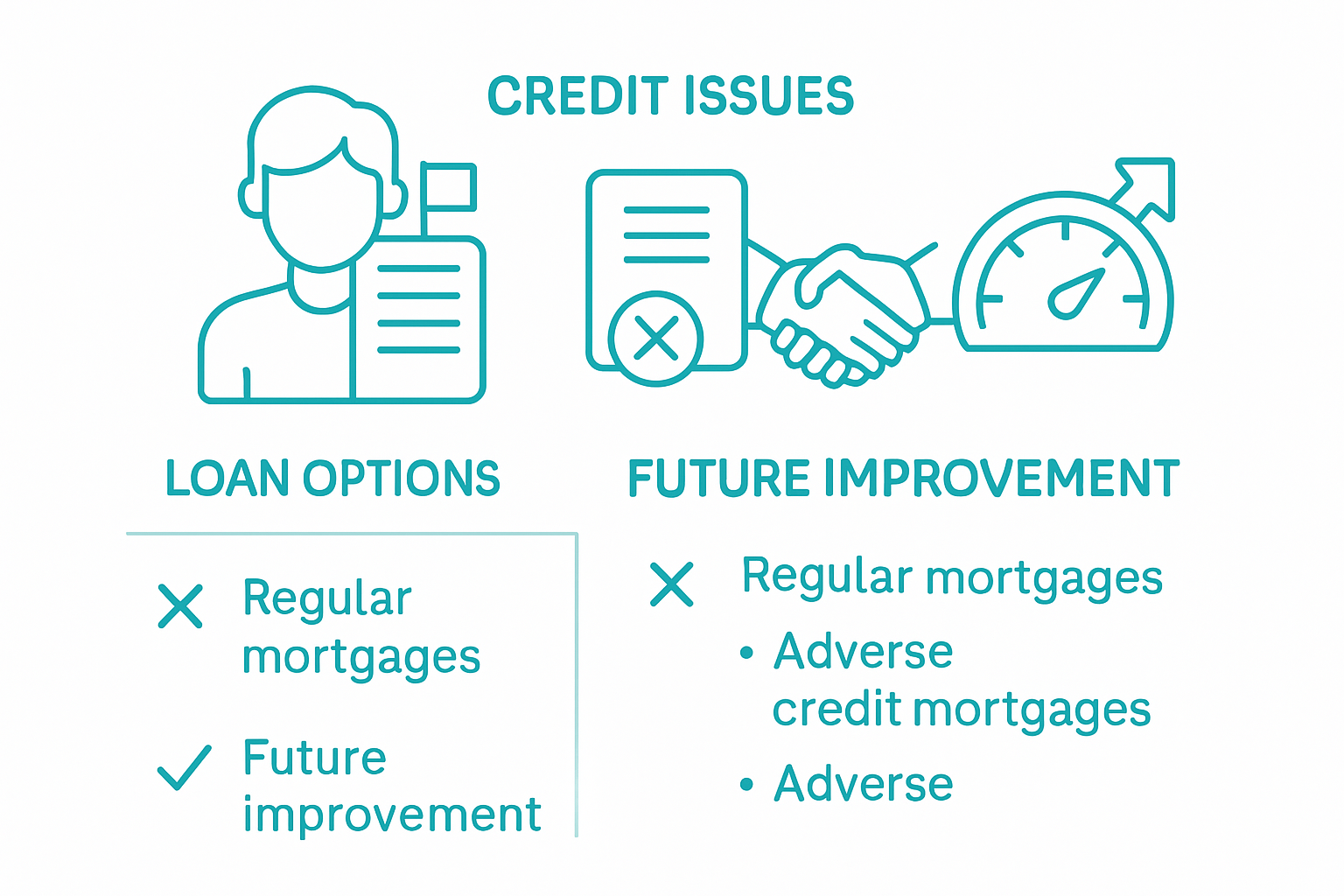
In the complex landscape of personal finance, adverse credit issues in New Zealand encompass a range of financial challenges that can significantly impact an individual’s borrowing potential. Consumer protection guidelines highlight several critical factors that can contribute to adverse credit status, with implications for future lending opportunities.
According to financial research, the most common adverse credit issues include:
- Payment Defaults: Unpaid bills or loans exceeding $125 and overdue by more than 30 days
- Missed Payments: Regular late payments on loans, credit cards, or utility bills
- High Debt-to-Income Ratios: Significant portion of income allocated to debt servicing
- Mortgage Arrears: Falling behind on home loan repayments
These financial challenges can create substantial barriers to obtaining credit. Mortgage approval strategies for individuals with challenging credit histories become crucial in navigating these complex financial landscapes. The impact extends beyond immediate borrowing capabilities, potentially affecting future financial opportunities and personal economic stability.

Understanding these adverse credit issues is more than just recognising financial missteps. It’s about developing a comprehensive approach to financial rehabilitation. Each credit challenge represents an opportunity to reassess financial strategies, implement more robust budgeting practices, and ultimately work towards rebuilding financial credibility. For New Zealanders facing these challenges, professional financial guidance can provide the strategic insights needed to transform past credit difficulties into a pathway of financial recovery and future success.
How Lenders Assess Bad Credit Applicants
Bad credit applicants face a nuanced and comprehensive evaluation process when seeking mortgage financing. Consumer protection guidelines reveal that lenders employ a multi-dimensional approach to assessing credit risk, looking far beyond traditional credit scores.
The assessment typically involves scrutinising several critical financial dimensions:
- Credit Report Analysis: Detailed examination of past payment histories
- Income Stability: Evaluation of current employment and earnings consistency
- Debt-to-Income Ratio: Calculating the proportion of monthly income allocated to existing debts
- Recent Financial Behaviour: Assessing improvements in financial management
- Explanatory Factors: Understanding contextual reasons behind credit challenges
Lenders recognise that credit challenges are not permanent barriers. Exploring home loan options for those with complex credit histories can reveal pathways to mortgage approval that many applicants might not initially recognise. The assessment process aims to balance risk management with providing fair lending opportunities.
Ultimately, the goal is not to penalise past financial struggles but to understand an applicant’s current financial capacity and future potential. Lenders look for positive indicators like steady income, recent financial discipline, and proactive debt management. By presenting a comprehensive picture of financial rehabilitation and current stability, bad credit applicants can significantly improve their chances of securing mortgage financing.
Eligibility Criteria for Home Loans With Defaults
Navigating home loan eligibility with defaults requires a clear understanding of the specific criteria lenders consider. Microloan guidelines outline fundamental requirements that form the foundation of mortgage applications for individuals with challenging credit histories.
The core eligibility criteria typically include:
- Age Requirement: Must be at least 18 years old
- Residency Status: New Zealand citizenship or permanent residency
- Valid Identification: Government issued documentation
- Income Stability: Demonstrable, consistent earnings
- Debt Rehabilitation: Evidence of financial recovery
- Deposit Requirements: Often higher for applicants with defaults
Exploring mortgage options for those with complex credit backgrounds reveals that meeting basic eligibility is just the first step. Lenders conduct comprehensive assessments that go beyond standard checklist requirements, looking deeply into an applicant’s financial narrative and potential for responsible lending.
Successful applicants demonstrate more than just meeting minimum criteria. They showcase financial resilience by presenting a clear strategy for debt management, providing comprehensive documentation of income stability, and showing tangible steps towards credit rehabilitation. The journey to mortgage approval with defaults is not about perfect credit, but about proving financial responsibility and commitment to sound financial practices.
Risks, Costs, and Responsible Borrowing
Adverse credit mortgages represent a complex financial commitment that requires careful navigation and strategic planning. Consumer protection guidelines highlight the critical importance of understanding the unique risks and costs associated with these specialised lending products.
The primary financial considerations for adverse credit borrowers include:
- Higher Interest Rates: Typically 1.5 to 3% above standard mortgage rates
- Increased Lending Fees: Additional charges to mitigate perceived lending risks
- Stricter Loan Terms: More rigorous repayment conditions
- Limited Loan Options: Fewer mortgage product selections
- Potential Credit Score Impact: Ongoing reporting requirements
Understanding mortgage repayment structures becomes crucial for borrowers seeking to manage these financial challenges effectively. Responsible borrowing demands a proactive approach, including comprehensive budget planning, consistent income management, and a clear strategy for financial rehabilitation.
Ultimately, successful navigation of adverse credit mortgages requires more than just meeting minimum requirements. Borrowers must demonstrate financial discipline, maintain transparent communication with lenders, and develop a long-term strategy for improving their credit profile. The goal is not just securing a mortgage, but creating a sustainable pathway to financial stability and future lending opportunities.
Overcome Adverse Credit Challenges With Expert Mortgage Advice
Facing credit defaults and unsure how to access home loans is a common challenge for Kiwis striving for homeownership. This article highlights the key difficulties such as higher interest rates, deposit requirements and thorough lender assessments that make securing a mortgage with adverse credit complex. If you want to rebuild your financial future and understand your borrowing options despite credit setbacks, expert guidance tailored to your unique situation is essential.

Take control of your journey today with Mortgage Managers. As local mortgage advisers based in Hobsonville, we specialise in guiding clients through bad credit home loans and helping them navigate the obstacles of defaults and arrears. Our team supports you by analysing your financial position and connecting you with lenders willing to consider your current circumstances beyond past mistakes. Explore how you can improve your chances by visiting https://mortgagemanagers.co.nz and start the pathway to responsible borrowing with confidence.
Frequently Asked Questions
What is an adverse credit mortgage?
An adverse credit mortgage is a specialised home loan designed for individuals with a challenging credit history, such as defaults and missed payments, providing a pathway to homeownership despite past financial difficulties.
What types of adverse credit issues can affect my mortgage application?
Common adverse credit issues include payment defaults, missed payments, high debt-to-income ratios, and mortgage arrears, which can impact your borrowing potential and eligibility for loans.
How do lenders assess applicants with bad credit?
Lenders assess bad credit applicants by examining factors like credit reports, income stability, debt-to-income ratios, recent financial behaviour, and understanding the context behind credit challenges.
What should I consider before applying for an adverse credit mortgage?
Before applying, consider the higher interest rates, increased lending fees, stricter loan terms, and the importance of creating a clear strategy for financial rehabilitation to improve your chances of approval.