
Buying your first home is an exciting step, but the topic of home equity can leave many new first home buyers feeling uncertain.
Understanding exactly how home equity works means more than just knowing your loan balance. Gaining equity in your home can help shape your long-term financial well being and also open up future opportunities.
With clear guidance, you will see how growing and managing your equity can strengthen your position as a homeowner and set you up for financial success in New Zealand.
Table of Contents
- Defining Home Equity And Common Misconceptions
- How Home Equity Builds Over Time In Nz
- Accessing And Using Your Home Equity Safely
- Risks, Costs And Tax Implications In New Zealand
- Avoiding Common Pitfalls When Tapping Equity
Key Takeaways
| Point | Details |
|---|---|
| Understanding Home Equity | Home equity is the market value of your property minus your mortgage balance, crucial for first home buyers in New Zealand to access financial benefits. |
| Dynamic Nature of Home Equity | Equity can grow through property value appreciation, mortgage repayments, and home improvements, not just market value increases. |
| Accessing Home Equity Responsibly | Homeowners should carefully consider financial risks and benefits before tapping into home equity, ensuring they maintain a financial buffer. |
| Common Pitfalls to Avoid | First home buyers must avoid overborrowing and ensure they conduct stress tests on repayments under varying economic scenarios. |
Defining Home Equity and Common Misconceptions
Home equity represents the financial value an individual owns in their property beyond any outstanding mortgage balance.
Think of it as the portion of your home that you truly “own” – calculated by subtracting your current mortgage debt from the property’s total market value.
Understanding home equity is crucial for first home buyers in New Zealand, as it serves as a powerful financial tool that can unlock numerous opportunities. When you reach 20% equity, you gain significant advantages in the property market:
- Access to better mortgage rates
- Reduced or eliminated low equity margins
- Increased borrowing potential
- Greater financial flexibility
- The ability to refinance to a better home loan
Many first home buyers misunderstand home equity, believing it’s a static concept.
In reality, home equity is dynamic and can change based on several factors:
- Property value fluctuations
- Mortgage principal repayments
- Home improvements and renovations
- Local real estate market conditions
Home equity isn’t just a number – it’s a strategic financial asset that can help you build long-term wealth.
First-time property owners often mistakenly assume that equity only increases through property value appreciation. However, consistent mortgage payments and strategic home improvements can also significantly boost your equity position.
Pro tip: Track your home’s market value annually and make consistent mortgage payments to steadily build your equity portfolio.
How Home Equity Builds Over Time in NZ
Home equity growth in New Zealand follows a strategic path that combines multiple financial mechanisms. Maximising property equity requires understanding the key drivers that incrementally increase your property’s financial value over time.
Homeowners can build equity through several primary methods:
- Regular mortgage principal repayments
- Property value appreciation
- Strategic home improvements
- Additional voluntary mortgage contributions
- Reducing overall mortgage debt
The most consistent method of building equity involves making consistent mortgage payments. Each payment reduces your principal balance, which directly increases your ownership stake in the property. For instance, in the early years of a mortgage, a larger portion of your payment goes towards interest, but over time, more funds are applied to the principal.
Property equity is a dynamic financial asset that grows through intentional financial strategies and market conditions.
Property value appreciation plays a significant role in equity growth. New Zealand’s real estate markets typically experience gradual value increases, which can substantially boost your home’s equity without additional personal investment. Local factors like infrastructure development, neighbourhood improvements, and broader economic trends contribute to this appreciation.

Additional strategies for accelerating equity include making extra mortgage payments, pursuing home renovations that increase property value, and maintaining your property in excellent condition. Some homeowners opt for home loan top-ups to strategically leverage their growing equity for further investments.
Pro tip: Consider making one extra mortgage payment annually when you refix to significantly reduce your loan term and accelerate equity accumulation.
Accessing and Using Your Home Equity Safely
Accessing home equity requires a strategic approach that balances financial opportunities with potential risks. Using home equity when refinancing demands careful consideration of your overall financial health and long-term goals.
Homeowners have multiple methods to access their home equity safely:
- Home equity loans
- Line of credit
- Cash-out refinancing
- Partial property sale
- Equity release products
Before tapping into your home equity, it’s crucial to understand the potential risks and benefits. Each method comes with unique financial implications that can significantly impact your long-term financial stability. The key is to approach equity access with a clear strategy and comprehensive financial planning.
Responsible home equity use means treating your property as a strategic financial asset, not a quick cash solution.
Typical uses for home equity include funding major investments, consolidating high-interest debt, financing home improvements, or supporting personal financial goals. However, it’s essential to remember that using equity effectively means maintaining a conservative approach. You’re essentially borrowing against your most valuable asset, so careful consideration is paramount.
Some homeowners explore equity release options to unlock financial flexibility. These strategies can provide additional funds for retirement, investment opportunities, or unexpected expenses. However, each option requires thorough analysis of potential long-term consequences.
Here’s a comparison of common ways to access home equity in New Zealand:
| Method | Typical Use Cases | Impact on Monthly Payments |
|---|---|---|
| Home equity loan | Large renovations, investments | Fixed payment over set term |
| Line of credit | Flexible ongoing expenses | Variable, depends on usage |
| Cash-out refinancing | Debt consolidation, big expenses | Usually increases repayments |
| Equity release product | Retirement funding, emergencies | May defer repayments, accrues interest |
Pro tip: Always consult a financial advisor and calculate your total borrowing capacity before accessing home equity to ensure you maintain a safe financial buffer.
Risks, Costs and Tax Implications in New Zealand
Home equity strategies in New Zealand come with complex financial considerations that extend far beyond simple borrowing. Home equity release products involve nuanced risks that first-time homeowners must carefully evaluate before making financial decisions.
Potential risks associated with home equity access include:
- Increased long-term debt burden
- Potential reduction in inheritance value
- Compounding interest charges
- Unexpected tax implications
- Potential property value fluctuations
- Legal and administrative costs
Tax implications represent a critical consideration for New Zealand homeowners. While primary residential properties are generally exempt from capital gains tax, accessing home equity might trigger specific tax events depending on how the funds are used. Investment properties, in particular, carry more complex tax reporting requirements that could impact your overall financial strategy.
Accessing home equity is not a financial shortcut, but a strategic decision requiring comprehensive understanding of potential consequences.
Financial experts recommend thorough analysis before leveraging home equity. The costs can include establishment fees, ongoing interest charges, and potential penalty clauses in your mortgage agreement. Some homeowners might find government policy changes significantly impact their equity strategies, making professional financial advice crucial.
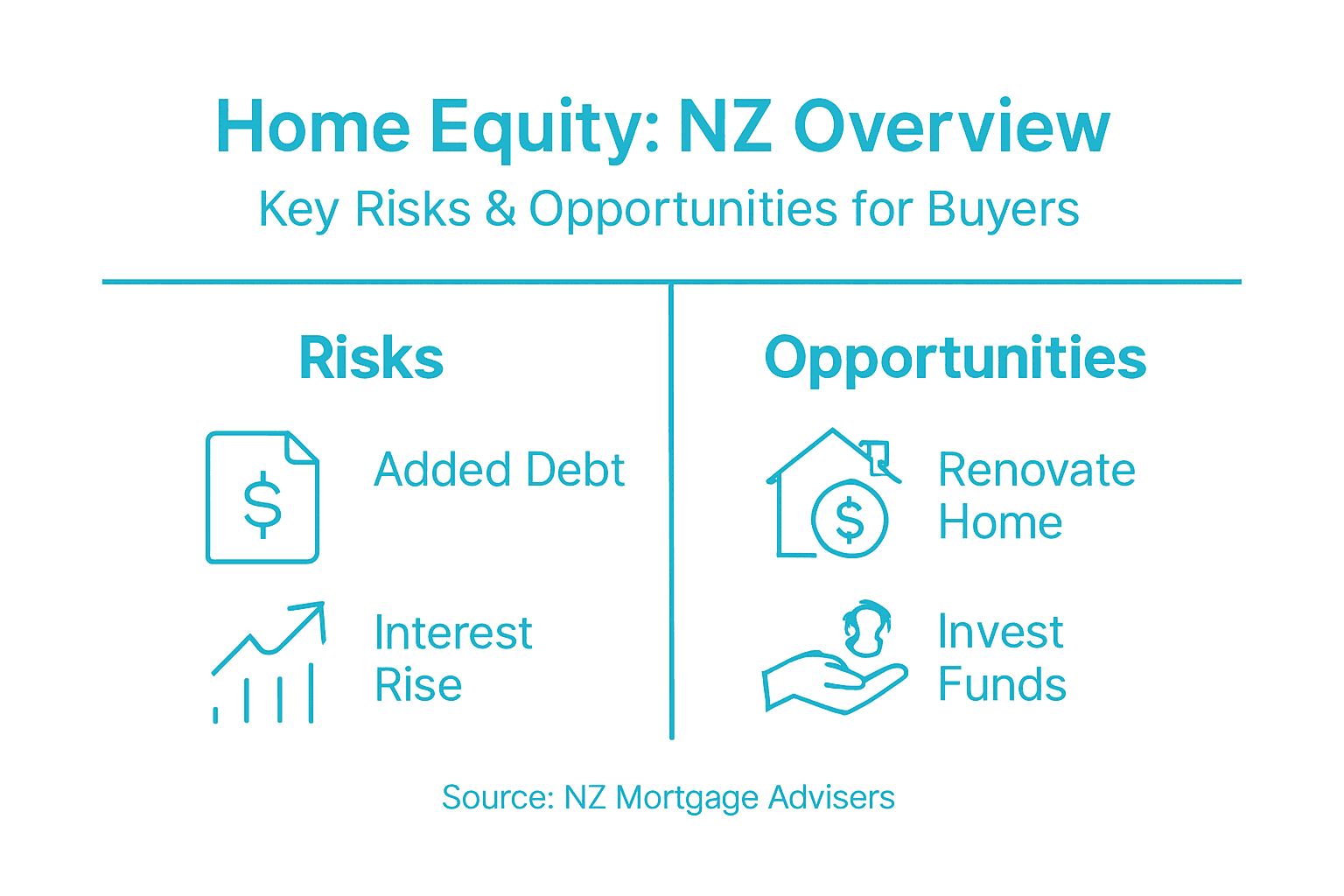
Understanding the long-term implications of home equity decisions requires careful planning. Factors like current interest rates, potential property value changes, and your personal financial goals must all be considered simultaneously.
Pro tip: Consult a registered financial advisor to comprehensively model potential equity access scenarios before making any significant financial commitments.
Avoiding Common Pitfalls When Tapping Equity
Navigating home equity requires strategic planning and careful consideration of potential financial risks. Using equity as deposit demands a thorough understanding of potential pitfalls that can derail your financial objectives.
First home buyers should be aware of these critical equity access mistakes:
- Overborrowing beyond sustainable limits
- Failing to maintain an equity buffer
- Ignoring comprehensive serviceability tests
- Underestimating potential interest rate changes
- Neglecting long-term financial implications
- Overlooking potential tax consequences
One of the most significant risks involves cross-collateralisation, where multiple properties are used as security for a single loan. This strategy can significantly reduce financial flexibility and increase overall risk exposure. Lenders may have more control over your assets, potentially limiting future borrowing or investment opportunities.
Equity access is a powerful financial tool, but it requires disciplined strategy and comprehensive understanding.
Critical considerations include stress-testing potential repayments under various economic scenarios. This means calculating your ability to meet mortgage obligations if interest rates increase or your income temporarily decreases. Mortgage professionals recommend maintaining a substantial financial buffer to protect against unexpected economic challenges.
Some homeowners mistakenly pursue low equity margins without fully understanding their long-term implications. These margins can significantly increase your borrowing costs and reduce overall financial flexibility.
The table below outlines critical risks and how to mitigate them when using home equity:
| Risk | Possible Consequence | Key Mitigation Strategy |
|---|---|---|
| Overborrowing | Unmanageable debt load | Set conservative borrowing limits |
| Cross-collateralisation | Reduced asset flexibility | Keep loans entirely separated |
| Ignoring stress tests | Repayment struggles if rates rise | Model repayments at higher rates |
| Misjudging tax impacts | Unexpected tax obligations | Get professional tax advice |
Pro tip: Conduct a comprehensive financial stress test before accessing home equity, simulating potential interest rate increases and income fluctuations.
Unlock Your Home Equity Potential with Expert Mortgage Advice
Understanding home equity is crucial but navigating its complexities can be challenging for first home buyers in New Zealand. You may be concerned about building equity safely, avoiding common pitfalls like overborrowing or cross-collateralisation, and ensuring you get the best mortgage rates once you reach that vital 20 percent equity mark. At Mortgage Managers, we specialise in guiding first home buyers through these exact challenges with tailored strategies that help you make informed, confident decisions on your journey to home ownership.

Ready to take control of your real home ownership journey and maximise your financial opportunities?
Connect with our experienced Auckland mortgage advisers today to explore options like home loan top-ups and safe refinancing strategies. Let us help you build equity deliberately and access it responsibly so you can avoid costly mistakes.
Visit Mortgage Managers now and take the first step towards smarter home financing with support from a locally owned team who truly understands the New Zealand housing market.
Frequently Asked Questions
What is home equity?
The equity in your home is the financial value you own in your property, calculated by subtracting your mortgage balance from your home’s total market value. It represents the portion of your home that you truly own.
How can first home buyers build equity in their property?
First home buyers can build equity through regular mortgage repayments, property value appreciation, home improvements, and by making additional mortgage contributions or reducing overall mortgage debt.
What are the risks of accessing home equity?
The risks of accessing home equity include increased long-term debt, potential reduction in inheritance value, unexpected tax implications, and the possibility of property value fluctuations. It’s essential to approach equity access carefully.
How can I use my home equity effectively?
Home equity can be effectively used for funding major investments, consolidating high-interest debt, financing home improvements, or supporting personal financial goals. However, it’s important to maintain a conservative approach and consult with a financial advisor.