
Most australian home buyers are surprised to learn that choosing the right mortgage could save them more than $50,000 over the life of a loan. With countless lenders and loan types available, the process feels anything but simple. Beyond securing a competitive interest rate, understanding fees, features, and potential risks is essential for making a confident decision. This guide cuts through the noise to help borrowers see what truly separates one home loan from another.
Table of Contents
- What Comparing Home Loans Really Means
- Major Loan Types Available In New Zealand
- How Interest Rates And Features Vary
- Hidden Costs And Potential Risks For Borrowers
- Maximising Savings And Informed Choices
Key Takeaways
| Point | Details |
|---|---|
| Holistic Loan Comparison | Evaluating home loans requires analysing interest rates, fees, features, and flexibility tailored to individual financial goals. |
| Diverse Loan Types | New Zealand offers various loan types, including government-supported options, each with unique benefits and considerations for different borrower situations. |
| Understanding Hidden Costs | Be aware of hidden costs like establishment fees and early repayment penalties that can affect the total loan cost and financial commitments. |
| Strategic Savings Approaches | Implement informed strategies by comparing total loan costs and making proactive choices, such as allocating extra payments to reduce interest over time. |
What Comparing Home Loans Really Means
Comparing home loans isn’t just about finding the lowest interest rate. It’s a sophisticated process of evaluating multiple financial factors that impact your long term mortgage experience. The home loan comparison tools available today help New Zealand borrowers understand the complex landscape of mortgage options with unprecedented clarity.
A comprehensive home loan comparison involves examining several critical elements beyond simple interest rates. These include upfront fees, ongoing charges, loan features, repayment flexibility, fixed versus variable rate structures, and potential exit costs. By systematically analysing these components, borrowers can uncover significant potential savings that might not be immediately apparent. The New Zealand Banking Association’s online calculator provides an excellent starting point for understanding how different loan parameters interact.
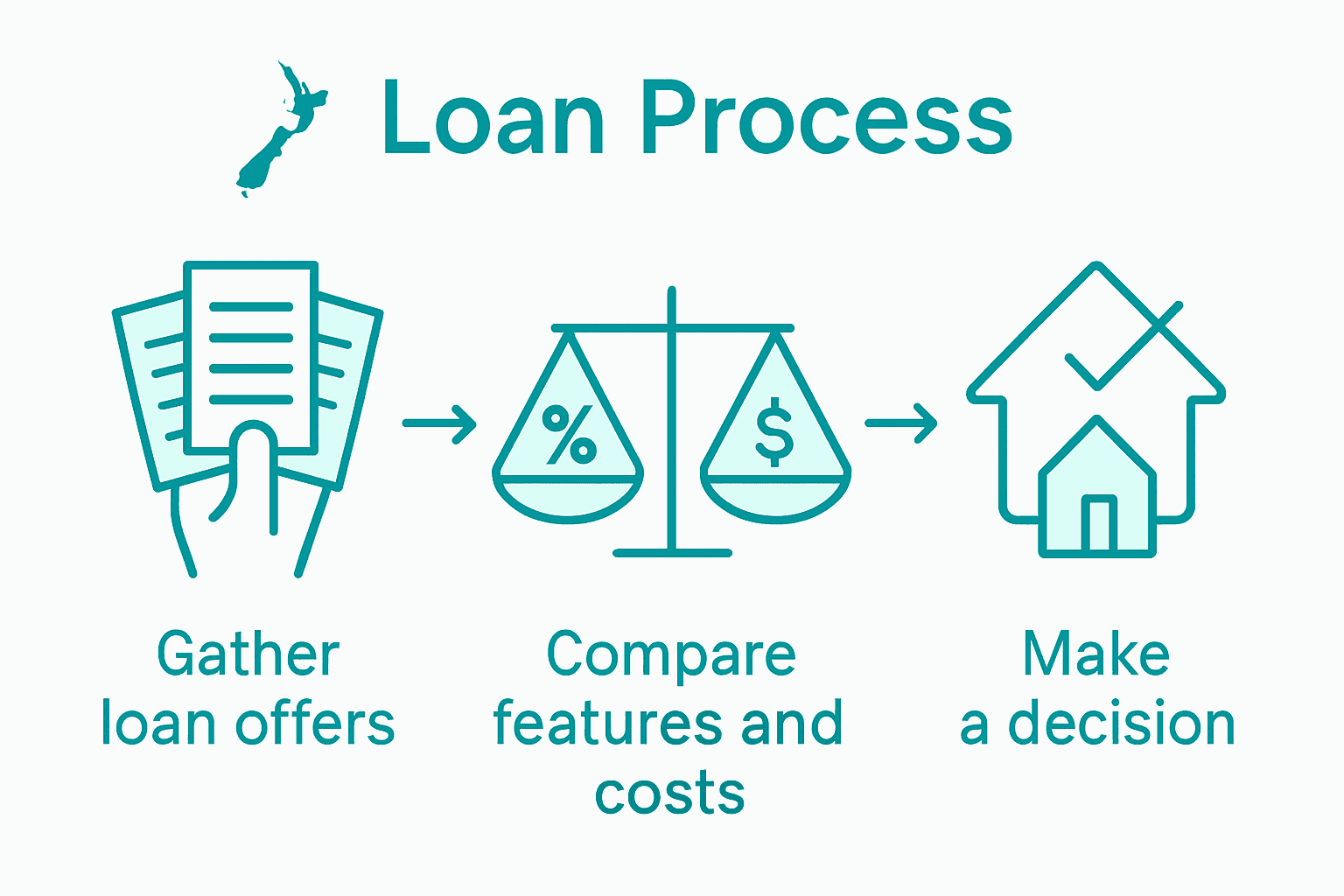
Effective home loan comparison requires a holistic approach that considers your unique financial circumstances. This means looking beyond headline rates and understanding how specific loan features align with your personal homeownership goals. Some loans might offer lower rates but include restrictive conditions, while others provide greater flexibility at a slightly higher cost. Mortgage experts recommend creating a detailed spreadsheet comparing multiple loan offers, tracking not just interest rates but also additional features like offset accounts, redraw facilities, and potential refinancing options.
Pro Home Loan Comparison Tip: Always calculate the total loan cost over its full term, not just the initial interest rate. This comprehensive approach will reveal the true financial impact of your chosen home loan.
Major Loan Types Available in New Zealand
New Zealand offers a diverse range of home loan options designed to suit different financial situations and homeownership goals. Understanding these loan types can help prospective borrowers navigate the complex mortgage landscape, ensuring they select the most appropriate financing solution for their needs.
The primary home loan categories include standard residential mortgages, first home buyer loans, and specialised lending options. First home loan programs from the New Zealand Government provide unique opportunities for new entrants into the property market. These typically include options like the First Home Loan scheme, which enables buyers with smaller deposits to enter homeownership, and the Kāinga Whenua Loan targeting Māori land purchasers.
Beyond government-supported programs, traditional banks and financial institutions offer various mortgage structures. These range from fixed-rate loans with stable repayments to floating rate mortgages that adjust with market conditions. Interest-only loans, split-rate mortgages, and revolving credit facilities represent additional sophisticated options that can be tailored to individual financial strategies. Each loan type carries distinct advantages and potential risks, making thorough research and professional financial advice crucial in the decision-making process.
Here’s a side-by-side overview of key home loan types available in New Zealand:
| Loan Type | Typical Borrower | Key Benefits | Main Considerations |
|---|---|---|---|
| Standard Mortgage | Property buyers with full deposit | Flexible terms, broad lender choice | Larger deposit required, strict eligibility |
| First Home Loan (Govt) | First-time buyers | Lower deposit, government guarantee | Income and price caps, limited lenders |
| Kāinga Whenua Loan | Māori land purchasers | Supports papakāinga housing projects | Only for Māori land, eligibility criteria |
| Interest-Only Loan | Investors, short-term buyers | Lower initial payments, cash flow focus | No principal reduction, higher total cost |
| Revolving Credit | Homeowners seeking flexibility | Reduces interest if managed well | Requires discipline, variable rates |
Pro Home Loan Selection Tip: Always compare multiple loan types across different providers, considering not just interest rates but total loan costs, flexibility, and alignment with your long-term financial objectives.
How Interest Rates and Features Vary
Interest rates in New Zealand’s home loan market are dynamic, influenced by complex economic factors and individual lender strategies. Comprehensive home loan rate analyses reveal significant variations that can substantially impact borrowers’ long-term financial outcomes.
Fixed and floating rates represent the primary interest rate structures, each with unique characteristics. Fixed rates provide stability and predictable repayments, typically ranging from one to five years, while floating rates fluctuate with market conditions. Recent trends show fixed mortgage rates dipping below 5%, creating attractive opportunities for borrowers seeking financial certainty. Comparing home loan offerings across different banks becomes crucial, as each institution presents distinct features beyond basic interest rates.

Beyond interest rates, loan features play a critical role in determining overall value. These can include offset account options, redraw facilities, flexible repayment structures, and potential honeymoon rates for new borrowers. Some lenders offer additional benefits like reduced establishment fees, cashback promotions, or bundled banking services that can significantly enhance the overall loan package. Understanding these nuanced differences requires careful analysis and potentially professional financial guidance.
Pro Rate Comparison Tip: Always calculate the total loan cost over its entire term, not just the initial interest rate, to understand the genuine financial impact of your chosen home loan.
Hidden Costs and Potential Risks for Borrowers
Household debt research reveals significant financial complexities that borrowers must understand before committing to a home loan. While mortgages represent a pathway to property ownership, they also carry substantial financial responsibilities and potential pitfalls that can dramatically impact long-term economic stability.
The Reserve Bank of New Zealand’s loan-to-value ratio restrictions highlight critical risk management strategies for potential borrowers. Hidden costs extend far beyond basic interest rates, encompassing establishment fees, legal expenses, valuation charges, and potential early repayment penalties. Borrowers must carefully evaluate ongoing charges like mortgage protection insurance, council rates, and maintenance expenses that can substantially increase the total financial commitment.
Risk management involves understanding potential scenarios that could compromise loan repayment capabilities. Job loss, relationship changes, unexpected medical expenses, or significant interest rate fluctuations can dramatically alter one’s financial landscape. Sophisticated borrowers assess their loan’s flexibility, investigating features like mortgage holidays, partial repayment options, and the potential for refinancing. Some loans include complex clauses that might restrict financial mobility or impose substantial penalties for early contract termination.
Below is a summary highlighting frequently overlooked hidden costs and risks associated with New Zealand home loans:
| Cost or Risk | Description | Potential Financial Impact |
|---|---|---|
| Establishment Fee | Upfront lender charge to set up loan | Adds to initial purchase costs |
| Early Repayment Penalty | Fee for paying off loan early | Can erase savings from refinancing |
| Valuation/Lawyer Fees | Charges for property valuation and legal work | Required for settlement, not advertised |
| Insurance & Rates | Ongoing insurance, council rates, maintenance | Increase total annual homeownership cost |
| Interest Rate Fluctuations | Changes in market rates affect repayments | Monthly payments could rise sharply |
| Restrictive Clauses | Limits on repayment or refinancing options | Reduces flexibility, costly to exit |
Pro Risk Management Tip: Always maintain an emergency fund equivalent to at least three to six months of mortgage repayments to provide a financial buffer against unexpected economic challenges.
Maximising Savings and Informed Choices
Maximising home loan savings requires strategic planning and comprehensive understanding of available financial resources. Government support programs for home buyers provide crucial opportunities for New Zealanders to reduce upfront costs and accelerate their property ownership journey.
Savings strategies extend beyond government schemes, encompassing sophisticated financial approaches. Smart borrowers analyse multiple loan structures, comparing not just interest rates but total loan costs, flexibility, and potential long-term financial implications. This includes evaluating offset accounts, understanding potential refinancing options, and strategically timing fixed versus variable rate selections to minimise overall expenses.
Informed choices demand thorough research and proactive financial management. Borrowers should develop a comprehensive understanding of their personal financial landscape, including credit score, income stability, and future earning potential. Sophisticated loan comparison involves examining less obvious factors like early repayment penalties, loan portability, and potential additional features that could provide financial advantages. Creating detailed spreadsheets comparing multiple loan offerings can reveal nuanced differences that significantly impact long-term financial outcomes.
Pro Savings Strategy Tip: Allocate an additional 5-10% above your minimum mortgage repayment to build equity faster and reduce overall interest payments throughout your loan term.
Make Confident Home Loan Choices with Expert Guidance
Navigating New Zealand’s complex home loan market can feel overwhelming with so many options, hidden costs and loan features to consider. The article highlights the importance of comparing total loan costs, identifying risk factors and aligning loan types to your unique financial goals. If you want to turn this knowledge into action you need tailored advice that cuts through the jargon and complexity.
At Mortgage Managers we specialise in helping Auckland and New Zealand borrowers unlock the full picture behind home loans. Our expert mortgage advisers based in Hobsonville provide personalised strategies to manage interest rate variations, compare loan types and avoid costly pitfalls. We focus on creating flexible loan solutions that match your circumstances and long term plans.
Start your home loan journey with confidence and clarity. Explore Mortgage Managers for trusted mortgage advice and solutions designed to maximise your savings and minimise surprises.

Don’t settle for headline rates alone Get in touch with the local experts who will guide you through detailed comparisons and help secure the best loan fit for your needs today. Visit Mortgage Managers now and turn home loan confusion into clear financial advantage.
Frequently Asked Questions
What should I compare when looking for home loans?
When comparing home loans, focus on interest rates, upfront fees, ongoing charges, loan features, repayment flexibility, and potential exit costs to find the most suitable loan for your needs.
Why is it important to consider total loan costs instead of just the interest rate?
Total loan costs reveal the overall financial impact over the loan term, including fees and flexible features, which can significantly affect your long-term payments and savings.
What are the different types of home loans available?
The main types of home loans include standard mortgages, first home loans, Kāinga Whenua loans, interest-only loans, and revolving credit facilities, each catering to different financial situations and borrower needs.
What hidden costs should I be aware of when taking out a home loan?
Hidden costs can include establishment fees, early repayment penalties, valuation and legal fees, as well as ongoing expenses like insurance and council rates, which can escalate the total cost of homeownership.