
TL;DR:
- First home buyers in New Zealand can access government schemes like Kāinga Ora and the First Home Grant.
- Preparing key documents early and understanding eligibility helps streamline the buying process.
- Collaborating with expert mortgage advisers improves confidence and ensures better mortgage and settlement outcomes.
Buying your first home in New Zealand can feel like standing at the base of a very tall mountain, unsure which path to take. The paperwork, the jargon, the deposit requirements, and the sheer number of decisions can make the whole process feel impossibly complex. But here is the reassuring truth: thousands of Kiwis navigate this journey every year, and many of them access generous government support that makes ownership far more achievable than they first imagined. This guide breaks down every step clearly, from gathering your documents to collecting your keys, so you can move forward with confidence rather than confusion.
Table of Contents
- What you need before starting the home buying process
- Step-by-step guide to finding and evaluating homes
- Applying for mortgage and navigating offers
- Final checks, settlement, and moving in
- What most first home buyers get wrong and how to get it right
- How Mortgage Managers can help you buy your first home
- Frequently asked questions
Key Takeaways
| Point | Details |
|---|---|
| Government schemes help | Kāinga Ora loans and First Home Grants make buying easier with low deposit and financial assistance. |
| KiwiSaver boosts your deposit | KiwiSaver funds can be used after three years of contributions to help meet your deposit. |
| Follow a clear buying process | Preparing documents, budgeting, and checking eligibility make your journey smoother and less stressful. |
| Get expert advice early | Mortgage advisers help you identify the best schemes and avoid common mistakes during the buying process. |
What you need before starting the home buying process
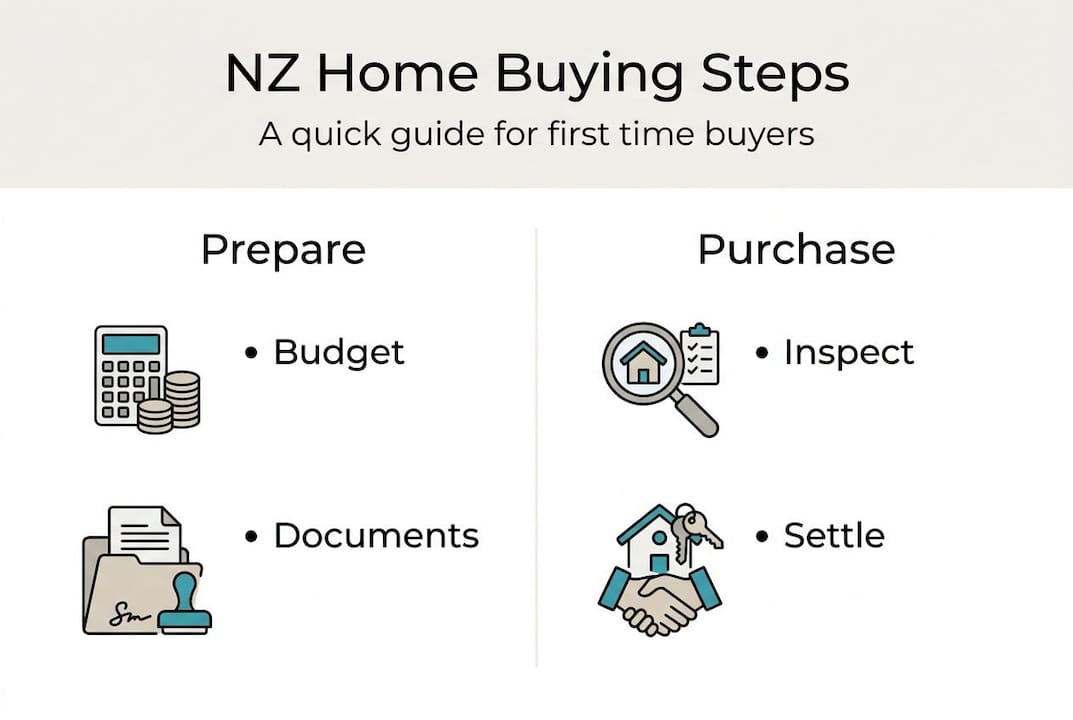
Before you start browsing listings or attending open homes, it pays to get your foundations solid. Think of this stage as building your financial toolkit. The more prepared you are upfront, the smoother every step that follows will be.
Documents you will need to gather:
- Valid photo ID (passport or driver’s licence)
- Proof of income (recent payslips, tax returns, or bank statements)
- KiwiSaver membership confirmation and contribution history
- Evidence of savings or gifted deposit funds
- Employment contract or letter from your employer
- IRD number and recent tax summary
Getting these documents ready early means you will not be scrambling when a lender or solicitor asks for them. It also signals to banks that you are a serious and organised buyer.
One of the most exciting parts of buying your first home in New Zealand is the government support available. The Kāinga Ora First Home Loan allows eligible buyers to purchase with just a 5% deposit, with income caps set at $95,000 for individuals and $150,000 for couples. On top of that, the First Home Grant offers up to $10,000 per person for KiwiSaver contributors, with higher amounts available for new builds. If you have been contributing to KiwiSaver for at least three years, you may also be eligible for a KiwiSaver first home withdrawal to boost your deposit further.
| Support type | Benefit | Key requirement |
|---|---|---|
| Kāinga Ora First Home Loan | 5% deposit accepted | Income caps apply |
| First Home Grant | Up to $10,000 per person | 3+ years KiwiSaver |
| KiwiSaver withdrawal | Access your own contributions | 3+ years contributing |
Beyond grants and loans, you also need to budget for costs that many first-time buyers overlook. Legal fees, building inspection costs, and loan application fees can add several thousand dollars to your total outlay. Solid first home budgeting from the outset protects you from nasty surprises later.
Pro Tip: Check your KiwiSaver balance and contribution history now, even if you are months away from buying. Some buyers discover gaps in their contribution record that affect grant eligibility, and fixing this early gives you time to remedy it.
Step-by-step guide to finding and evaluating homes
With your documents ready and your budget mapped out, the active search begins. This is where the excitement really builds, but it also requires a clear head and a structured approach.
How to search and shortlist properties:
- Set a firm budget based on your pre-approval amount and total buying costs.
- Identify your preferred suburbs and commute requirements.
- Use property portals like Trade Me Property and realestate.co.nz to monitor listings.
- Attend open homes consistently and take notes at each one.
- Check whether properties meet eligibility requirements for the First Home Grant (price caps vary by region).
- Shortlist two or three properties that genuinely fit your criteria before proceeding.
One of the biggest decisions you will face is whether to buy a new build or an existing home. This choice affects not just your lifestyle but also your grant eligibility and mortgage options. Review the mortgage features available for each property type before committing.
| Feature | New build | Existing home |
|---|---|---|
| First Home Grant amount | Higher grant available | Standard grant amount |
| Deposit requirement | Often lower | Standard deposit rules |
| Inspection complexity | Less risk of hidden issues | Full building report advised |
| Personalisation | Choose finishes | Immediate character and space |
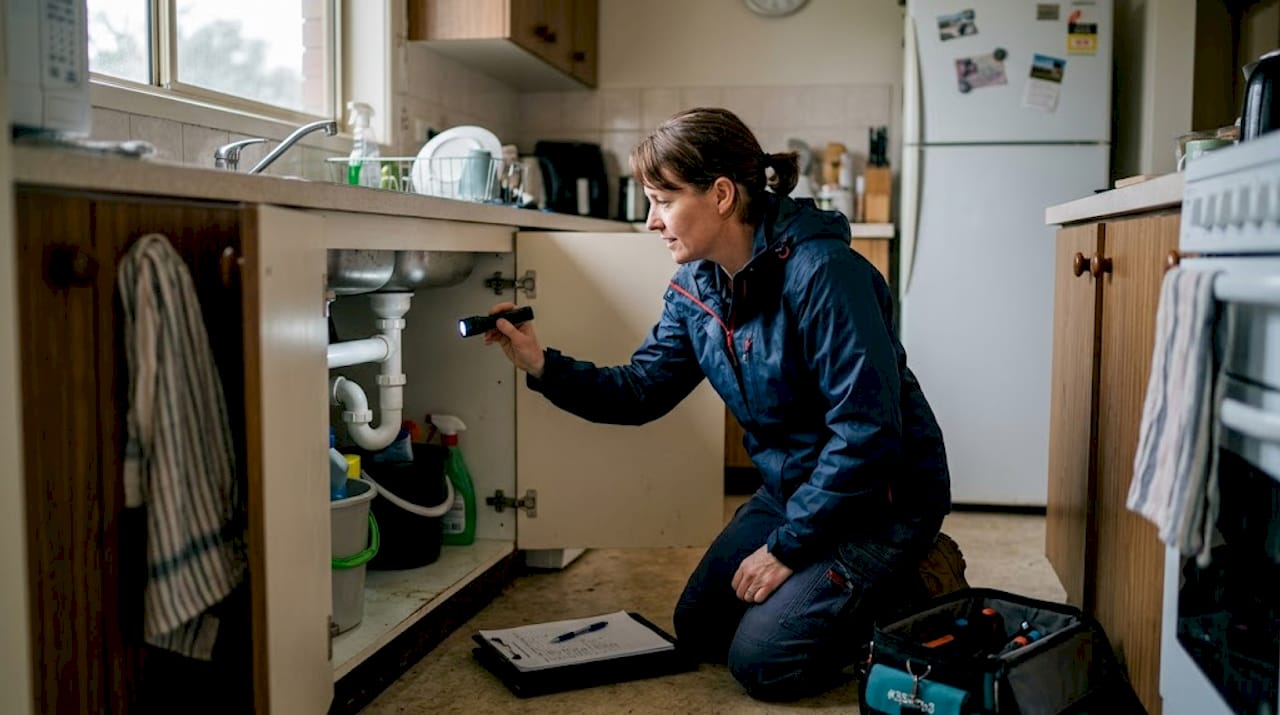
As a first home buyer, attending a property inspection is not just a formality. It is your opportunity to spot potential problems before they become your financial responsibility. Look for signs of moisture, check the condition of the roof and foundations, and ask the agent direct questions about the property’s history.
The First Home Grant offers up to $10,000 per person for KiwiSaver contributors, with even higher amounts available for new builds. Knowing this before you search helps you prioritise properties that maximise the support you are entitled to.
Pro Tip: Always request a Land Information Memorandum (LIM) report from the local council before making an offer. It reveals consenting history, flood zones, and any legal issues attached to the land that could affect your purchase.
Applying for mortgage and navigating offers
Having found a home that ticks your boxes, it is time to secure your finance and put forward a compelling offer. This stage requires careful attention to detail, and it is where the guidance of a mortgage adviser becomes genuinely valuable.
Step-by-step mortgage application process:
- Gather all financial documents and confirm your KiwiSaver and grant eligibility.
- Approach a mortgage adviser or lender for a pre-approval assessment.
- Choose your mortgage type: fixed, variable, or a combination of both.
- Submit your full application with supporting documentation.
- Wait for formal approval, which typically takes five to ten working days.
- Once approved, work with your solicitor to prepare your offer documents.
Choosing the right mortgage structure is more nuanced than most buyers realise. A fixed rate gives you certainty over repayments for a set term, which is helpful when budgeting tightly. A variable rate can move with market conditions, sometimes saving you money but also carrying more risk. Many buyers opt for a split approach, fixing part of their loan while keeping a portion variable for flexibility.
Government schemes can significantly change your deposit picture. 5% deposit mortgages are possible for eligible buyers through Kāinga Ora, with income caps of $95,000 for individuals and $150,000 for couples. Understanding how your KiwiSaver withdrawal and First Home Grant interact with your deposit is critical before you submit any offer. Explore the best Kāinga Ora home loan options to understand which lenders participate in the scheme.
“Understanding your full financial picture before making an offer puts you in a far stronger negotiating position and reduces the chance of your offer falling through.”
When making an offer, your solicitor will prepare a sale and purchase agreement. You can include conditions such as finance approval and a satisfactory building report. These conditions protect you if something unexpected arises. Review KiwiSaver tips for buyers to ensure your withdrawal timing aligns with your settlement date.
Pro Tip: Get your mortgage pre-approval before attending auctions. Auction sales are unconditional, meaning you cannot add a finance clause. Without pre-approval, bidding at auction is a significant financial risk.
Final checks, settlement, and moving in
Once your offer is accepted and your mortgage is confirmed, you are in the home stretch. This final stage is about careful verification, coordination, and making sure every piece is in place before settlement day.
Legal and settlement checklist:
- Confirm your solicitor has received and reviewed all title documents
- Verify your KiwiSaver withdrawal application has been submitted and processed
- Confirm First Home Grant payment has been arranged with Kāinga Ora
- Arrange home and contents insurance to be active from settlement date
- Organise utility connections (power, internet, gas) ahead of your move
- Complete a final property inspection the day before settlement
- Confirm the settlement amount with your solicitor and lender
The KiwiSaver first home withdrawal requires at least 3 years of contributions before you can access your funds. Submit your withdrawal application well in advance of settlement, as processing can take up to ten working days. Delays here can push back your settlement date, which causes stress for everyone involved.
There are also different types of KiwiSaver withdrawals available, and understanding which one applies to your situation ensures you access the right amount at the right time.
“Settlement day is the finish line, but the real work happens in the two weeks before it. Stay organised, communicate with your solicitor daily, and confirm every payment well ahead of time.”
Once settlement is complete, your solicitor will confirm the title transfer and hand over the keys. Take a moment to celebrate. You have just achieved something significant.
Pro Tip: Arrange your home insurance before settlement day, not after. Most lenders require proof of insurance as a condition of releasing funds, and some policies take 24 hours to activate.
What most first home buyers get wrong and how to get it right
After working with first home buyers across Auckland and beyond, we have seen the same patterns repeat. The biggest mistake is waiting to save a larger deposit when government schemes already make a 5% deposit achievable. Buyers spend years saving while property values continue to rise, effectively running on a treadmill.
Another common oversight is treating government schemes as an afterthought rather than a starting point. The First Home Grant and Kāinga Ora scheme can fundamentally change what is possible for you, but only if you understand the eligibility rules early enough to plan around them.
Documentation gaps are also surprisingly common. Buyers arrive at the application stage missing key paperwork, which delays approvals and sometimes costs them properties they loved. Start your document checklist the moment you decide to buy.
The buyers who succeed are those who seek expert guidance early, ask questions without embarrassment, and treat the process as a project with clear milestones rather than a vague aspiration. That mindset shift changes everything.
How Mortgage Managers can help you buy your first home
Navigating the home buying process alone is possible, but it is a lot harder than it needs to be. At Mortgage Managers, we act as your personal mortgage adviser, helping you understand every option available and matching you with the right lender for your situation.

We are based in Hobsonville and work with first home buyers across Auckland, the North Shore, West Auckland, and remotely throughout New Zealand. Understanding the role of a mortgage adviser means knowing you have someone in your corner who works for you, not the bank. Whether you are just starting out or ready to make an offer, our expert mortgage brokers are here to guide you through every step with clarity and confidence.
Frequently asked questions
How much deposit do I need to buy my first home in New Zealand?
You may only need a 5% deposit if you are eligible for the Kāinga Ora First Home Loan scheme, which sets income caps and requires a bank application through a participating lender.
Can I use my KiwiSaver for a home deposit?
Yes, after contributing for at least 3 years to KiwiSaver, you can withdraw your savings to put towards your first home deposit, subject to eligibility conditions.
What government grants are available for first home buyers?
You may qualify for the First Home Grant, which offers up to $10,000 per person for KiwiSaver contributors, with higher amounts available if you are purchasing a new build.
What are the main steps to buy a house in New Zealand?
Get your finances ready, search for suitable homes, check eligibility for Kāinga Ora grants and KiwiSaver support, attend inspections, apply for a mortgage, make a conditional offer, confirm legal documents, and complete settlement.
Recommended
- Step-by-step first home buyer guide for New Zealanders
- First Home Buyers Guide | Mortgage Managers
- First-time buyer workflow: Step-by-step guide for Auckland homes
- Find Our 7 Essential First Home Buyer Tips for 2026
- Essential residential moving checklist: streamline your move