
TL;DR:
- Shared ownership allows buyers to co-purchase properties with lower deposits, making homeownership more accessible.
- It involves gradually increasing ownership (“staircasing”) over time, with significant costs including fees and ongoing payments.
- Success depends on financial discipline, understanding scheme restrictions, and having a clear exit plan.
Saving a 20% deposit while paying rent can feel like running up a down escalator. For many first home buyers in New Zealand, the numbers simply don’t stack up, and the dream of owning a home keeps sliding further away. But here’s what most people don’t realise: you don’t always need to go it alone. Shared ownership in NZ lets you co-purchase a property with a government or private provider, meaning you need a smaller deposit and can get your foot in the door sooner. This guide walks you through how it works, who qualifies, and what to watch out for before you sign anything.
Table of Contents
- What is shared ownership and why does it matter?
- Understanding government-backed and private shared ownership schemes
- Eligibility rules, the application process, and key conditions
- Potential pitfalls, risks, and how to decide if shared ownership is right for you
- Our take: What most guides miss about shared ownership in New Zealand
- Next steps: Get expert help with shared ownership and home loans
- Frequently asked questions
Key Takeaways
| Point | Details |
|---|---|
| Lower deposit barrier | Shared ownership means you can buy a home with as little as a 5% deposit in New Zealand. |
| Multiple scheme options | Both government and private providers offer routes to co-buy a home, with different terms and target buyers. |
| Key eligibility rules | You must meet income, residency, and credit criteria and plan to live in the home long-term. |
| Beware of hidden costs | Look out for extra fees, staircasing charges, and restrictions before you sign up. |
| Long-term planning is crucial | Success relies on financial discipline and knowing your exit plan before you commit. |
What is shared ownership and why does it matter?
Shared ownership is exactly what it sounds like. You buy a portion of a home, and a scheme provider buys the rest alongside you. You live in the property as your primary home, pay your mortgage on your share, and cover all the ownership costs. Over time, you aim to buy out the provider’s share until you own the whole thing outright.
In New Zealand, shared ownership schemes primarily include government-backed options like Kāinga Ora’s Progressive Home Ownership fund, as well as private providers such as YouOwn, Housing Foundation, and Habitat for Humanity. Each model works a little differently, but the core idea is the same: lower the barrier to entry so more Kiwis can own a home.
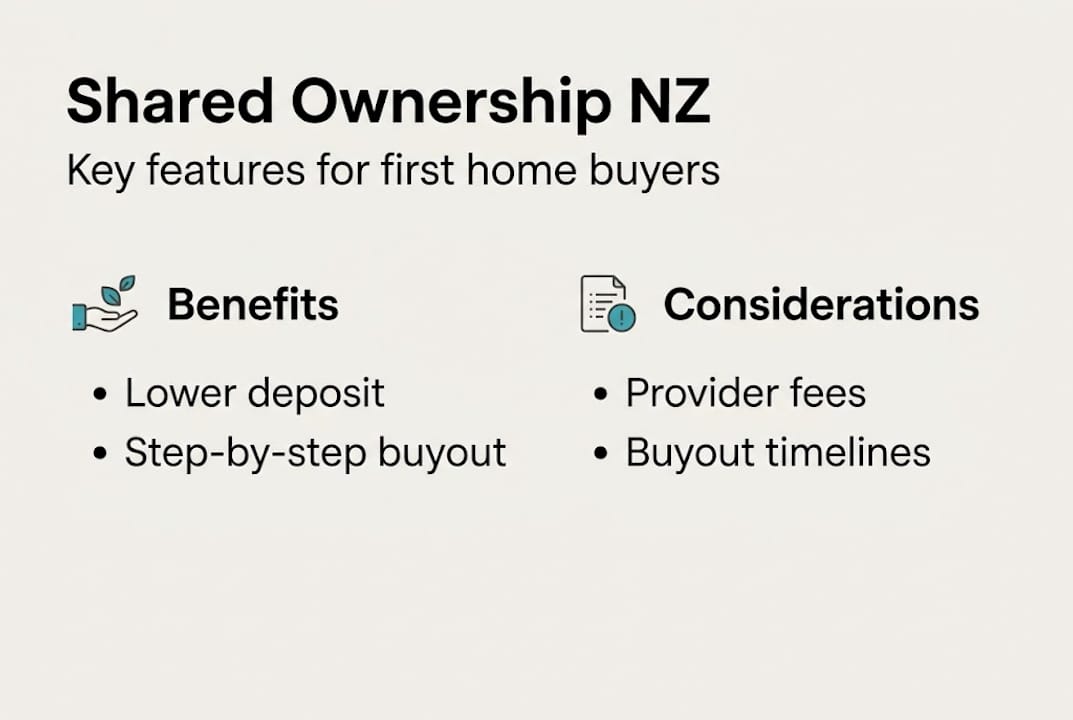
Here’s a quick look at how the main models compare:
| Scheme | Provider type | Min. deposit | Max. provider share | Buyout timeline |
|---|---|---|---|---|
| Kāinga Ora / PHO | Government | 5% | 25% or $200k | Up to 25 years |
| YouOwn | Private | 5% | 40% | Flexible |
| Housing Foundation | Non-profit | 5% | Varies | Structured |
| Habitat for Humanity | Non-profit | Varies | Varies | Case by case |
The concept of “staircasing” is central to shared ownership. This is the process of gradually increasing your ownership share over time, usually by purchasing additional portions as your income and savings grow. Think of it as climbing a property ladder one rung at a time, rather than trying to leap to the top in one go.
Who does this help most? Primarily, it’s designed for first home buyers who are shut out by deposit requirements and high property prices. It’s a genuine game-changer for families on modest incomes who are otherwise stuck in the rental cycle.
“Shared ownership schemes have opened doors for households that would have otherwise waited years longer to own a home. The key is understanding the commitment you’re making before you step through that door.”
The Progressive Home Ownership fund has delivered over 1,176 settled homes as of March 2026, which tells you this isn’t a niche experiment. It’s a real pathway that’s working for thousands of New Zealand families.
Now that you know why shared ownership is worth a look, let’s break down the different types available.
Understanding government-backed and private shared ownership schemes
Having outlined the overall models, it’s time to dig deeper into how these key providers work and what makes each one unique.
The Kāinga Ora scheme sits under the government’s $400 million Progressive Home Ownership fund. Under this arrangement, buyers contribute a minimum 5% deposit, with Kāinga Ora contributing up to 25% of the purchase price or $200,000, whichever is lower. Both parties are listed as tenants in common on the title. Buyers are expected to buy out Kāinga Ora’s share within 15 years, and must do so within 25 years at the latest. Annual reviews are conducted with a case manager to track progress.
The PHO fund has contracted 1,179 homes through Kāinga Ora, with 1,176 settled as of March 2026. Other providers under the fund include Housing Foundation (223 contracted, 126 settled) and Habitat for Humanity, with a focus on Māori, Pacific peoples, and families in greatest need.
Here’s a step-by-step of the general application process:
- Check your eligibility against the scheme’s income and residency criteria.
- Get pre-approval from a lender who accepts shared ownership applications.
- Find a property that meets the scheme’s requirements.
- Apply to the scheme provider with your financial documents.
- Receive a co-ownership agreement and have it reviewed by a solicitor.
- Complete settlement and move in.
- Attend annual reviews and plan your staircasing schedule.
Private schemes like YouOwn operate differently. They tend to target buyers who earn too much for government schemes but still can’t meet standard deposit requirements. YouOwn charges an ongoing fee (currently around 5.95% per annum on their equity share), which is worth factoring into your long-term cost calculations.

Pro Tip: Before you choose a scheme, confirm which lenders will accept it. Not all banks and non-bank lenders support every shared ownership arrangement, and being pre-approved for the wrong scheme can cost you time.
If you’re unsure where to start, reading through a solid first home buyers guide can help you build a clearer picture before you approach any provider.
Eligibility rules, the application process, and key conditions
Once you know which scheme might suit, your next questions are: can I apply, and what’s involved?
Eligibility varies by scheme, but for Kāinga Ora-backed options, the general requirements are:
- New Zealand citizen or permanent resident
- First home buyer, or a “second-chancer” who no longer owns property
- Household income under $130,000 per year (this can vary by scheme and location)
- Good credit history with no recent defaults or insolvency
- Commitment to living in the property as your primary residence for at least three years
- Ability to service a mortgage on your share of the property
The income cap is one that catches people off guard. It’s not just about your base salary. Rental income, overtime, and other regular earnings can all be counted, which sometimes pushes applicants over the threshold unexpectedly.
Here’s what the application journey typically looks like:
- Gather your financial documents: payslips, bank statements, tax returns, KiwiSaver balance.
- Get a credit check done early so you can address any issues before applying.
- Speak with a mortgage adviser who understands Kāinga Ora loan eligibility and can identify the right fit.
- Submit your application to the scheme provider with all supporting documentation.
- Await approval and work with your adviser to secure your mortgage.
- Review the co-ownership agreement carefully with a solicitor before signing.
A condition that surprises many buyers is that you, not the provider, are responsible for all ownership costs. That includes rates, insurance, maintenance, and body corporate fees if applicable. The provider simply holds an equity stake; they’re not your landlord.
Pro Tip: Your income limit and eligibility can shift depending on your location or family size. Some schemes apply different thresholds for regional areas versus Auckland. Always check the best Kāinga Ora options available to you based on your specific circumstances, not just the headline figures.
Understanding the NZ home loan process in full will also help you feel more confident going into any scheme application.
Potential pitfalls, risks, and how to decide if shared ownership is right for you
Before you get excited by the upsides, let’s walk through what could trip you up and how to make a clear-headed decision.
Shared ownership is genuinely helpful for many buyers, but it comes with strings attached. Here are the key risks to understand:
- Resale restrictions: You can’t simply sell whenever you like. The provider must consent to any sale, and in some cases has the right to buy back your share first.
- Staircasing costs: Each time you buy an additional share, you’ll pay for a new property valuation and legal fees. These costs add up over time.
- Joint liability: As co-owners on the title, disputes on exit or sale require agreement from all parties, which can complicate things if your circumstances change.
- Maintenance responsibility: You carry all internal maintenance costs, while structural issues may fall to the provider depending on the agreement.
- Lender limitations: Not all lenders will finance a shared ownership purchase, which can limit your mortgage options and potentially affect your interest rate.
“Shared ownership is a powerful tool, but it works best for buyers who go in with clear eyes, a solid savings plan, and a realistic timeline for buying out their co-owner’s share.”
The mortgage approval guide can help you understand what lenders look for when assessing a shared ownership application.
A quick checklist to help you decide if shared ownership suits you:
- You have at least 5% of the purchase price saved.
- You plan to live in the property long-term, not flip it.
- You have stable income and a realistic plan to increase your ownership share.
- You’ve compared the total cost of scheme fees against a standard mortgage.
- You’ve had a solicitor review the co-ownership agreement.
One insight worth sitting with: in private schemes, an ongoing fee of around 5.95% on the provider’s equity share can quietly erode your savings benefit if property values don’t grow strongly or if you hold the arrangement for only a short period.
Our take: What most guides miss about shared ownership in New Zealand
Most articles about shared ownership spend a lot of time on the entry point and very little on the exit. That’s where we see buyers come unstuck.
Getting into a shared ownership arrangement is the easier part. The harder part is building the financial discipline to consistently buy out your provider’s share over 10 to 25 years. That requires a savings plan from day one, not something you figure out later. As co-ownership experience shows, success hinges on financial discipline for the buyout, not just getting through the front door.
We also think buyers underestimate the true cost of private schemes. A 5.95% annual fee on a provider’s equity share sounds manageable in year one, but over five or more years, that’s a significant sum. If property values in your area grow slowly, you may find the fee savings from a lower deposit are cancelled out entirely.
Our honest advice: treat shared ownership as a stepping stone, not a forever home. Go in with a clear plan for how you’ll staircase your ownership and what your exit looks like. The buyers who thrive in these arrangements are the ones who plan their finish line before they cross the start.
Pro Tip: Run the numbers on both a shared ownership arrangement and a standard mortgage with a smaller property. Sometimes buying a more modest home outright gives you more flexibility and lower long-term costs than a shared ownership deal on a bigger one.
Next steps: Get expert help with shared ownership and home loans
Navigating shared ownership is genuinely complex, and the stakes are high. Getting impartial, expert mortgage advice before you commit to any scheme can save you thousands and prevent costly mistakes down the track.

At Mortgage Managers, we work with first home buyers across Auckland, the North Shore, West Auckland, and remotely throughout New Zealand. We help you compare schemes, understand your true eligibility, and prepare a mortgage application that gives you the best chance of approval. Whether you’re ready to apply for your first home loan or just starting to explore your options, our NZ mortgage adviser team is here to guide you every step of the way.
Frequently asked questions
Do I still need a deposit with shared ownership?
Yes. Most schemes require at least a 5% deposit of the property’s purchase price, which you contribute upfront alongside the provider’s equity share.
Can I lose my home if I can’t buy out the provider’s share?
If you can’t complete the buyout within the required timeframe, which is up to 25 years under Kāinga Ora arrangements, you may be required to sell the property.
Is shared ownership only for first home buyers?
Mainly yes, but second-chancers who no longer own any property can access certain schemes, making it available to a broader group than many people realise.
What costs should I watch out for in shared ownership?
Beyond your mortgage, watch for staircasing valuations and fees, ongoing provider fees in private schemes, and all property maintenance and insurance costs, which fall entirely on you.
Can I sell my share whenever I want?
Not always. Resale requires provider consent and can be subject to conditions, so shared ownership offers less flexibility than standard freehold ownership when it comes to exiting the property.