
Stepping into the Auckland property market brings unique challenges for first-time investors, especially when questions about financing and shifting local conditions are front of mind. With lenders typically requiring a deposit of 20 to 30 percent for investment mortgages and rising competition across Auckland suburbs, understanding your financial position and market trends is the foundation for smart decision-making. This guide offers practical steps to help you review your finances, explore borrowing options and interpret market insights, so you can make confident investment choices.
Table of Contents
- Step 1: Assess Your Financial Readiness
- Step 2: Research Auckland Investment Property Markets
- Step 3: Explore Finance Options With Local Advisers
- Step 4: Inspect And Evaluate Potential Properties
- Step 5: Confirm And Complete Your Property Purchase
Quick Summary
| Key Takeaway | Explanation |
|---|---|
| 1. Assess Financial Readiness | Evaluate income, savings, debts, and cash flow before investing to understand your capacity and strategy. |
| 2. Research Auckland Markets | Investigate current market trends and suburb performances to find optimal investment opportunities. |
| 3. Explore Financing Options | Work with local mortgage advisers to identify suitable investment financing structures tailored for you. |
| 4. Conduct Thorough Inspections | Hire professionals for building inspections to avoid unexpected costs related to property defects. |
| 5. Finalise Purchase Steps | Carefully review legal documents and prepare for settlement to ensure a smooth property transfer. |
Step 1: Assess your financial readiness
Buying an investment property in Auckland requires careful financial planning and a thorough understanding of your current financial position. This step is crucial for determining whether you’re ready to enter the property investment market and what type of investment strategy will suit your circumstances.
To effectively assess your financial readiness, you’ll need to conduct a comprehensive review of your current financial health. Start by gathering detailed information about your income, savings, debts, and credit history. Investment mortgage lending criteria in New Zealand typically require specific financial benchmarks that investors must meet. Here are key aspects to evaluate:
- Current annual income and stability of earnings
- Total savings and available deposit (most lenders require 20-30%)
- Existing debt levels and credit score
- Cash flow capacity for potential mortgage repayments
- Additional funds for property maintenance and unexpected expenses
Carefully review your bank statements, tax returns, and financial records to create an accurate picture of your financial situation. Consider consulting a professional mortgage adviser who specialises in investment property financing to get a detailed assessment of your borrowing capacity.
Your financial readiness isn’t just about having a deposit – it’s about demonstrating sustainable financial management and investment potential.
Preparing a detailed financial overview will help you understand your true investment capabilities and identify any areas requiring improvement before approaching lenders.
Pro tip: Request a free credit report and address any potential issues or discrepancies before applying for an investment mortgage to improve your approval chances.
Step 2: Research Auckland investment property markets
Researching the Auckland property market is a critical step in your investment journey, providing the insights needed to make informed decisions about potential real estate investments. Understanding current market trends, suburb performance, and investment potential will help you develop a strategic approach to property acquisition.
Begin your research by examining comprehensive property market reports that offer detailed insights into Auckland’s real estate landscape. These reports typically provide crucial information such as:
- Average sale prices by suburb and property type
- Monthly sales volumes and market trends
- Rental market data and gross rental yields
- Emerging investment hotspots
- Historical price performance and growth rates
Expand your research beyond official reports by leveraging multiple information sources. Attend local property investment seminars, connect with experienced real estate agents specialising in investment properties, and explore online resources that offer in-depth market analysis. Pay particular attention to factors like infrastructure developments, population growth, and local economic indicators that could impact property values.
Not all suburbs are created equal – strategic research can uncover hidden investment opportunities in Auckland’s diverse property market.
Consider creating a spreadsheet to track and compare different suburbs, recording key metrics like median house prices, rental returns, and capital growth potential. This systematic approach will help you make data-driven investment decisions.
To help you evaluate Auckland suburbs for investment, compare these market indicators:
| Indicator | Definition | Impact on Investment |
|---|---|---|
| Median House Price | Typical sale price in the area | Affects affordability |
| Gross Rental Yield | Rent income as % of property value | Shows profitability |
| Capital Growth Rate | Price increase over time | Potential future returns |
| Population Growth | Rate of resident increase | Influence on demand |
Pro tip: Subscribe to multiple property market newsletters and set up Google Alerts for Auckland real estate to stay continuously informed about market shifts and emerging opportunities.
Step 3: Explore finance options with local advisers
Securing the right financing is a crucial step in your Auckland investment property journey, requiring specialised knowledge of the local mortgage landscape. Understanding the nuanced lending criteria for investment properties will help you navigate the complex world of property investment financing.
Start by exploring investment property loan strategies that are specifically tailored to property investors. Investment mortgages differ significantly from standard home loans, with unique requirements such as:
- Higher deposit requirements (typically 30%)
- Different lending criteria compared to owner-occupied properties
- Stricter assessment of potential rental income
- More comprehensive financial scrutiny
- Variable interest rates specific to investment properties
Consulting with a local mortgage adviser who understands Auckland’s property market can provide invaluable insights. These professionals can help you understand complex lending structures, compare different bank offerings, and identify the most suitable financing options for your specific investment goals.

Here’s a summary of common finance options for Auckland investment property buyers:
| Finance Option | Typical Deposit Required | Suitability | Key Benefit |
|---|---|---|---|
| Investment Mortgage | 30% | Most property investors | Higher loan amounts |
| Interest-only Loan | 20-30% | Cash flow-focused investors | Lower initial repayments |
| Line of Credit | Variable | Seasoned investors | Flexible access to funds |
| Joint Venture Financing | Negotiated | Partnership investors | Shared risks and resources |
Not all mortgage advisers are created equal – seek out specialists who have deep experience in investment property financing.
During your consultations, be prepared to discuss your financial situation comprehensively, including income stability, existing debts, credit history, and potential rental yields. This detailed approach will help advisers craft the most appropriate financing strategy for your investment objectives.
Pro tip: Request multiple financing scenarios from your mortgage adviser to understand how different loan structures might impact your long-term investment returns.
Step 4: Inspect and evaluate potential properties
Inspecting potential investment properties is a critical step in your Auckland real estate investment strategy, requiring a systematic and thorough approach to protect your financial interests. Your goal is to uncover any potential issues that could impact the property’s value and future maintenance costs.
Begin by scheduling a comprehensive building inspection for Auckland properties that covers all critical structural and functional aspects. A professional inspection will help you identify potential problems before making your investment. Key areas to focus on during your property evaluation include:
- Structural integrity of the building
- Plumbing and electrical system conditions
- Roof and exterior weathertightness
- Evidence of moisture damage or hidden defects
- Signs of previous repairs or maintenance issues
- Potential renovation or upgrade requirements
- Compliance with current building standards
During the inspection, accompany the professional and ask detailed questions about the property’s condition. Take comprehensive notes and photographs to support your evaluation. Pay special attention to areas that might require significant investment, such as roofing, foundation, and major system replacements.
Not all defects are immediately visible – a professional inspection can save you thousands in unexpected repair costs.
Carefully review the inspection report, considering both immediate repair needs and potential long-term maintenance expenses. Use this information to negotiate the purchase price or determine whether the property meets your investment criteria.
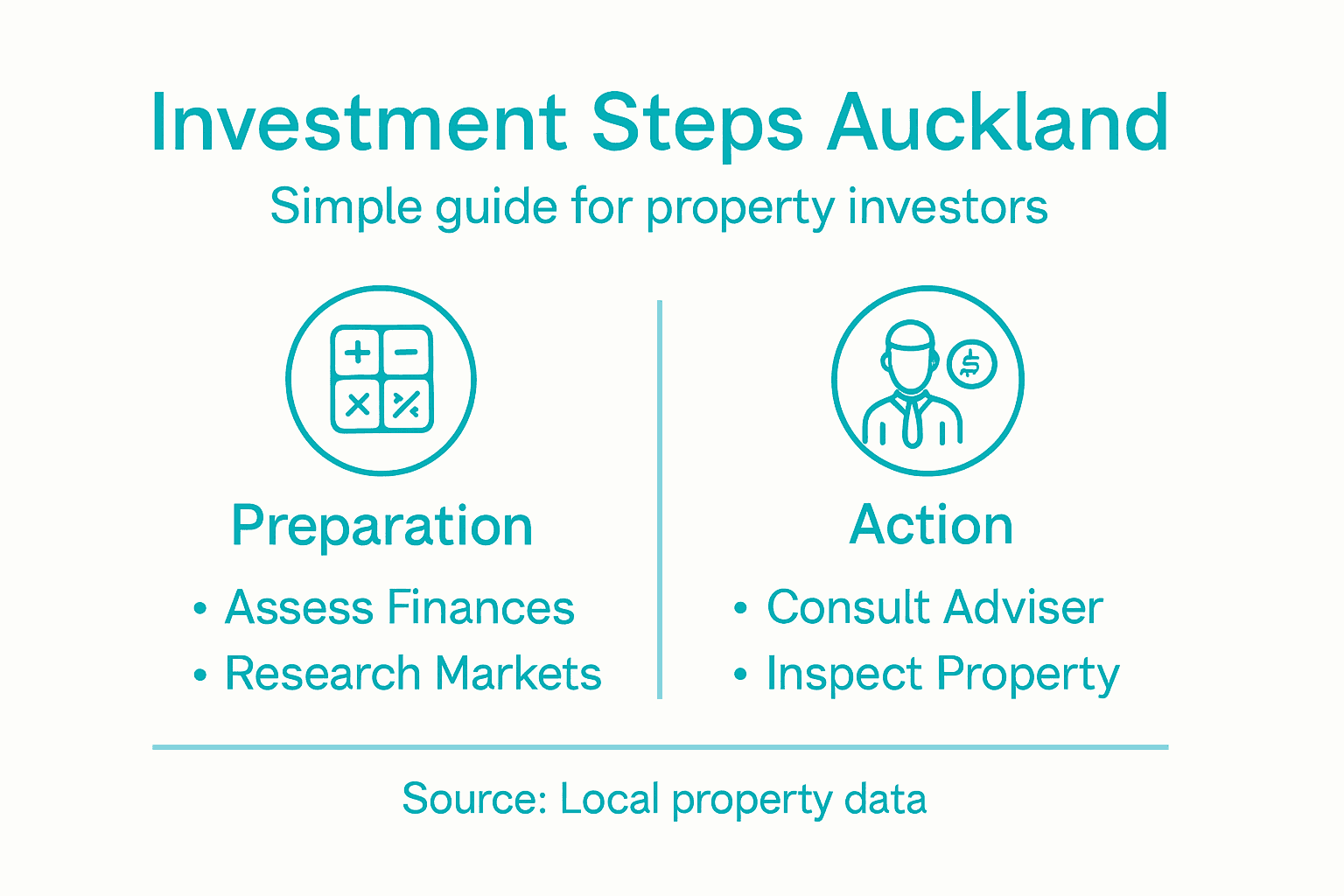
Pro tip: Request a detailed written report with photographic evidence and get quotes for any necessary repairs before finalising your investment decision.
Step 5: Confirm and complete your property purchase
Reaching the final stage of your investment property purchase requires meticulous attention to detail and strategic coordination with multiple professionals. Your goal is to navigate the legal and financial processes smoothly, ensuring a successful transfer of ownership.
Begin by carefully reviewing the property purchase agreement with your legal representative. This critical document outlines the terms and conditions of your investment, including:
- Specific purchase price and payment terms
- Settlement date and conditions
- Any special conditions or contingencies
- Inclusions and exclusions of the property sale
- Specific legal obligations for both parties
- Potential penalty clauses
Work closely with your solicitor and mortgage adviser to ensure all legal and financial requirements are met before the settlement date. This includes finalising your mortgage documentation, transferring funds, and completing all necessary property transfer paperwork.
The final stages of property purchase can be complex – professional guidance is crucial to avoiding potential pitfalls.
Prepare for settlement by conducting a final property inspection to confirm the property’s condition matches the agreed terms. Arrange for insurance to be in place from the settlement date and ensure all utility connections and rates transfers are coordinated.
Pro tip: Create a comprehensive settlement checklist and schedule a final meeting with your legal and financial advisers to review all documentation and confirm every detail before completing the purchase.
Take Control of Your Auckland Investment Property Financing Today
Navigating the complexities of investment property financing in Auckland demands expert guidance tailored to your unique financial readiness and investment goals. From understanding the higher deposit requirements to exploring specialised loan options and negotiating the best mortgage terms, Mortgage Managers offers personalised support to help you confidently face these challenges. With insights into local lending criteria and strategic advice on investment property loan strategies, we empower you to make informed decisions that align with the goals discussed in the Buying Investment Property Guide for Auckland Investors.

Ready to overcome hurdles around deposit size, credit requirements, or loan structure? Connect with our expert Auckland mortgage advisers based in Hobsonville who specialise in investment property financing. Visit Mortgage Managers now for professional advice that turns your property investment ambitions into reality. Take the next step towards securing your ideal finance solution by contacting us today and unlocking tailored pathways to your Auckland investment success.
Frequently Asked Questions
What steps should I take to assess my financial readiness for buying an investment property?
To assess your financial readiness, gather information about your income, savings, debts, and credit history. Calculate your available deposit and consider consulting a mortgage adviser to evaluate your borrowing capacity. This comprehensive assessment will help you understand your financial standing and inform your investment strategy.
How can I research the Auckland property market effectively?
Begin your research by examining property market reports for current trends, including average sale prices and rental yields. Attend seminars, connect with real estate agents, and utilise online analysis tools to deepen your understanding of specific suburbs and investment opportunities.
What are the key finance options available for investing in Auckland properties?
Key financing options include investment mortgages, interest-only loans, and lines of credit. Consult a mortgage adviser to explore these options and determine the best fit based on your financial situation and investment goals, ensuring you understand the deposit requirements and potential interest rates associated with each.
What should I look for during a property inspection?
During a property inspection, focus on the structural integrity, plumbing, and electrical systems. Hire a professional inspector to identify any potential issues, and take detailed notes and photographs to assess renovation needs or compliance with current standards, which can impact your investment decision.
How do I navigate the property purchase agreement in Auckland?
Carefully review the property purchase agreement with your legal representative to understand the purchase price, settlement date, and any special conditions. Prepare a checklist of requirements to ensure you meet all legal obligations before finalising the purchase of your investment property.
What final steps should I take before settling on my investment property?
Before settling, conduct a final inspection to confirm the property’s condition and ensure all documents are in order. Coordinate utility connections and obtain insurance effective from the settlement date to prepare for ownership transfer smoothly.
Recommended
- Discover the Basics: Your Guide to Property Investment in New Zealand – Mortgage Managers
- Keep My Existing Home As A Rental Property – Mortgage Managers
- Will This New Government Kill Your Property Investment Dream?
- Property Investment Loans: Solutions for Low Credit
- Luxury Real Estate | Austin’s Best Neighborhoods