
TL;DR:
- Settlement day is a critical milestone in New Zealand home purchases, involving legal and financial processes that require careful preparation. Understanding key timelines, coordinating documents, and ensuring funds are ready help facilitate a smooth transfer of ownership without delays or stress. Proactive management of inspections, KiwiSaver withdrawals, and post-settlement tasks ensures first home buyers can celebrate their new property confidently.
Settlement day is one of the most significant moments in your home buying journey, and for many Auckland first home buyers, it arrives wrapped in uncertainty. You have signed the contract, your offer has been accepted, and now a flurry of legal and financial steps stand between you and the keys to your new home. Knowing how to prepare for settlement well in advance is what separates a smooth handover from a stressful last-minute scramble. This guide walks you through every stage, from understanding key timelines to what happens after the dust settles.
Table of Contents
- Understanding settlement and key timelines in Auckland
- Preparing your finance, documents, and funds for settlement
- Final inspections and verifications before settlement day
- What happens on settlement day and immediate next steps
- The importance of proactive settlement preparation: expert insights
- How Mortgage Managers can support your settlement journey in Auckland
- Frequently asked questions
Key Takeaways
| Point | Details |
|---|---|
| Understand settlement timing | Settlement usually occurs 4–8 weeks after all conditions are met, with important processes managed by your lawyer. |
| Prepare finances early | Organise your mortgage documents and settlement funds well in advance to avoid delays and penalty interest. |
| Plan for KiwiSaver processing | KiwiSaver withdrawals take 10–15 days, so allow extra time within your settlement schedule. |
| Conduct final inspections | Perform a thorough walk-through 1–2 days before settlement to verify property condition and repairs. |
| Use expert support | Mortgage advisers can help first home buyers coordinate finance and settlement smoothly. |
Understanding settlement and key timelines in Auckland
Settlement is more than just collecting keys. In New Zealand home purchases, settlement is the point when your lawyer pays the balance purchase price to the seller’s lawyer, ownership transfers, and keys are released once payment is confirmed. It is a legal process coordinated between lawyers, lenders, and Land Information New Zealand (LINZ), the government body that registers property titles.
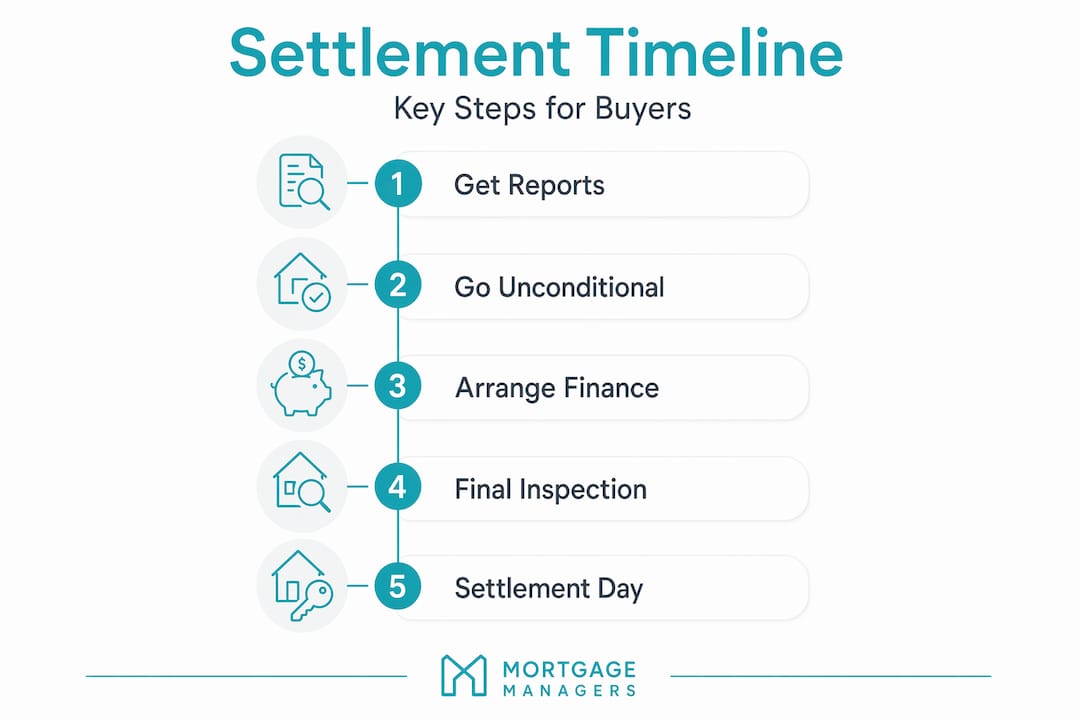
Understanding this flow matters because many first home buyers assume settlement is instant. It is not. Each party has steps to complete, and delays at any point can push your settlement back. Knowing who is responsible for what keeps you from feeling helpless on the day.
Key parties involved in your settlement:
- Your conveyancing lawyer handles document preparation, fund transfers, and title registration
- Your lender or bank draws down your mortgage funds on settlement day
- The seller’s lawyer receives payment and confirms the release of keys
- LINZ updates the title to reflect your ownership and any registered mortgage
When it comes to timing, pre-settlement conditions such as LIM reports and building inspections typically take 10 to 20 working days, with settlement usually occurring 4 to 8 weeks after going unconditional depending on your contract terms. Build this into your planning from day one.
| Stage | Typical timeframe |
|---|---|
| LIM and building report conditions | 10 to 20 working days |
| Going unconditional to settlement | 4 to 8 weeks |
| KiwiSaver withdrawal processing | 10 to 15 working days |
| LINZ title registration | Same day or next business day |
Getting familiar with this home buying guide for first buyers early in the process helps you see settlement as part of a broader journey rather than an isolated event. Understanding the basics and timelines of settlement lays the foundation for all the practical preparations ahead.
Preparing your finance, documents, and funds for settlement
With timelines clear, the next step is ensuring your finance and documents are fully set to meet settlement requirements without issues. This is where most first home buyers either set themselves up for success or inadvertently create delays.
One of the most overlooked aspects of settlement preparation in New Zealand is KiwiSaver timing. KiwiSaver withdrawals commonly take 10 to 15 days, so planning for a 5 to 6 week settlement period after going unconditional is strongly advised to avoid a rushed or failed settlement. Many first home buyers underestimate this and find themselves in a frustrating standoff between their KiwiSaver provider and their settlement date.
Your KiwiSaver withdrawal steps should be initiated as soon as your purchase goes unconditional. Do not wait for your lawyer to prompt you.
Finance and document checklist before settlement:
- Mortgage documents signed and returned to your lender
- All finance conditions formally satisfied and confirmed in writing
- KiwiSaver withdrawal application submitted with all required evidence
- Settlement funds confirmed with your lawyer (exact amount and payment method)
- Identification documents verified as per anti-money laundering requirements
- Insurance policy arranged to commence from settlement day
On the topic of funds, prepare settlement funds well in advance and confirm the exact payment amount and method with your lawyer. Late funds can result in penalty interest charged at the Reserve Bank rate plus 2%, which adds up quickly on an Auckland property purchase.
Pro Tip: Ask your lawyer for the exact settlement figure at least three working days before settlement day. This gives you time to arrange any shortfall and confirm the wire transfer without rushing.
It is also worth confirming that your home loan documents checklist is complete before you reach settlement week. Signed mortgage documents must be in order and all finance conditions satisfied before settlement day. A missing signature or unfulfilled condition can halt the entire process.
| Document or task | Who is responsible | When to complete |
|---|---|---|
| Mortgage document signing | You and your lender | At least 1 week before settlement |
| KiwiSaver withdrawal application | You | Immediately after going unconditional |
| Settlement funds transfer | You and your lawyer | Day before or morning of settlement |
| Insurance policy activation | You | Effective from settlement day |
Understanding the broader loan process overview can also help you anticipate what your lender needs and when, reducing back-and-forth delays in the final stretch.
Final inspections and verifications before settlement day
Now that your finance and documents are in order, it is time to confirm the property itself is in the condition you agreed to purchase it in. This step is one that first home buyers sometimes skip when they are excited or pressed for time. Do not skip it.
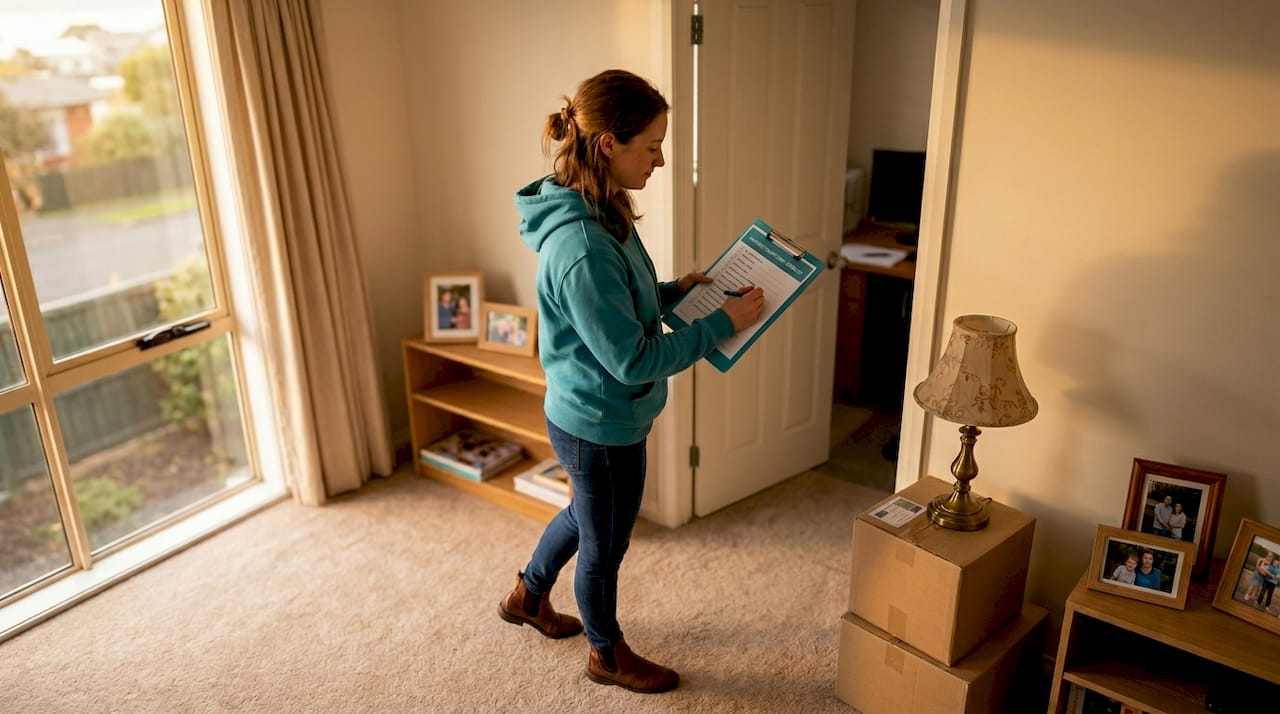
A final inspection is usually scheduled 1 to 2 days before settlement to verify the property condition matches the contract and that any agreed repairs are completed. Think of it as your last line of defence before ownership transfers.
Steps for a thorough pre-settlement inspection:
- Book your inspection early. Coordinate with your real estate agent to schedule the walk-through 1 to 2 days before settlement, not the morning of.
- Bring your building report. Review any noted items and check whether agreed repairs have been carried out to a satisfactory standard.
- Test everything. Run taps, flush toilets, check light switches, open and close windows and doors, and test all included appliances.
- Confirm inclusions are present. If the contract included chattels such as a dishwasher, heat pump, or blinds, verify they are still in the property.
- Document any concerns with photos. If something does not look right, photograph it immediately and note the time.
Pro Tip: Walk through the property with a printed copy of the chattels list from your sale and purchase agreement. Tick off each item as you go. This simple habit has saved more than a few buyers from discovering missing fixtures after settlement.
If repair work is incomplete or the property condition does not match your inspection agreements, notify your agent promptly. Your lawyer can then negotiate a remedy, whether that is a price reduction, a delayed settlement, or funds held in trust pending completion, without putting the entire settlement at risk.
Linking your inspection to your home buying guide final steps keeps everything coordinated and on schedule.
What happens on settlement day and immediate next steps
With inspections passed and funds ready, settlement day itself is largely managed by professionals on your behalf. Your job is to be available, responsive, and prepared for it to take most of the day.
Your lawyer transfers the balance to the seller’s lawyer, arranges ownership transfer and mortgage registration via LINZ, and confirms once settlement is complete so keys can be collected. That confirmation is your signal that you are now, officially, a homeowner.
What happens step by step on settlement day:
- Your lawyer receives the mortgage drawdown funds from your lender
- Your lawyer combines those funds with your deposit and any KiwiSaver withdrawal
- The total is transferred to the seller’s lawyer
- The seller’s lawyer confirms receipt and authorises key release
- LINZ updates the property title to your name and registers the mortgage
- Your lawyer notifies you that settlement is complete and keys are available
Delays can occur due to funding timing or unexpected issues identified by either lawyer. Keep your phone on and stay close to your email. Your lawyer is your primary point of contact, and home loan preparation done well in advance means fewer reasons for delay.
Immediate post-settlement tasks:
- Activate your home and contents insurance from settlement day
- Notify Auckland Council of the change of ownership for rates purposes
- Transfer electricity, gas, broadband, and water accounts into your name
- Retrieve and safely store your title documents and loan agreements
- Change the locks on your new home
| Post-settlement task | Timeframe |
|---|---|
| Insurance activation | Settlement day |
| Council rates notification | Within 1 week |
| Utility transfers | Within 1 to 2 weeks |
| Lock change | Settlement day or next day |
| Document filing | Within a few days |
Post settlement tasks like notifying council for rates and activating insurance from settlement day are easy to overlook when you are caught up in the excitement of getting the keys. Build a simple checklist and tick them off one by one.
One practical tip worth noting: plan your physical move-in for the day after settlement where possible. Settlement can technically complete at any time during business hours, and having removal trucks waiting for a call that has not come yet adds unnecessary stress to an already big day.
The importance of proactive settlement preparation: expert insights
Here is something we have observed working with Auckland first home buyers over many years. Most settlement problems are not caused by complex legal disputes or surprise property defects. They are caused by avoidable gaps in preparation, typically from assuming someone else is taking care of something.
Settlement readiness success mostly depends on information quality and tight preparation to reduce surprises by ensuring all key documents and facts are ready ahead of settlement. That means your lawyer can only do their job smoothly when you have done yours first.
What is your job exactly? In NZ conveyancing, the buyer’s role is mainly to be ready with funds timing, insurance cover, and available for final checks. Most of your leverage exists before settlement day, not on the day itself. Once the settlement machine is in motion, there is very little room to course-correct without financial consequences.
The buyers we see navigate settlement most confidently are those who treat it like a project. They set milestone dates for KiwiSaver applications, mortgage document signing, and insurance quotes, rather than waiting for their lawyer or adviser to chase them. That proactive mindset is the single biggest difference between a smooth settlement and a stressful one.
Generous time buffers are your best tool. Build in extra days for KiwiSaver clearances, allow three working days for funds to clear, and never schedule your removal truck for settlement morning. These are not overcautious habits. They are the habits of buyers who have settled without drama.
If you would like a clear picture of the full journey from application through to keys in hand, our first home buyer guide walks you through every stage in plain language.
How Mortgage Managers can support your settlement journey in Auckland
Knowing what to expect and how to prepare for settlement is essential, but expert guidance can make your journey smoother and considerably less stressful.

At Mortgage Managers, we are a locally owned and operated team of Auckland mortgage advisers based in Hobsonville, and we work with first home buyers across West Auckland, the North Shore, and throughout New Zealand. We help you navigate the complexities of KiwiSaver timing, mortgage document preparation, and lender coordination so your settlement timeline is realistic from the start. Our advisers act as your financial GPS from pre-approval through to settlement day, ensuring nothing slips through the cracks. If you are ready to get started or simply want to understand your options, talk to our Auckland mortgage brokers today, or take the first step and apply for your mortgage with our team’s support behind you.
Frequently asked questions
What exactly happens on settlement day in New Zealand?
On settlement day, your lawyer transfers the remaining purchase funds to the seller’s lawyer, and ownership transfers via LINZ with your mortgage registered. You receive the keys once payment is confirmed by all parties.
How long does KiwiSaver withdrawal take for first home buyers?
KiwiSaver processing takes 10 to 15 working days, so planning for a settlement around 5 to 6 weeks after going unconditional is strongly recommended to avoid delays.
What should I check during the final inspection before settlement?
During the final walk-through, typically 1 to 2 days before settlement, verify the property condition matches the contract, all agreed repairs are completed, and every included chattel is still present.
What happens if my settlement funds are late?
Late settlement funds can delay the entire process and trigger penalty interest at the Reserve Bank rate plus 2%. Arrange your funds at least three working days in advance and confirm the exact amount with your lawyer.
When should I arrange home insurance during the settlement process?
Arrange insurance to start from settlement day, as your mortgage lender requires cover in place once the risk of ownership transfers to you. Organise it at least a week before settlement to avoid any last-minute gaps.