
Over thirty percent of first home buyers in West Auckland face some form of credit default on their financial records. If you dream of owning a home but worry that past setbacks will hold you back, you are not alone. While australian lenders may turn away applicants with defaults, options exist for those who understand the process, take strategic steps, and work closely with advisers who specialise in complex credit situations.
Table of Contents
- Step 1: Check Your Credit File For Defaults
- Step 2: Improve Your Financial Position Strategically
- Step 3: Collate Relevant Supporting Documents
- Step 4: Demonstrate Genuine Savings And Stability
- Step 5: Apply With A Specialist Mortgage Adviser
- Step 6: Confirm Approval And Review Loan Terms
Quick Summary
| Essential Insight | Explanation |
|---|---|
| 1. Check your credit file for defaults | Obtain your credit report to review defaults and understand their impact on your mortgage prospects. |
| 2. Improve your financial position strategically | Create a budget that focuses on debt repayment while demonstrating responsible financial management to potential lenders. |
| 3. Collect supporting documents meticulously | Organise key financial records that showcase your financial journey and commitment to overcoming past defaults. |
| 4. Demonstrate genuine savings and stability | Show consistent savings and responsible financial habits over at least six months to assure lenders of your current stability. |
| 5. Work with a specialist mortgage adviser | Leverage the expertise of a mortgage adviser familiar with adverse credit scenarios to guide your application process effectively. |
Step 1: Check your credit file for defaults
Tracking down your credit history is the first critical step in understanding how defaults might impact your mortgage application. You need a comprehensive view of what lenders will see when assessing your financial background. Obtaining your credit file allows you to review any recorded defaults and understand their potential implications for your home loan journey.
To get started, request a free credit report from one of New Zealand’s credit reporting agencies such as Equifax or Centrix. These reports will detail any defaults registered against your name, including the date, amount, and type of default. Understanding adverse credit options can help you navigate potential challenges in your mortgage application process. When reviewing your report, pay close attention to the specifics of each default note the exact details, amounts, and dates of any recorded financial issues.
If you discover defaults on your credit file, don’t panic. Many mortgage advisers specialise in helping borrowers with complex credit histories. Gather all documentation related to these defaults and be prepared to explain the circumstances. Some defaults may be negotiable or able to be resolved, which could improve your mortgage prospects.
Expert advice: Always obtain an official copy of your credit report from multiple agencies to ensure you have a complete and accurate picture of your financial history.
Step 2: Improve your financial position strategically
Strategically improving your financial position becomes crucial when preparing for a mortgage application, especially if you have previous defaults. Your goal is to demonstrate financial responsibility and stability to potential lenders. This means creating a comprehensive plan that addresses your current financial challenges and showcases your commitment to financial recovery.

Start by improving your finances systematically through careful budgeting and expense management. Create a detailed monthly budget that prioritises debt repayment and savings. Focus on reducing unnecessary expenses and allocating more funds towards clearing outstanding debts. Consider consolidating multiple debts, negotiating with creditors for better repayment terms, and establishing a consistent payment history. This approach helps rebuild your credit credibility and shows lenders you are actively managing your financial challenges.
Implement a structured savings plan alongside your debt reduction strategy. Set up automatic transfers to a dedicated savings account, aiming to build an emergency fund and demonstrate financial discipline. Track your progress meticulously, keeping detailed records of debt repayments and savings contributions. These documented efforts can provide powerful evidence of your financial rehabilitation when discussing your mortgage application with advisers.
Expert advice: Maintain impeccable financial records and create a clear narrative about how you are actively improving your financial position.
Step 3: Collate relevant supporting documents
Gathering the right documentation is a critical step in strengthening your mortgage application, especially when you have previous credit defaults. Your objective is to compile a comprehensive portfolio that demonstrates financial transparency and rebuilding efforts. This collection of documents will help mortgage advisers understand your financial journey and assess your current creditworthiness.
Begin by organising key financial records including debt restructuring documentation that show proactive financial management. Essential documents include proof of income such as pay slips from the past three months, tax returns for the previous two years, and bank statements showing consistent savings and debt repayment patterns. If you have resolved previous defaults, gather settlement letters or evidence of payment agreements that illustrate your commitment to financial recovery.
Prepare additional supporting documents that provide context to your financial situation. These might include letters explaining past financial challenges, evidence of ongoing employment, references from employers, and documentation of any additional income sources. Organise these documents in a clear, chronological manner, making it easy for mortgage advisers to review your financial history comprehensively. Each document should tell part of your financial story demonstrating stability, responsibility, and forward momentum.
Expert advice: Create both digital and physical copies of all supporting documents and keep them meticulously organised for quick reference.
Here’s a summary of typical documents that strengthen a mortgage application with previous defaults:
| Document Type | Purpose | What It Demonstrates |
|---|---|---|
| Recent pay slips | Verifies regular income | Financial stability |
| Bank statements | Shows savings and repayments | Responsible financial habits |
| Settlement letters | Confirms cleared past defaults | Commitment to recovery |
| Debt restructuring record | Details proactive debt management | Willingness to resolve issues |
| Employer references | Supports stable employment | Predictable income source |
Step 4: Demonstrate genuine savings and stability
Showcasing genuine savings and financial stability is crucial when applying for a mortgage with a history of defaults. Lenders want to see concrete evidence that you have transformed your financial approach and can consistently manage financial responsibilities. Your goal is to create a compelling narrative of financial recovery and responsible money management.
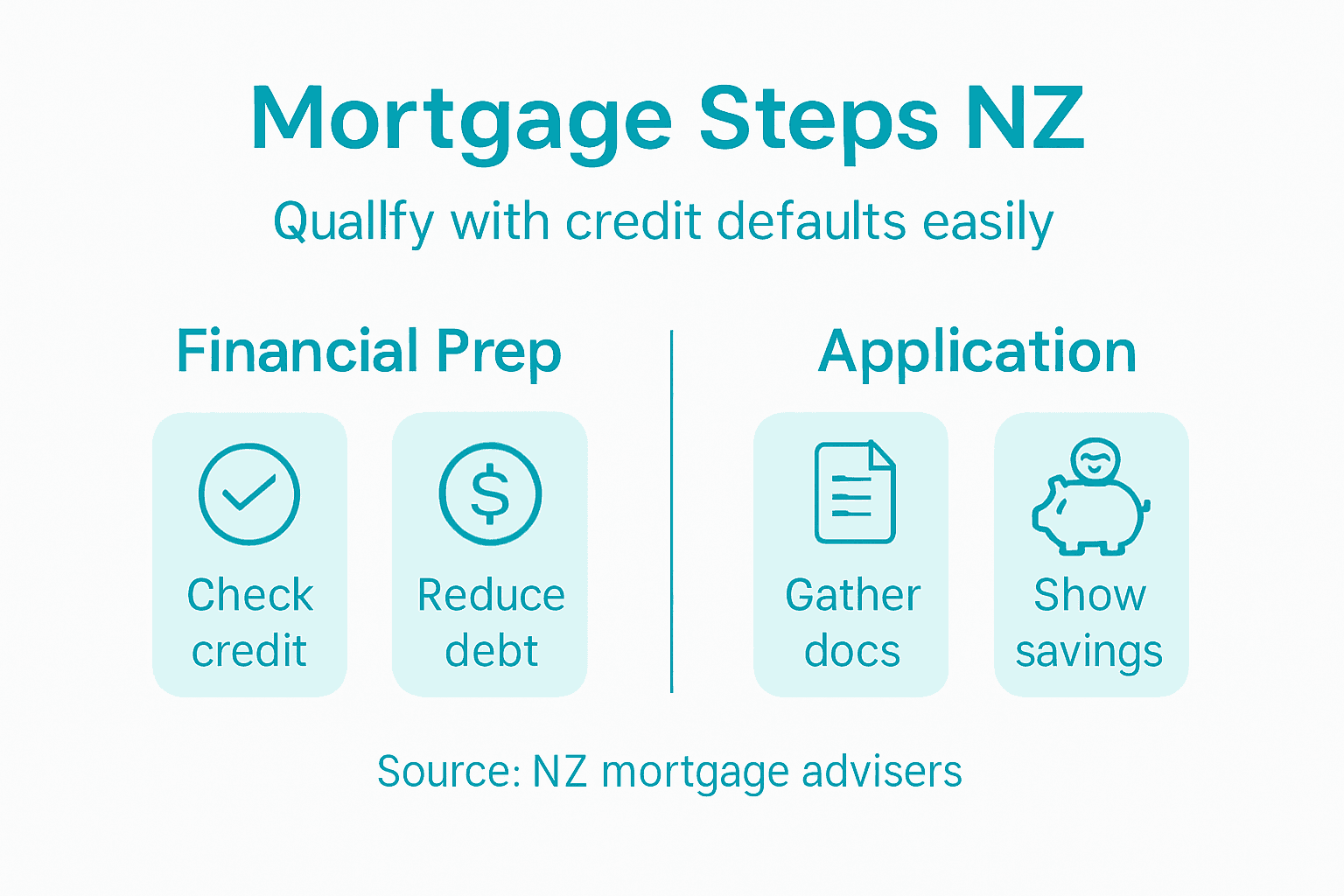
Start by establishing a robust savings pattern that tracks your financial goals with precision. Open a dedicated savings account and commit to regular deposits demonstrating consistent financial discipline. Aim to build a savings history that spans at least six months, with consistent monthly contributions that show predictable income allocation. Lenders will scrutinise your bank statements looking for regular savings patterns, so ensure your deposits are steady and represent a meaningful percentage of your income.
Beyond simple savings, focus on creating a comprehensive financial profile that reflects stability. This means maintaining a single bank account with a clean transaction history, avoiding overdrafts, and minimising unnecessary expenses. Provide evidence of consistent bill payments, show zero late payment penalties, and demonstrate a responsible approach to financial management. Your bank statements should tell a story of financial maturity progression from past challenges to current stability.
Expert advice: Treat your savings account like a critical financial strategy document that tells the story of your financial rehabilitation.
Step 5: Apply with a specialist mortgage adviser
Working with a specialist mortgage adviser is your strategic pathway to successfully navigating a mortgage application with previous defaults. These professionals understand the nuanced challenges of credit-impaired borrowers and can provide targeted guidance through a complex lending landscape. Your objective is to leverage their expertise to present the strongest possible application.
Seek out independent mortgage advice that specialises in adverse credit scenarios. A skilled mortgage adviser will conduct a comprehensive assessment of your financial situation, helping you understand which lenders are most likely to consider your application. They can provide crucial insights into preparing documentation, addressing potential red flags, and strategically positioning your financial recovery narrative. Look for advisers with proven experience in helping clients with credit defaults successfully secure mortgage funding.
During your initial consultation, be transparent about your financial history and prepared to discuss the circumstances surrounding your previous defaults. Provide all supporting documentation you have compiled, including evidence of financial rehabilitation, consistent savings, and improved financial management. Your mortgage adviser will help you craft a compelling application that demonstrates your commitment to financial responsibility and current stability.
Expert advice: Choose a mortgage adviser who specialises in adverse credit mortgages and has a track record of successfully helping clients with similar financial backgrounds.
Step 6: Confirm approval and review loan terms
Reaching mortgage approval is a significant milestone, especially when you have previously experienced credit defaults. This stage requires meticulous attention to detail to ensure you fully understand the financial commitment you are undertaking. Your primary focus is comprehensively reviewing all loan terms and conditions to protect your financial interests.
Carefully examine the mortgage approval documentation provided by your lender, paying close attention to interest rates, repayment schedules, and any specific conditions related to your credit history. Understand the difference between fixed and variable interest rates, and how they might impact your long term financial strategy. Scrutinise any special clauses or additional requirements that might be attached to your mortgage due to your previous credit challenges.
Compare fixed and variable interest rates often applied to borrowers with past defaults:
| Interest Rate Type | Key Features | Common Use Case |
|---|---|---|
| Fixed | Rate remains unchanged; set term | Predictable repayments |
| Variable | Rate can change with market fluctuations | Potential cost savings |
Consult with your mortgage adviser to walk through each section of the loan agreement, ensuring you comprehend every aspect of the terms. Ask detailed questions about potential future scenarios such as refinancing options, early repayment conditions, and what would constitute a breach of contract. Your adviser can help you identify any potential risks or unusual clauses that might affect your financial stability in the future.
Expert advice: Never sign mortgage documents without thoroughly understanding every single term and seeking professional guidance.
Take Control of Your Mortgage Journey Despite Defaults
If you are struggling to qualify for a mortgage due to previous defaults understanding the right steps to rebuild your credit and present a strong application is essential. The article highlights key challenges like addressing credit file defaults strategically, gathering proper documentation and demonstrating genuine savings and financial stability. Overcoming these obstacles takes expert guidance and a personalised approach that Mortgage Managers can provide.

Don’t let past credit setbacks stop you from owning a home in New Zealand. Our team of Auckland mortgage advisers specialises in helping clients with complex credit histories find tailored mortgage solutions that suit their unique situation. By working with us you gain access to expert independent mortgage advice and support every step of the way. Start improving your financial future today by visiting Mortgage Managers to book your consultation. Take the first step now towards turning your mortgage goals into reality.
Frequently Asked Questions
How can I check my credit file for defaults?
Start by requesting a free credit report from New Zealand’s credit reporting agencies, such as Equifax or Centrix. Ensure you review the details of any recorded defaults, including amounts and dates, to understand how they may affect your mortgage application.
What steps can I take to improve my financial position before applying for a mortgage?
Focus on creating a detailed budget that prioritises debt repayment and savings. By consolidating debts or negotiating with creditors, you can enhance your financial health—aim to establish a consistent payment history within the next three to six months.
What types of documents should I collate for my mortgage application with defaults?
Gather key financial records such as recent pay slips, bank statements, and settlement letters for resolved defaults. Organise these documents in chronological order to clearly demonstrate your financial journey and improvement efforts.
How can I demonstrate genuine savings to lenders?
Open a dedicated savings account and commit to depositing a regular amount each month for at least six months to show financial discipline. Aim to save a meaningful percentage of your income during this period to establish a solid savings narrative.
Why should I work with a specialist mortgage adviser?
A specialist mortgage adviser understands the challenges faced by borrowers with credit defaults and can provide tailored guidance throughout the application process. Be open about your financial history and provide documentation to help them craft a strong application on your behalf.
What should I look for in my mortgage approval documentation?
Carefully review the mortgage documents, paying close attention to interest rates, repayment terms, and specific conditions related to your credit history. Ensure you understand every clause and consult your mortgage adviser if anything is unclear before signing.