
Managing mortgage in 2025 is very important for any home owners.
Over half of Auckland first home buyers are turned away due to limited savings or bad credit, a challenge that echoes for many australian migrants settling in New Zealand. Understanding how lenders judge your finances is crucial because even small mistakes can delay your home ownership dreams. This guide highlights proven strategies, essential steps, and expert tips so you can approach lenders with confidence and move closer to holding your own keys in 2025.
Table of Contents
- Step 1: Assess Current Financial Situation And Credit
- Step 2: Identify Suitable Home Loan Options
- Step 3: Prepare Essential Documentation For Application
- Step 4: Apply With Tailored Lender Strategies
- Step 5: Verify Loan Approval And Future Repayment Plans
Quick Summary
| Key Insight | Explanation |
|---|---|
| 1. Assess Financial Situation First | Review your income, debts, and credit profile thoroughly to understand your mortgage eligibility. |
| 2. Explore Home Loan Options | Investigate various home loan types, focusing on those that best match your financial circumstances. |
| 3. Prepare Necessary Documentation | Collect and organise essential financial documents to streamline your mortgage application process. |
| 4. Tailor Your Application Strategy | Customise your loan application to highlight your financial stability to lenders, improving your chances. |
| 5. Verify Loan Approval Details Carefully | Scrutinise loan terms and create a repayment plan to stay financially secure after approval. |
Step 1: Assess current financial situation and credit
Assessing your financial situation is the foundational first step for Auckland first home buyers seeking mortgage approval in 2025. This crucial process involves taking a comprehensive snapshot of your current financial health and understanding how lenders will evaluate your mortgage readiness.
Start by gathering all relevant financial documents and conducting a thorough review of your credit profile. Home affordability data from Massey University highlights the importance of evaluating current income levels as part of determining mortgage potential. Calculate your total monthly income from all sources including salary, investments, and any additional revenue streams. Next, list all existing debts credit card balances, personal loans, student loans and determine your total monthly debt obligations.
Your credit score plays a pivotal role in mortgage approval. Understanding how credit scoring works will help you strategically position yourself for home loan success. Request a free credit report and carefully review it for any errors or areas requiring improvement. Lenders typically prefer credit scores above 650, so identify any negative marks and develop a plan to address them. This might involve paying down existing debts, resolving outstanding collections, or establishing a consistent payment history.
Hot Tip: Create a detailed spreadsheet tracking your income, expenses, and debt to gain crystal clear insight into your financial landscape and mortgage readiness.
Step 2: Identify suitable home loan options
Navigating home loan options can feel overwhelming for Auckland first home buyers, but understanding the available choices will help you make an informed decision about your mortgage strategy. The key is matching your financial situation with the most appropriate loan structure that supports your homeownership goals.
Government supported loan programs offer unique opportunities for first home buyers with diverse financial backgrounds. The First Home Loan program, for instance, allows buyers to enter the property market with as little as a 5% deposit through Kāinga Ora. These government initiatives are designed to reduce traditional barriers to homeownership by providing more flexible lending criteria. Explore different mortgage structures that align with your financial capacity, considering factors like fixed versus floating rates, loan terms, and repayment flexibility.
When comparing home loan options, assess key elements such as interest rates, establishment fees, flexibility of repayments, and potential break costs. Consider your long term financial goals and current income stability. Some loan types might offer better conditions for first home buyers, including lower deposit requirements or special introductory rates. Consult with mortgage advisers who can provide personalised guidance based on your specific financial profile and help you navigate the complex landscape of home loan products.
Hot Tip: Request loan pre approval before property hunting to understand your exact borrowing capacity and strengthen your negotiating position with sellers.
Here’s a comparison of popular home loan types available for Auckland first home buyers:
| Loan Type | Minimum Deposit Required | Interest Rate Structure | Typical Flexibility |
|---|---|---|---|
| First Home Loan (Kāinga Ora) | 5% | Fixed or floating | High flexibility |
| Standard Bank Mortgage | 10-20% | Fixed or floating | Moderate flexibility |
| Non-bank Lender Loan | 10-20% | Usually floating | Flexible criteria |
| KiwiSaver Assisted Loan | Varies (KiwiSaver funds) | Fixed or floating | Linked to KiwiSaver |
Step 3: Prepare essential documentation for application
Successfully securing a mortgage hinges on presenting a comprehensive and well organised documentation package that demonstrates your financial credibility to potential lenders. This critical step requires meticulous preparation and attention to detail to streamline your home loan application process.

Government resources recommend gathering a comprehensive set of documents that provide a complete picture of your financial profile. Essential documentation typically includes multiple components. Gather verified proof of income such as recent payslips, tax returns from the past two years, and employment confirmation letters. Collect detailed bank statements showing consistent savings patterns and demonstrating your ability to manage financial commitments. Your identification documents should include current passport or driver’s licence, proof of address, and any other relevant personal identification.
Compile a thorough record of your financial history including current assets and liabilities. This means preparing detailed statements about existing loans, credit card balances, investment portfolios, and any additional income streams. Financial service training emphasises the importance of accurate and organised paperwork in supporting lender decision making. Consider creating a digital folder with high quality scanned copies of all documents to ensure quick and efficient submission. Double check that all documents are current, clearly legible, and accurately reflect your financial standing.
Hot Tip: Create a dedicated document checklist and start gathering materials at least three months before your anticipated mortgage application to ensure comprehensive preparation.
Below is a summary of essential documents needed for a successful mortgage application:
| Document Type | Purpose | Common Examples |
|---|---|---|
| Income Proof | Verifies earnings | Payslips, tax returns |
| Identity Verification | Confirms applicant’s identity | Passport, driver’s licence |
| Bank Statements | Shows savings & cashflow | Last three months’ records |
| Financial History | Outlines assets and liabilities | Loan/balance statements |
Step 4: Apply with tailored lender strategies
Crafting a strategic mortgage application requires a nuanced approach that positions you as an attractive candidate to potential lenders. Your goal is to present a compelling financial narrative that demonstrates your reliability and readiness for homeownership in the Auckland property market.
First Home Loan applications demand careful preparation and strategic communication about your financial circumstances. Research each lender’s specific criteria and tailor your application accordingly. This means highlighting your stable income, consistent savings pattern, and ability to service mortgage repayments. Understand that different lenders have varying risk appetites and assessment frameworks. Some may be more flexible with first home buyers, while others maintain stricter lending standards. Non bank lenders offer alternative pathways for those who might not meet traditional bank requirements.
Prepare a comprehensive application package that goes beyond basic documentation. Include a clear explanation of your financial goals, demonstrate your understanding of mortgage responsibilities, and showcase any financial planning you have undertaken. Leverage government support mechanisms like KiwiSaver first home withdrawal programmes and first home grant options to strengthen your application. Consider seeking professional mortgage advice to help you navigate complex lending criteria and present your financial profile in the most favourable light possible.
Hot Tip: Create a personalised mortgage application summary that tells a compelling story about your financial responsibility and homeownership readiness.
Step 5: Verify loan approval and future repayment plans
Successfully obtaining loan approval marks a significant milestone in your first home buyer journey. Your focus now shifts to understanding and confirming the intricate details of your mortgage agreement and establishing a robust financial strategy for future repayments.
Government guidelines recommend carefully verifying all loan approval details including precise loan amount, interest rate, repayment schedule, and associated insurance premiums. Thoroughly review the official loan offer document, checking every clause and condition. Pay special attention to the interest rate type (fixed or floating), loan term length, and any potential penalties for early repayment or refinancing. Create a comprehensive spreadsheet that maps out your expected monthly repayments, accounting for potential interest rate fluctuations and your overall budget constraints.
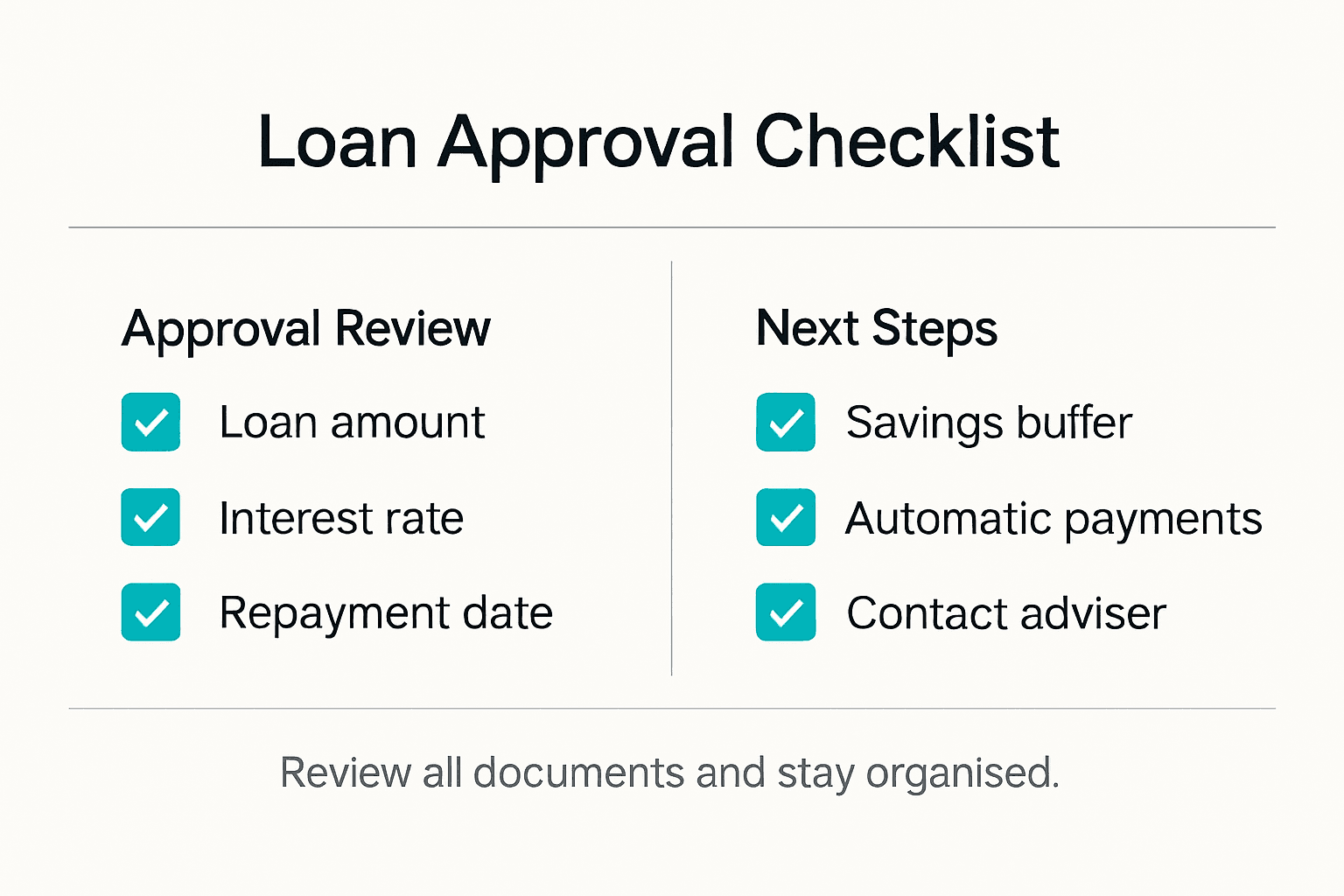
First home buyer programmes through Kāinga Ora encourage proactive financial management after loan approval. Consider enrolling in financial planning workshops or seeking professional mortgage advice to develop a sustainable long term repayment strategy. Build an emergency fund that can cover several months of mortgage payments to provide a financial buffer. Calculate your debt service ratios and ensure your monthly mortgage commitments remain comfortably within your income parameters. Regular financial reviews will help you stay on track and maintain your homeownership goals.
Hot Tip: Set up automatic loan repayments and create a separate savings buffer to protect against unexpected financial challenges.
Navigate Your Auckland First Home Journey with Confidence
Buying your first home in Auckland in 2025 comes with unique challenges like assessing your financial health, finding the right loan, and preparing complex documentation. This is what we mean when we say Managing mortgage in 2025 is important.
The pressure to understand credit scores, government supported loan programs, and repayment plans can feel overwhelming when trying to secure mortgage approval. You want clear guidance tailored to your needs so you feel confident every step of the way.
At Mortgage Managers, we understand these hurdles and specialise in Auckland mortgage advice that focuses on first home buyers’ goals. Whether you need help deciphering loan structures like the Kāinga Ora First Home Loan or want expert support preparing your application, our team based in Hobsonville is ready to guide you. We make the mortgage process simple and stress-free with personalised strategies designed to maximise your borrowing power and secure your future home.

Take control of your home loan journey today by connecting with one of our expert mortgage advisers. Visit us at Mortgage Managers to start a personalised conversation about your mortgage options and get tailored solutions for Auckland first home buyers. Your dream home awaits, and expert help is just one click away.
Frequently Asked Questions
How do I assess my financial situation for a mortgage in 2025?
To assess your financial situation, gather your income documents, credit report, and details about all debts. Create a detailed spreadsheet tracking your income, expenses, and debts to get a clear understanding of your mortgage readiness.
What home loan options are available for first home buyers in Auckland?
First home buyers in Auckland can consider various options, including the First Home Loan programme, standard bank mortgages, and loans from non-bank lenders. Research each type and speak with a mortgage adviser to find a structure that suits your financial situation and homeownership goals.
What essential documents do I need to prepare for my mortgage application?
You will need to provide proof of income, identification documents, bank statements, and a financial history outlining your assets and liabilities. Begin gathering these materials well in advance to ensure you have everything compiled by the time you want to apply.
How can I improve my chances of getting mortgage approval?
Improving your chances of mortgage approval involves tailoring your application to each lender’s criteria and presenting a clear financial narrative. Highlight your stable income and consistent savings; consider seeking professional assistance for personalised advice.
What should I do after receiving loan approval?
After receiving loan approval, carefully review the loan offer, including the interest rate and repayment terms. Set up a financial strategy for making repayments and consider building an emergency fund to cover several months of mortgage payments in case unexpected expenses arise.
How can I create a long-term repayment strategy for my mortgage?
To create a long-term repayment strategy, calculate your monthly budget and set up automatic repayments based on your income and expense patterns. Regularly review your financial situation and ensure that your monthly commitments remain manageable, ideally keeping debt service ratios below 30%.