
Finding the right deposit for a home loan can feel stressful for first-time buyers in Hobsonville, especially if savings are low or past credit issues linger. The challenge matters because lenders base their decisions on your deposit size, which affects your borrowing power and long-term costs. This guide will help you understand minimum deposit requirements in Auckland, what options exist for buyers with limited funds or bad credit, and how your deposit influences home loan approval.
Table of Contents
- What Minimum Deposit Means For Home Loans
- Standard Deposit Requirements In New Zealand
- Low Deposit Options And Who Qualifies
- Special Considerations For Bad Credit Buyers
- Costs, Risks, And How KiwiSaver Helps
Key Takeaways
| Point | Details |
|---|---|
| Minimum Deposits Are Essential | A minimum deposit generally required is 10-20% of the property’s value, indicating financial stability to lenders. |
| Larger Deposits Improve Loan Terms | Higher deposits can lead to lower interest rates and better borrowing potential, reflecting financial responsibility. |
| Low Deposit Options Exist | Programs like the First Home Loan and KiwiSaver facilitate home ownership for those with limited savings. |
| Bad Credit May Complicate Borrowing | Individuals with bad credit may face higher rates and stricter lending criteria, but can still explore alternative pathways to obtain a loan. |
What Minimum Deposit Means For Home Loans
A home loan’s minimum deposit represents the initial financial commitment required by lenders when purchasing residential property in Auckland and beyond. This upfront payment signals to financial institutions that you have the financial stability and discipline to manage a significant long-term mortgage.
Understanding minimum deposit requirements involves recognising how lenders assess residential property lending risks. Typically, most New Zealand banks expect borrowers to provide a minimum deposit ranging between 10-20% of the property’s total purchase price.
Key aspects of minimum deposits include:
- Demonstrates financial readiness to lenders
- Reduces overall loan-to-value ratio
- Indicates borrower’s commitment and savings capacity
- Helps determine lending risk and mortgage terms
Deposit size directly impacts your mortgage conditions. Larger deposits often translate to more favourable interest rates and increased borrowing potential. Lenders view substantial deposits as a sign of financial responsibility, which can unlock better loan terms and potentially lower ongoing mortgage costs.
To help clarify how deposit requirements influence loan terms, here’s a summary comparison:
| Deposit Size | Typical Interest Rate | Borrowing Potential | Risk to Lender |
|---|---|---|---|
| 10% Deposit | Higher | Limited | Elevated |
| 20% Deposit | Lower | Greater | Reduced |
| 30%+ Deposit | Most competitive | Highest | Minimal |
Pro tip: Start building your deposit early by creating a dedicated savings account and exploring first home buyer assistance programmes to accelerate your home ownership journey.
Standard Deposit Requirements In New Zealand
In New Zealand’s property market, standard deposit requirements play a crucial role in determining home loan accessibility. Home loan deposit standards typically range around 20% of the property’s total value, a benchmark that helps lenders manage financial risk while ensuring borrowers demonstrate serious financial commitment.
The standard deposit requirement impacts different buyer segments in unique ways:
- First-time homebuyers may find 20% challenging to accumulate
- Investors might need to provide larger deposits
- Self-employed individuals could face stricter deposit requirements
- Properties in high-value markets like Auckland might demand more substantial deposits
Most New Zealand banks and financial institutions have established consistent lending practices around deposit requirements. These requirements serve multiple purposes beyond simple risk mitigation. They help evaluate a borrower’s financial stability, assess their ability to manage ongoing mortgage payments, and provide a buffer against potential market fluctuations.
Deposit requirements are not just arbitrary numbers, but carefully calculated indicators of financial readiness and long-term lending sustainability.
Understanding these deposit standards requires considering multiple factors such as income levels, credit history, and current market conditions. While 20% remains the standard benchmark, some lenders might offer more flexible options for well-qualified borrowers or those participating in specific government home ownership programmes.

Pro tip: Create a dedicated high-interest savings account specifically for your home deposit to maximise your savings potential and demonstrate financial discipline to potential lenders.
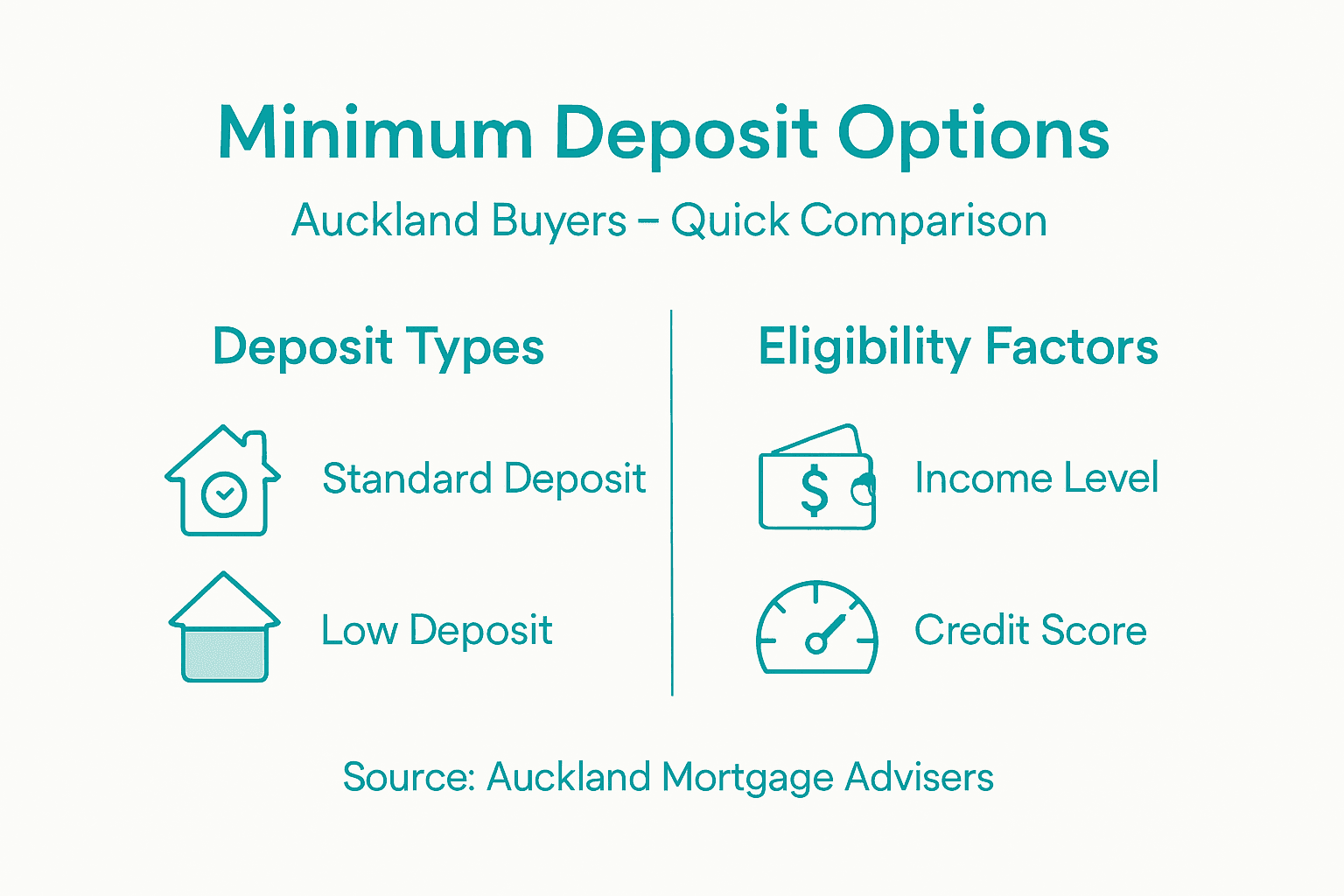
Low Deposit Options And Who Qualifies
Navigating low deposit home loan options in New Zealand requires understanding the specific pathways available for buyers with limited savings. Microfinance alternatives and ethical lending have emerged as crucial solutions for buyers traditionally excluded from mainstream mortgage markets.
Typical low deposit options include:
- First Home Loan programme (10% deposit)
- KiwiSaver first home withdrawal
- Government home start grants
- Welcome Home Loan scheme
- Low equity lending options from specific banks
Qualification for these programmes typically depends on several critical factors:
- Income thresholds
- Credit history
- Employment stability
- Property value limits
- First-time buyer status
Low deposit options are not one-size-fits-all solutions, but targeted financial pathways designed to make homeownership more accessible.
Understanding eligibility criteria is crucial. Most low deposit programmes require applicants to demonstrate financial responsibility, steady income, and a clean credit history. Lenders will closely examine your financial profile, including income consistency, existing debt levels, and potential future earning capacity.
For quick reference, here’s how popular low deposit home loan pathways differ in eligibility and support:
| Option | Minimum Deposit | Main Eligibility Requirement | Support Offered |
|---|---|---|---|
| First Home Loan Programme | 10% | NZ citizen, income threshold | Easier access |
| KiwiSaver Withdrawal | Varies | Fund participation, first home | Deposit boost |
| Home Start Grant | Up to $10,000 | Income, property value limits | Grant funding |
Pro tip: Obtain a detailed credit report and address any potential issues before applying for low deposit home loans to maximise your approval chances.
Special Considerations For Bad Credit Buyers
Bad credit doesn’t automatically disqualify you from homeownership, but it does create unique challenges in New Zealand’s mortgage landscape. Microfinance initiatives for low-income borrowers offer alternative pathways for those struggling with traditional lending requirements.
Key challenges for bad credit buyers include:
- Higher interest rates
- Stricter lending criteria
- Additional documentation requirements
- Potential need for larger deposits
- More intensive financial scrutiny
Lenders assess bad credit through multiple lenses:
- Overall credit score
- Specific credit event details
- Time since negative credit incidents
- Current financial stability
- Income consistency
Bad credit is a temporary financial state, not a permanent barrier to homeownership.
Understanding credit rehabilitation strategies is crucial. Potential strategies include demonstrating consistent income, clearing outstanding debts, providing comprehensive explanations for past credit issues, and potentially securing a guarantor to support your application.
Pro tip: Work with a mortgage broker specialising in bad credit scenarios to develop a targeted strategy for improving your lending prospects.
Costs, Risks, And How KiwiSaver Helps
Navigating home ownership involves understanding complex financial landscapes, with KiwiSaver emerging as a powerful tool for managing deposit challenges. Home loan affordability strategies highlight how government-backed savings schemes can significantly reduce initial purchase barriers.
Key risks and costs for home buyers include:
- Volatile interest rate fluctuations
- Potential market value depreciation
- Unexpected maintenance expenses
- Long-term financial commitment
- Complex lending criteria
KiwiSaver offers multiple advantages for first-time buyers:
- Allows partial withdrawal of retirement savings
- Government contributions boost savings
- Provides potential first home grant access
- Helps accumulate deposit faster
- Offers tax-efficient savings mechanism
KiwiSaver isn’t just a retirement tool, but a strategic pathway to homeownership.
Understanding the nuanced benefits requires careful financial planning. KiwiSaver can help mitigate risks by providing a structured savings approach, offering potential government subsidies, and creating a disciplined investment strategy specifically tailored for home acquisition.
Pro tip: Regularly review your KiwiSaver fund’s performance and consider switching to a more aggressive growth strategy to maximise your home deposit potential.
Take Control of Your Auckland Home Loan Deposit Today
Understanding the minimum deposit needed for your Auckland home purchase can feel overwhelming especially when juggling factors like interest rates, lending risks and finding the right low deposit options. If you are facing challenges such as meeting the 10 to 20 per cent deposit requirement or navigating complex lending criteria we can help simplify the process. Our mortgage advisers at Mortgage Managers specialise in providing personalised solutions that align with your financial readiness and home ownership goals.

Discover how our expert Auckland mortgage advisers based in Hobsonville support buyers just like you in overcoming deposit hurdles. By working with Mortgage Managers you gain access to tailored advice on deposit strategies, KiwiSaver utilisation and how to improve your borrowing potential. Don’t let uncertainty hold you back – get in touch now for a free consultation and start a clear path to your dream home with trusted mortgage guidance at Mortgage Managers. Learn more about how we can assist you at Mortgage Managers and secure your future in the Auckland property market.
Frequently Asked Questions
What is a minimum deposit for a home loan?
A minimum deposit for a home loan is the upfront amount that a borrower must pay to secure a mortgage, typically ranging from 10% to 20% of the property’s purchase price.
How does the size of a deposit impact mortgage interest rates?
Larger deposits often lead to lower interest rates as they reduce the loan-to-value ratio, indicating less risk for lenders, which can result in better borrowing conditions for the borrower.
What are the standard deposit requirements in New Zealand’s property market?
Standard deposit requirements in New Zealand generally hover around 20% of a property’s total value, although this can vary depending on the borrower’s circumstances, such as credit history and income levels.
Are there options for borrowers with a low deposit?
Yes, there are various low deposit options available, such as the First Home Loan programme and KiwiSaver first home withdrawal, aimed at assisting buyers with limited savings.