
Over 60% of australian buyers find saving for a home deposit one of their biggest financial hurdles. For anyone eyeing property in New Zealand, deposit requirements often set the pace and possibilities for homeownership dreams. Changes in lender guidelines are creating new opportunities, especially for first-time buyers. This guide unpacks the latest rules and practical ways australians can prepare, so you know exactly what deposits and options you might face.
Table of Contents
- Home Deposit Requirements Defined For NZ Buyers
- Minimum Deposit Amounts And Loan Options
- Low Deposit Loans And First Home Schemes
- KiwiSaver And Other Deposit Sources
- Lender Policies, Risks, And Avoidable Mistakes
Key Takeaways
| Point | Details |
|---|---|
| Home Deposit Requirements Are Evolving | Recent changes allow banks to offer loans with deposits as low as 5-10%, increasing access for first-time buyers. |
| Understanding Deposit Options Is Essential | Buyers can choose from standard deposits of 20%, to low deposit options of 10-15%, or less with specific loans. |
| KiwiSaver Is A Valuable Resource | First-home buyers can utilise KiwiSaver for deposit withdrawals, providing assistance in overcoming initial financial barriers. |
| Be Aware Of Lender Policies And Risks | Understanding strict lending criteria and financial implications is crucial to avoid costly mistakes in the home-buying process. |
Home Deposit Requirements Defined for NZ Buyers
Home deposit requirements in New Zealand represent the critical financial threshold that determines a buyer’s readiness to purchase property. At its core, a home deposit is the upfront, lump-sum payment a buyer provides to secure a mortgage, representing a percentage of the total property’s purchase price. While traditionally lenders expected buyers to provide a 20% deposit, recent regulatory changes are shifting these expectations.
The Reserve Bank’s recent lending guidelines are transforming deposit accessibility for New Zealand homebuyers. Starting December 1, 2025, banks can now issue up to 25% of their loans to owner-occupiers with deposits less than 20%, expanding opportunities for first-time buyers. This adjustment means more flexibility in mortgage approvals and potentially lower initial financial barriers.
Navigating home deposit requirements involves understanding several key components. Typical deposit ranges in New Zealand include:
- Standard Deposit: 20% of property value
- Low Deposit Options: 10-15% for first-time buyers
- High LVR Loans: Potentially available with deposits as low as 5-10%
Buyers should recognise that lower deposits often attract higher interest rates and potential mortgage insurance requirements. Low deposit home loans can provide entry points into property ownership, but careful financial planning remains crucial. Understanding your specific financial situation, credit history, and long-term affordability will determine the most suitable deposit strategy for your home purchasing journey.
Minimum Deposit Amounts and Loan Options
Minimum deposit amounts in New Zealand represent a critical factor in determining mortgage accessibility and lending potential. Traditionally, lenders have required buyers to provide a 20% deposit, which serves as a benchmark for loan approval and demonstrates financial stability. However, recent lending guidelines are reshaping the landscape of home loan opportunities.

The Reserve Bank’s evolving regulations now allow banks more flexibility in issuing loans to borrowers with lower deposits. This means first-time homebuyers can access mortgages with reduced upfront financial requirements. Low deposit home loans have become increasingly viable, with options ranging from 5% to 15% deposits, enabling more New Zealanders to enter the property market.
Typical deposit options in the New Zealand mortgage market include:
- Standard Deposit: 20% of property value
- First Home Buyer Deposit: 10-15% with potential government support
- Low Deposit Loans: 5-10% with specific lending criteria
Buyers should understand that lower deposits often come with additional considerations. These may include higher interest rates, mandatory mortgage insurance, and stricter lending assessments. Carefully evaluating your financial position, credit history, and long-term affordability remains crucial when exploring deposit options. Each deposit percentage represents a different risk profile for lenders, ultimately influencing the terms and accessibility of your home loan.
Low Deposit Loans and First Home Schemes
Navigating the path to homeownership can be challenging for first-time buyers, but New Zealand offers several innovative schemes to support property purchase. KiwiSaver first-home withdrawal options provide a critical financial lifeline for those struggling to accumulate a traditional deposit, enabling eligible members to leverage their retirement savings towards purchasing their first home.
To qualify for these schemes, certain criteria must be met. Withdrawal requirements stipulate that KiwiSaver members must have been actively contributing for at least three years and demonstrate a genuine intention to live in the purchased property. This approach ensures the programme supports genuine homeownership rather than investment opportunities.
Key first home buyer support mechanisms include:
- KiwiSaver Withdrawal: Up to entire saved balance
- First Home Grant: Up to $10,000 for eligible buyers
- First Home Loan: Reduced deposit requirements (often 5-10%)
There are options for low deposit home loans that can dramatically reduce the initial financial barrier to property ownership. These schemes recognise the challenges faced by first-time buyers, offering flexible pathways to transform homeownership from a distant dream into an achievable reality. Understanding these options requires careful research and potentially professional financial guidance to navigate the specific requirements and maximise potential support.
KiwiSaver and Other Deposit Sources
Building a home deposit requires strategic financial planning, with KiwiSaver emerging as a powerful tool for New Zealand homebuyers. UniSaver withdrawal options reveal that members can access both standard and locked savings accounts, including employer and personal contributions, creating a flexible pathway to property ownership.
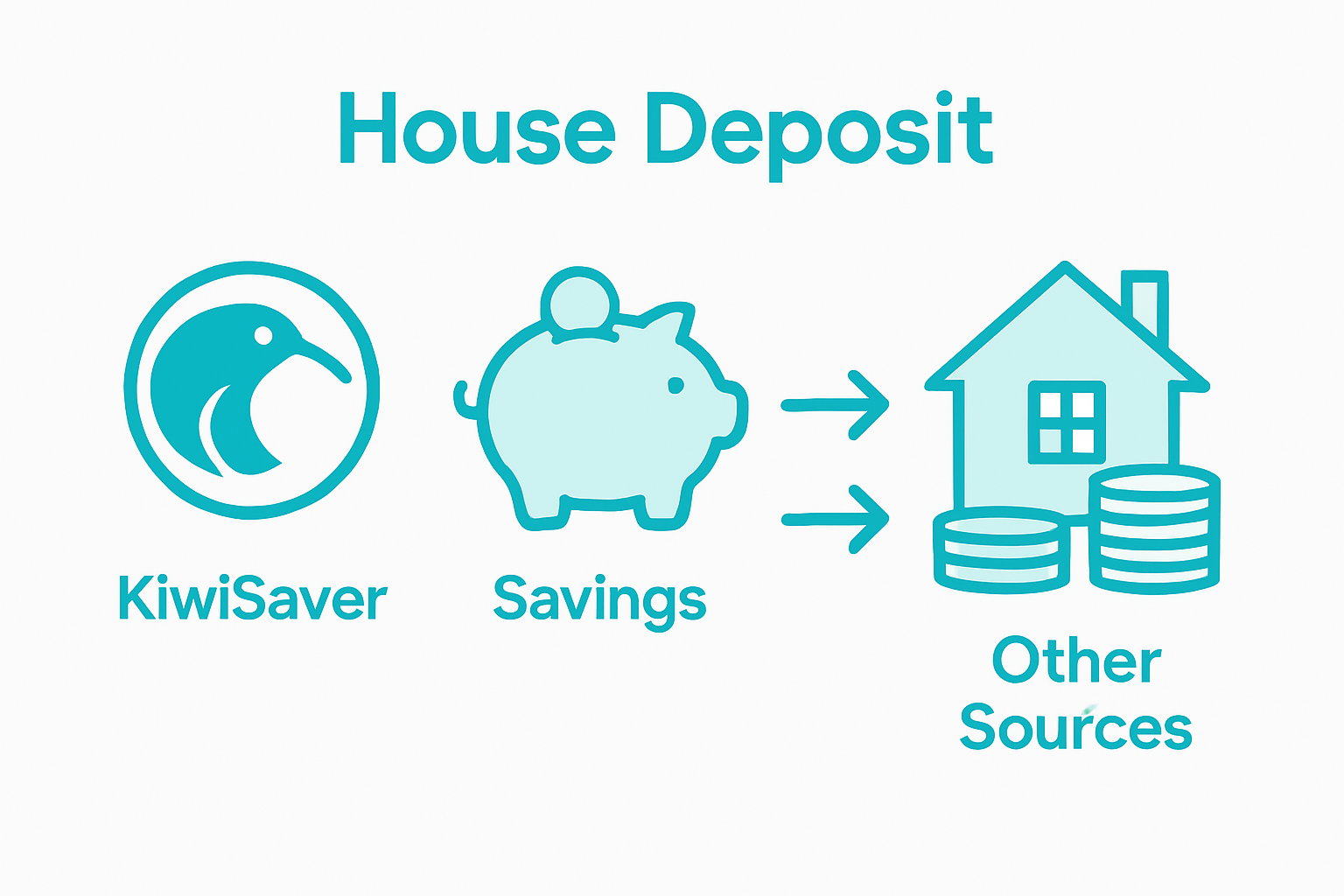
Managing KiwiSaver for first home buyers’ deposits involves understanding the nuanced rules surrounding fund access. Prospective homeowners can tap into multiple deposit sources beyond traditional savings, expanding their financial opportunities.
Key deposit accumulation strategies include:
- KiwiSaver Savings: Primary retirement and home purchase fund
- Personal Savings Accounts: Additional supplementary funds
- Family Contributions: Potential gifts or loans from relatives
- Government Grants: First Home Grant programme support
Beyond KiwiSaver, savvy buyers explore diverse financial avenues to bolster their home deposit. These might include term deposits, investment returns, inheritance, or workplace bonuses. The critical factor remains consistent discipline in saving and a strategic approach to leveraging available financial resources. Understanding the interplay between different deposit sources can transform the seemingly insurmountable challenge of home ownership into an achievable milestone.
Lender Policies, Risks, and Avoidable Mistakes
Navigating the complex landscape of home lending requires a nuanced understanding of lender policies and potential financial risks. New lending regulations introduced by the Reserve Bank of New Zealand demonstrate the ongoing evolution of mortgage lending standards, with recent changes specifically targeting borrowers’ debt-to-income ratios to mitigate systemic financial risks.
Six of the biggest mistakes homeowners make with lending often stem from inadequate financial preparation and limited understanding of lending criteria. Potential borrowers must carefully assess their financial health, considering factors beyond simple deposit amounts, such as credit history, income stability, and long-term repayment capacity.
Key risks and potential pitfalls in home lending include:
- Debt-to-Income Ratio Constraints: Strict limits on borrowing capacity
- Credit Score Impact: Long-term financial reputation at stake
- Variable Interest Rates: Potential unexpected financial pressure
- Hidden Fees: Additional costs beyond standard mortgage payments
Smart borrowers approach lending with comprehensive research and professional guidance. Understanding the intricate details of lender policies, potential risks, and personal financial limitations can transform a potentially challenging lending experience into a strategic financial decision. Consulting with mortgage professionals, maintaining transparent financial records, and developing a robust financial plan are critical steps in successfully navigating the home lending landscape.
Secure Your Dream Home with Expert Deposit Guidance
Understanding home deposit requirements in New Zealand can feel overwhelming as you navigate terms like low deposit loans, KiwiSaver withdrawals, and lender policies. The financial commitment is significant and making the right choices early can ease stress and improve your chances of approval. Whether you are a first-time buyer aiming for a 10 to 20 percent deposit or exploring options with lower upfront costs, expert advice is essential.
At Mortgage Managers, our locally owned team of Auckland mortgage advisers specialise in helping you unlock flexible home loan solutions tailored to your unique situation. From clarifying the impact of deposit size on interest rates to leveraging first home schemes effectively, we provide clear guidance to turn your property ambitions into reality. Don’t let uncertainty about deposits hold you back.

Begin your journey with trusted mortgage brokers who understand New Zealand’s evolving lending landscape inside out. Visit Mortgage Managers today and discover personalised strategies for managing your home deposit. Explore low deposit home loans and learn how to make KiwiSaver work harder for your first home at Managing KiwiSaver for First Home Buyers Deposits. Take control of your future now with expert support at your fingertips.
Frequently Asked Questions
What is a home deposit, and why is it important?
A home deposit is the upfront, lump-sum payment a buyer provides to secure a mortgage, representing a percentage of the total property’s purchase price. It is important as it demonstrates financial stability to lenders and affects the mortgage terms and interest rates offered.
What are the typical deposit requirements for homebuyers?
Typically, homebuyers in New Zealand are expected to provide a standard deposit of 20% of the property’s value. However, there are low deposit options available for first-time buyers, which can range from 5% to 15% depending on individual financial circumstances and lender criteria.
How do recent lending changes impact home deposit requirements?
Recent lending guidelines allow banks to issue more loans to owner-occupiers with deposits of less than 20%, potentially enabling first-time buyers to enter the market with a lower initial financial barrier, thus expanding their lending opportunities.
What are the risks of using a low deposit loan?
Using a low deposit loan may come with higher interest rates, mandatory mortgage insurance, and stricter lending assessments. Borrowers should consider their long-term affordability, credit history, and potential financial risks involved with lower deposit amounts.