
Finding a way onto the property ladder can feel out of reach for many, especially when faced with huge upfront deposits. In New Zealand, low deposit home loans now open more doors for buyers compared to traditional options, and many australian and Kiwi families are noticing the shift. With deposits sometimes as low as 5 percent, these flexible loans offer a real chance for homeownership sooner while helping first-time buyers break through long-standing financial barriers.
Table of Contents
- Low Deposit Home Loans Defined In New Zealand
- Types Of Low Deposit Loans Available
- Eligibility Criteria And Deposit Requirements
- Lender Policies And Government Schemes
- Costs, Risks And Responsible Borrowing
- Alternatives To Low Deposit Home Loans
Key Takeaways
| Point | Details |
|---|---|
| Accessible Home Ownership | Low deposit home loans in New Zealand enable buyers to enter the property market with deposits as low as 5-10%, making homeownership more attainable. |
| Diverse Loan Options | Various types of low deposit loans, including first home loan programmes and shared ownership schemes, cater to a range of buyer needs, especially for first-time purchasers. |
| Eligibility Criteria | Specific eligibility criteria, such as stable income and a genuine saved deposit, play a crucial role in securing low deposit loans, thus requiring careful preparation by applicants. |
| Consider Costs and Risks | Borrowers should be aware of additional costs and risks associated with low deposit loans, requiring strategic financial planning and a thorough understanding of loan terms. |
Low Deposit Home Loans Defined in New Zealand
In the complex landscape of home financing, low deposit home loans represent an innovative pathway for aspiring homeowners who might struggle to accumulate a traditional 20% deposit. Low deposit mortgages allow Kiwi buyers to enter the property market with significantly reduced upfront financial requirements, typically enabling purchases with deposits as low as 5-10%.
Traditionally, New Zealand lenders required substantial deposits, making homeownership challenging for many. However, modern mortgage strategies have evolved to provide more accessible options. Low deposit home loans enable borrowers to secure property with minimal savings, effectively bridging the gap between aspiration and financial reality. These specialised loan products often come with specific conditions designed to mitigate lender risk while supporting first-time buyers.
Key characteristics of low deposit home loans in New Zealand include:
- Deposit requirements as low as 5-10% of property value
- Potential need for lenders mortgage insurance
- Higher interest rates compared to standard home loans
- Additional lending criteria and stricter assessment processes
- Opportunities for first-time buyers and those with limited savings
The fundamental purpose of these loans is to democratise property ownership, recognising that not everyone can accumulate a traditional 20% deposit. By offering more flexible financing options, lenders are helping more New Zealanders achieve their homeownership dreams, transforming what once seemed impossible into a tangible reality.
Types of Low Deposit Loans Available
New Zealand offers several innovative low deposit loan options designed to help buyers with minimal savings enter the property market. Getting a home loan with a 5% deposit has become increasingly accessible, with multiple pathways available for aspiring homeowners.

First Home Loan Programmes provide critical support for buyers struggling to accumulate traditional deposit amounts. These specialised loans often feature government backing, enabling borrowers to secure home financing with deposits as low as 5-10%. Specifically, alternative homeownership support introduces unique strategies like the Squirrel Launchpad home loan, which targets first-time buyers with stable income and minimal savings.
The primary types of low deposit home loans in New Zealand include:
- First Home Loan Programmes
- Low Deposit Bank Loans (5-10% deposit)
- Shared Ownership Schemes
- Government-Assisted Home Purchase Options
- Professional Bundle Loans for Specific Career Groups
Shared ownership schemes represent another innovative approach, allowing buyers to co-own property with organisations, effectively reducing individual financial barriers. These arrangements provide flexibility for those who might otherwise be excluded from homeownership, creating pathways that bridge the gap between renting and full property ownership.
Eligibility Criteria and Deposit Requirements
Low deposit home loans come with specific eligibility criteria designed to protect both borrowers and lenders. First bank confirms lower deposit requirements for various buyer categories, creating more accessible pathways to homeownership.
For first-time buyers, the criteria are particularly nuanced. The Squirrel Launchpad home loan exemplifies typical requirements, which include:
- Being a first-time home buyer
- Intending to live in the purchased property
- Demonstrating a 5% genuine saved deposit (including KiwiSaver funds)
- Holding a PAYE or fixed-term contract for at least 12 months
- Maintaining a stable income and good credit history
Lenders typically assess multiple factors beyond deposit size, including:
- Employment stability
- Credit score and financial history
- Debt-to-income ratio
- Ability to service loan repayments
- Property valuation and location
Understanding these requirements helps prospective buyers prepare effectively, increasing their chances of securing a low deposit home loan. Each lender may have slightly different criteria, so thorough research and potentially seeking professional mortgage advice can significantly improve approval prospects.
Lender Policies and Government Schemes
Government support plays a critical role in making homeownership more accessible for New Zealanders with limited savings. LVR restrictions have significantly influenced lending practices, creating more flexible pathways for low deposit borrowers.
The First Home Loan scheme, underwritten by Housing New Zealand, represents a pivotal government initiative. First home loan opportunities enable eligible first-time buyers to purchase property with as little as 5% deposit. Participating lenders include Kiwibank, SBS Bank, The Co-operative Bank, Westpac, and Unity, providing comprehensive support for aspiring homeowners.
Lender policies vary considerably across different property types. Bank lending guidelines reveal nuanced approaches to loan-to-value ratios:
- Standalone homes and townhouses: Up to 90-95% LVR
- Apartments: Typically limited to 80% LVR
- Borrowers with deposits under 20% may encounter:
- Higher interest rates
- Additional risk management fees
- More stringent approval criteria
These structured policies aim to balance risk management with expanded homeownership opportunities. Prospective buyers should carefully research individual lender requirements and leverage government schemes to maximise their chances of securing a low deposit home loan.
Costs, Risks and Responsible Borrowing
Low deposit home loans introduce unique financial considerations that require careful strategic planning. Mortgage repayments become more complex when borrowing with minimal equity, demanding thorough financial assessment.
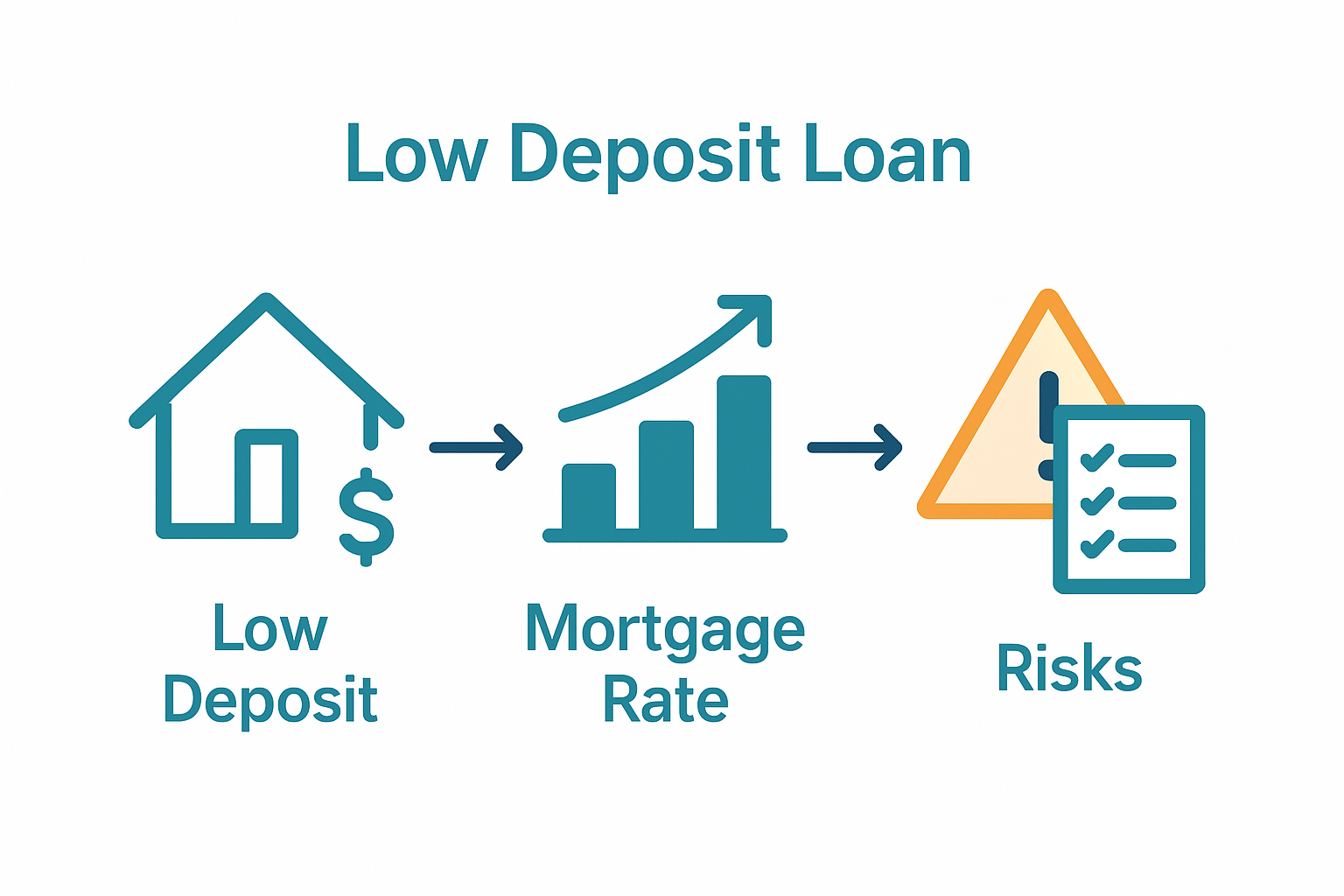
One significant risk involves additional borrowing costs. Low equity margins can increase interest rates between 0.25% to 1.5% per annum, directly impacting monthly repayments. These margins remain in effect until the borrower’s equity reaches 20%, representing a substantial long-term financial commitment.
Responsible borrowing strategies include:
- Thoroughly assessing personal financial stability
- Understanding complete loan terms
- Creating comprehensive repayment budgets
- Maintaining emergency financial reserves
- Regularly reviewing personal financial health
- Considering potential income fluctuations
Borrowers must recognise that low deposit loans carry inherent risks. Home loan deposit strategies emphasise the importance of comprehensive financial planning, ensuring borrowers can consistently meet their mortgage obligations without compromising overall financial wellbeing.
Alternatives to Low Deposit Home Loans
Buyers facing challenges with traditional low deposit home loans have several innovative alternative pathways to homeownership. Home loan options extend beyond conventional lending models, providing flexible strategies for aspiring property owners.
Alternative homeownership support introduces creative solutions that bypass traditional deposit requirements. These alternatives include:
- Shared Ownership Schemes
- Co-ownership with housing organisations
- Reduced individual financial burden
- Gradual equity accumulation
- Rent-to-Buy Agreements
- Option to purchase rental property
- Flexible ownership transition
- Builds rental history and potential equity
- Family Guarantee Options
- Parents/family members provide property equity
- Reduces individual deposit requirements
- Shared financial risk
These innovative approaches recognise that homeownership pathways are diverse. By exploring multiple strategies, potential buyers can find solutions tailored to their unique financial circumstances, ultimately making property ownership more accessible and achievable.
Take Control of Your Homeownership Journey with Expert Low Deposit Loan Support
Securing a low deposit home loan can feel overwhelming when faced with complex eligibility criteria and additional costs. Whether you are a first-time buyer aiming to navigate government schemes or someone seeking creative alternatives like shared ownership, recognising the challenges ahead is the first step towards success. Understanding terms like lenders mortgage insurance and loan-to-value ratios is vital but knowing where to get personalised help makes all the difference.

At Mortgage Managers, our skilled Auckland mortgage advisers specialise in guiding clients through these exact hurdles. From Hobsonville to the wider West Auckland and beyond, we deliver local expertise tailored to your unique financial situation. Take advantage of low deposit home loan strategies and get the clarity you need to move forward confidently. Don’t let uncertainty stall your dream of owning a home. Visit us today at Mortgage Managers and discover how to start your journey with personalised advice and clear next steps.
Frequently Asked Questions
What are low deposit home loans?
Low deposit home loans are mortgage products that allow homebuyers to purchase property with a reduced upfront deposit, typically between 5% to 10% of the property’s value, making homeownership more accessible for those with limited savings.
What types of low deposit home loans are available?
Common types of low deposit home loans include First Home Loan programmes, low deposit bank loans, shared ownership schemes, government-assisted home purchase options, and professional bundle loans tailored for specific career groups.
What eligibility criteria do I need to meet for a low deposit home loan?
Eligibility criteria generally include being a first-time buyer, demonstrating a genuine saved deposit, having stable income and good credit history, and intending to live in the property purchased. Specific requirements may vary by lender.
What are the risks of using low deposit home loans?
Risks associated with low deposit home loans include higher interest rates, additional borrowing costs like lenders mortgage insurance, and the potential for financial strain if repayments cannot be managed effectively. Responsible financial planning is crucial.