
Searching for refinancing solutions as a first home buyer in Hobsonville can feel complex, especially if a low deposit or a patchy credit history stands in your way. Understanding what lenders need and how home loan eligibility works in New Zealand is crucial for success. This guide tackles each part of the journey, showing you how to use tools like the Kāinga Ora First Home Decision Tool and how to work with mortgage brokers to boost your chances of getting approved.
Table of Contents
- Step 1: Assess Your Eligibility And Current Mortgage
- Step 2: Compare Refinancing Options With Brokers
- Step 3: Prepare Essential Financial Documentation
- Step 4: Apply For Refinancing And Await Approval
- Step 5: Verify New Mortgage Terms And Finalise Settlement
Quick Summary
| Key Point | Explanation |
|---|---|
| 1. Assess Financial Eligibility | Evaluate your current income, debts, and credit score to ensure refinancing is a viable option. |
| 2. Compare Refinancing Options | Engage a mortgage broker to explore fixed and floating rate loans for the best deal. |
| 3. Gather Essential Documentation | Collect necessary financial records to expedite the approval process for your refinancing application. |
| 4. Submit Application Carefully | Follow steps meticulously and maintain communication with your broker for a smoother approval experience. |
| 5. Verify New Mortgage Terms | Ensure you thoroughly understand all aspects of your new mortgage arrangement to avoid future complications. |
Step 1: Assess your eligibility and current mortgage
Understanding your mortgage eligibility is the first critical milestone in your refinancing journey as a Hobsonville homeowner. This step involves carefully examining your current financial landscape to determine your potential for refinancing and identifying any areas that might need improvement before approaching lenders.
To start, you’ll want to conduct a comprehensive assessment of your financial health. Utilising Kāinga Ora’s First Home Decision Tool can provide an initial gauge of your home ownership assistance eligibility. Key factors lenders will scrutinise include:
- Your current income stability
- Total existing debt levels
- Credit score and history
- Current mortgage performance
- Employment consistency
- Available deposit or equity
Your credit record plays a pivotal role in this assessment. Banks typically look for consistent payment histories, minimal defaults, and a demonstrated ability to manage financial commitments. Gathering recent bank statements, proof of income, and a detailed breakdown of your monthly expenses will strengthen your refinancing application.
Lenders want to see that you’re a reliable financial performer with a track record of responsible money management.
Review your current mortgage terms, interest rates, and remaining loan balance. Understanding these details will help you determine whether refinancing offers genuine financial advantages or potential cost savings.
Pro tip: Request a comprehensive credit report before applying to identify and address any potential red flags that could impact your refinancing prospects.
Step 2: Compare refinancing options with brokers
Refinancing your mortgage is more than just finding a lower interest rate – it’s about strategically navigating the complex landscape of home loan options to secure the best possible financial outcome for your Hobsonville property. A mortgage broker can be your greatest ally in this journey, offering expertise and access to a wide range of lending solutions.
When comparing refinancing options, you’ll want to leverage professional insights. Mortgage rates and comparison tools can help you understand the current market landscape, but a broker brings nuanced understanding beyond simple number-crunching. Key factors to consider include:
Here’s a comparison of fixed and floating mortgage rate features for Hobsonville refinancers:
| Aspect | Fixed Rate Loans | Floating Rate Loans |
|---|---|---|
| Rate predictability | Stable monthly repayments | Payments vary with rate changes |
| Early repayment flex | Break fees may apply | Extra repayments easier |
| Rate changes risk | Protected from rate rises | Exposed to market fluctuations |
| Suitability | Longer-term financial planning | Shorter-term or flexible needs |
- Fixed versus floating interest rates
- Potential break fees from your current lender
- Loan term flexibility
- Additional loan features
- Establishment and ongoing fees
- Potential cashback or incentive offers
Professional mortgage brokers can provide invaluable market insights that go beyond basic online comparisons. They understand subtle differences between lender criteria and can often negotiate terms that aren’t publicly advertised. Some brokers have established relationships with multiple banks, which means they can quickly identify the most suitable refinancing options tailored to your specific financial situation.
Mortgage brokers are your strategic partners in uncovering refinancing opportunities that might otherwise remain hidden.
Your broker will typically request comprehensive documentation about your current financial position, including income statements, bank records, and existing mortgage details. They’ll then analyse these documents to match you with lenders most likely to approve your refinancing application.

Pro tip: Prepare a detailed financial portfolio before meeting your broker, including recent payslips, tax returns, and a comprehensive list of your current assets and liabilities to expedite the refinancing process.
Step 3: Prepare essential financial documentation
Preparing your financial documentation is a critical step in the refinancing process that can make or break your application. Mortgage refinancing requires comprehensive document preparation to demonstrate your financial stability and creditworthiness to potential lenders.
Your documentation package should include a comprehensive set of financial records that provide a clear picture of your economic health. Essential documents you’ll need to gather are:
- Proof of identity (driver’s licence, passport)
- Recent payslips (last 3-6 months)
- Annual tax returns
- Bank statements covering the past 3-6 months
- Current mortgage statement
- Detailed list of assets and liabilities
- Employment verification letter
- Proof of additional income sources
Special considerations apply for self-employed Hobsonville residents. If you’re running your own business, you’ll need to provide additional documentation such as business financial statements, tax returns for the past two years, and potentially an accountant’s verification of your income stability.
Below is a quick summary of special documentation considerations for self-employed applicants:
| Documentation Type | Why It’s Needed | Additional Tips |
|---|---|---|
| Business financial records | Proves business viability | Prepare for last two financial years |
| Accountant’s income letter | Confirms income stability | Use a registered accountant |
| GST/tax returns | Shows tax compliance | Provide clean, recent statements |
Organised and complete documentation signals financial responsibility and can significantly expedite your refinancing approval process.
For those with complex financial situations, consider creating a digital folder with high-quality scans of all required documents. This approach ensures you can quickly share information with your mortgage broker or lender and helps prevent delays in processing your refinancing application.
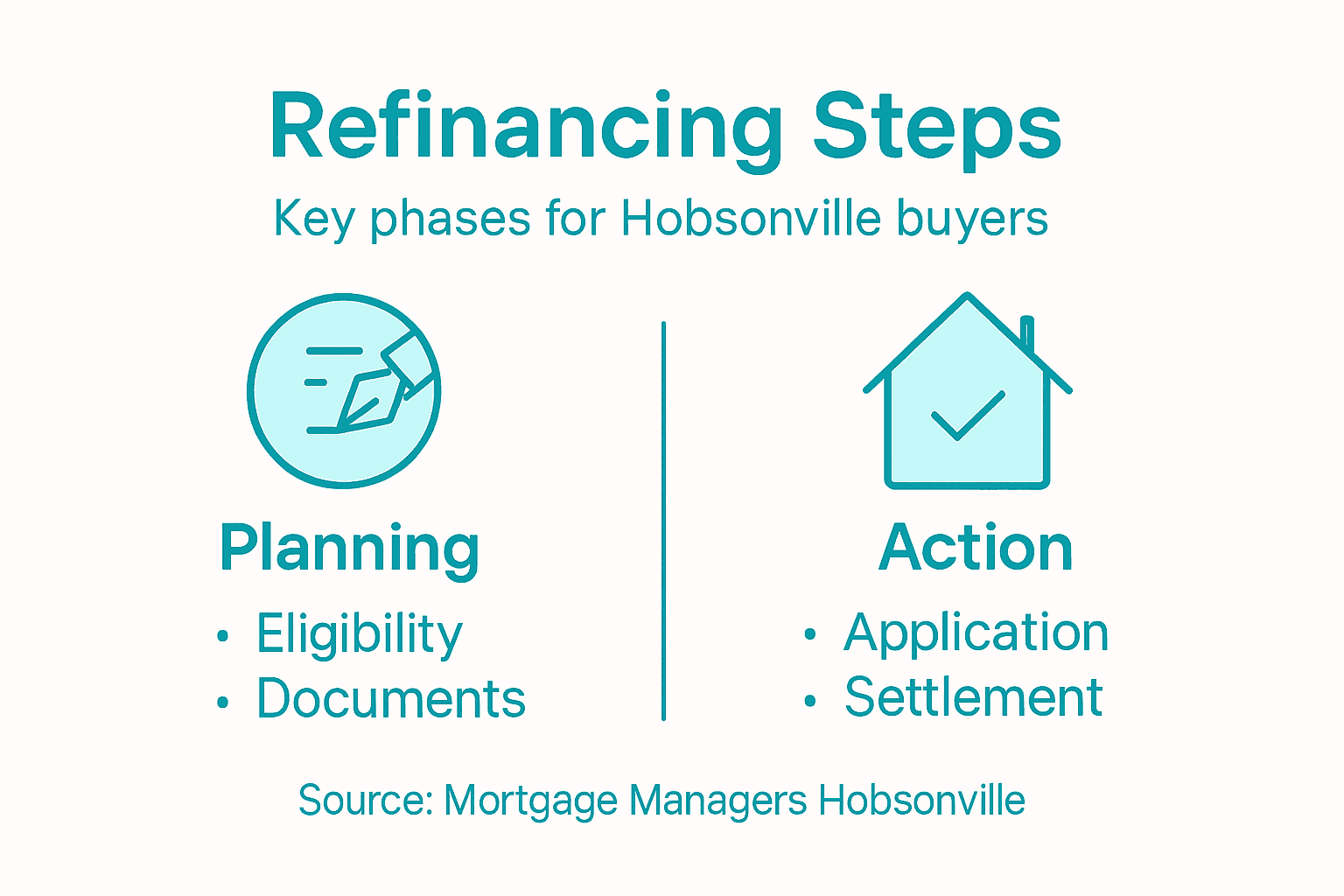
Pro tip: Create a dedicated email folder or cloud storage directory specifically for your refinancing documents to keep everything centrally located and easily accessible.
Step 4: Apply for refinancing and await approval
With your documentation prepared and broker guidance secured, you’re now ready to submit your formal refinancing application. Step-by-step refinancing processes require meticulous attention to detail and strategic timing.
Your refinancing application will typically involve several key stages:
- Initial loan application submission
- Property valuation request
- Credit and financial background check
- Formal loan assessment
- Conditional approval notification
- Final loan approval
During the application process, lenders will conduct a comprehensive review of your financial profile. They’ll examine your income stability, credit history, current debt levels, and the proposed loan-to-value ratio. Be prepared to provide additional documentation if requested and maintain open communication with your mortgage broker.
Patience and preparedness are your greatest allies during the refinancing approval journey.
Expect the entire approval process to take anywhere from two to six weeks, depending on the complexity of your financial situation and the specific lender’s assessment procedures. Your mortgage broker can help you navigate potential challenges and provide insights into optimising your application’s success.
Pro tip: Avoid making significant financial changes or opening new credit accounts during the refinancing process, as these actions could potentially jeopardise your loan approval.
Step 5: Verify new mortgage terms and finalise settlement
The final stage of your refinancing journey involves carefully reviewing and confirming the details of your new mortgage arrangement. Settlement processes in New Zealand require meticulous attention to ensure a smooth transition of your loan terms.
Key elements to verify during the settlement process include:
- Interest rate and type (fixed or floating)
- Loan repayment schedule
- Loan term duration
- Monthly payment amount
- Any special conditions or clauses
- Establishment and ongoing fees
- Discharge of previous mortgage
Your mortgage broker or legal representative will play a crucial role in coordinating the final settlement. They’ll manage the technical aspects of transferring your mortgage, including communicating with your current and new lenders, ensuring all legal documentation is correctly processed, and managing the official registration of the new loan.
Careful verification of every detail prevents future financial complications and ensures a seamless refinancing experience.
During settlement, you’ll need to sign final loan documents and potentially arrange for the discharge of your existing mortgage. This process typically involves coordination between your broker, lender, and legal representatives to ensure a smooth transfer of financial obligations.
Pro tip: Request a comprehensive written summary of your new mortgage terms and keep a digital and physical copy for your records, ensuring you have a clear reference point for future review.
Take Control of Your Refinancing Journey with Expert Help in Hobsonville
Refinancing your mortgage can feel overwhelming with all the financial documents to prepare and lender details to verify. The challenge of understanding fixed versus floating rates and navigating complex loan terms often causes stress and uncertainty. If your goal is to secure the best possible refinancing terms while avoiding costly mistakes, you need trusted advice tailored to your unique situation.
At Mortgage Managers, we specialise as Hobsonville mortgage advisers ready to guide you through every step of your refinance application. With deep local knowledge and access to a wide range of lenders, we help you assess your eligibility, compare options, and smoothly finalise your new mortgage with confidence. We take the hassle out of the process so you can focus on what matters most.

Don’t wait until refinancing becomes complicated and stressful. Visit Mortgage Managers today and connect with experts who understand Hobsonville homeowners like you. Our personalised service ensures that you are fully prepared and supported right through to settlement. Start your journey now with Mortgage Managers and turn refinancing into an opportunity for financial success.
Frequently Asked Questions
What steps should I take to assess my eligibility for refinancing?
To assess your eligibility for refinancing, review your current financial situation, including your income stability, existing debt levels, and credit score. Start by gathering recent bank statements and proof of income to determine where you stand before approaching lenders.
How do I compare refinancing options effectively?
To compare refinancing options, work with a mortgage broker who can provide insights into various loan features and interest rates. Analyse key aspects such as fixed versus floating rates, potential fees, and loan term flexibility to find the best fit for your financial needs.
What documents do I need to prepare for my refinancing application?
You’ll need to prepare several essential documents, including proof of identity, recent payslips, tax returns, and bank statements. Organise these documents to streamline your application process and ensure quicker approval from lenders.
How long does the refinancing approval process usually take?
The refinancing approval process typically takes between two to six weeks, depending on your financial situation and the lender’s procedures. Stay patient and maintain communication with your mortgage broker throughout this period to navigate any challenges.
What final checks should I perform before settling my new mortgage?
Before settling your new mortgage, verify the interest rate, repayment schedule, and any special conditions of the loan. Ensure you understand all terms and request a written summary for your records to avoid any future complications.