
Many first home buyers may ask what is bad credit, and more importantly may not yet understand the impact that even a small amount of bad credit can have on their aspirations to buy a home.
Buying your first home can feel overwhelming, especially if past credit troubles have left you unsure where to begin.
Many believe bad credit completely shuts the door on home loans.
That may be true when approaching a bank, yet other non-bank lenders in New Zealand look beyond a single number, weighing income, recent habits, and loan purpose. With about 20% of New Zealanders experiencing bad credit scores, understanding the facts and truths about home lending gives you a true path toward home ownership.
Table of Contents
- Defining Bad Credit and Common Myths
- How Bad Credit Histories Are Created
- Credit Scores, Reports, and NZ Agencies
- How Bad Credit Affects Home Loan Approval
- Pathways and Solutions for First Home Buyers
Key Takeaways
| Point | Details |
|---|---|
| Understanding Bad Credit | A bad credit score in New Zealand is typically below 580, affecting borrowing capabilities, but home ownership is still achievable. |
| Common Myths | It is a misconception that bad credit permanently hinders loan approvals; multiple factors are considered by lenders. |
| Credit Score Components | Key components of credit scores include payment history, credit utilisation, and borrowing history; awareness can help improve your score. |
| Government Support | Various first home buyer programmes and grants are available to assist those with bad credit in becoming homeowners. |
Defining Bad Credit and Common Myths
In the world of home loans and financial planning, bad credit represents more than just a low number on a financial report. For Hobsonville home buyers, understanding what constitutes bad credit can be the difference between securing a mortgage and facing repeated rejections.
A bad credit score in New Zealand typically falls below 580, which can significantly impact your borrowing capabilities. Credit score insights reveal that approximately 20% of New Zealanders experience these challenging ratings, but this doesn’t mean home ownership is impossible.
Let’s debunk some common myths about bad credit:
- Myth 1: Bad credit means you can never get a home loan
- Myth 2: Your credit score is permanently damaged
- Myth 3: All lenders will automatically reject you
- Myth 4: Checking your credit score will lower it further
In reality, lenders assess multiple factors beyond just your credit score. Income stability, current financial habits, and loan purpose also play crucial roles in mortgage approval.
Bad credit is a temporary condition, not a permanent financial sentence.
Credit scores are calculated using several key components:
- Payment history
- Credit utilization
- Length of borrowing history
- Types of credit accounts
- Recent credit inquiries
Understanding these factors can help Hobsonville home buyers take strategic steps to improve their creditworthiness and increase their mortgage approval chances.
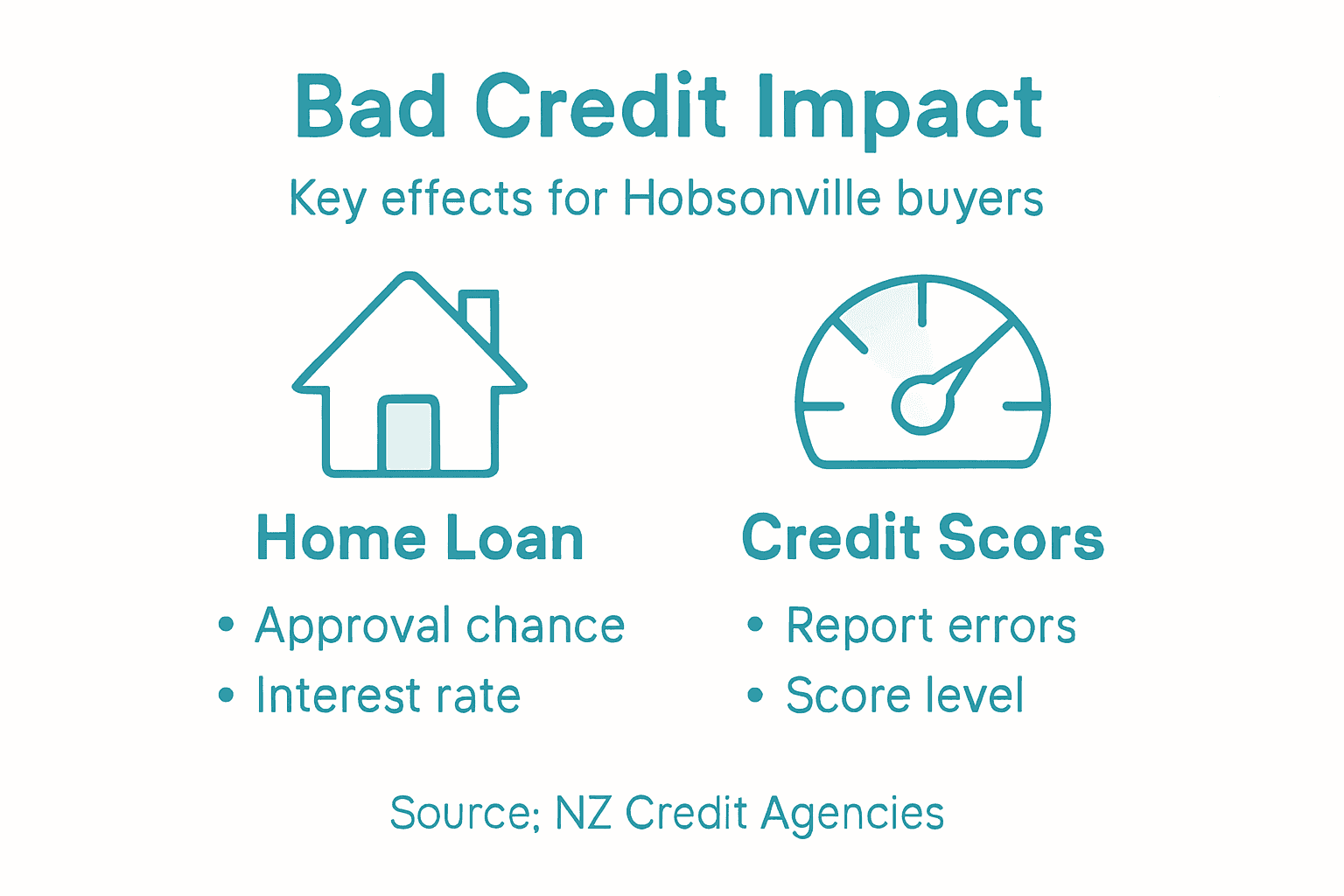
Pro tip: Request a free credit report annually and review it carefully for any errors that might be unnecessarily lowering your score.
How Bad Credit Histories Are Created
Creating a bad credit history isn’t typically an overnight process, but rather a gradual accumulation of financial missteps that can significantly impact your borrowing potential. Credit losses in financial systems reveal complex patterns of how consumers develop negative credit profiles.
Bad credit histories typically emerge through several key financial behaviours:
- Consistently missing bill payments
- Defaulting on loan agreements
- Maxing out credit cards
- Experiencing multiple credit rejections
- Declaring bankruptcy
- Having court judgments against financial obligations
Missed Payments represent the most common pathway to bad credit. When you fail to pay bills or loan instalments by their due date, financial institutions record these incidents, which progressively damage your credit score.
One late payment might seem insignificant, but repeated missed payments can create a lasting negative financial reputation.
Understanding the economic cycles and credit risk patterns helps Hobsonville home buyers recognise potential warning signs. Each missed payment, unpaid debt, or financial judgment can remain on your credit report for several years, creating long-term challenges in securing future loans.
The severity of credit damage depends on multiple factors:
- Amount of outstanding debt
- Frequency of missed payments
- Time since last negative financial event
- Total number of credit accounts involved
- Current income and employment stability
Pro tip: Set up automatic bill payments and create calendar reminders to ensure you never miss a financial obligation that could harm your credit reputation.
Credit Scores, Reports, and NZ Agencies
Navigating the world of credit in New Zealand requires understanding the key agencies and systems that track your financial history. Credit reporting mechanisms in New Zealand involve three primary credit reporting agencies that play a crucial role in determining your borrowing potential.

The main credit reporting agencies in New Zealand are:
The following table provides a quick reference to the main credit reporting agencies in New Zealand and their unique features:
| Agency Name | Key Service | Distinguishing Feature |
|---|---|---|
| Centrix | Credit score reporting | Long-established NZ agency |
| Equifax | Detailed credit history | International data network |
| Illion | Comprehensive credit data | Strong consumer dispute support |
- Centrix: One of the oldest credit reporting agencies
- Equifax: Provides comprehensive credit information
- Illion: Offers detailed credit reporting services
Credit Reports contain a comprehensive record of your financial behaviour, including:
- Payment history
- Credit accounts
- Outstanding debts
- Previous credit applications
- Defaults or legal judgments
Here at Mortgage Managers we recommend getting a free credit report before applying for a home loan.

Your credit report is a financial fingerprint that lenders use to assess your reliability.
Consumer protection guidelines highlight important rights for Hobsonville home buyers. Individuals can request one free credit report annually from each agency, allowing you to review and correct any potential errors that might negatively impact your credit score.
Key factors that influence your credit score include:
- Consistency in bill payments
- Credit utilisation rates
- Length of credit history
- Types of credit accounts
- Recent credit inquiries
Pro tip: Request and carefully review your free annual credit reports from all three agencies to catch and dispute any inaccuracies that could harm your home loan prospects.
How Bad Credit Affects Home Loan Approval
Bad credit can transform the home loan journey from a straightforward process into a complex navigation of financial challenges for Hobsonville home buyers. Credit ratings dramatically impact mortgage prospects in ways that extend far beyond simple approval or rejection.
The primary ways bad credit influences home loan approval include:
- Reduced likelihood of loan approval
- Higher interest rates
- Smaller loan amounts
- More stringent lending conditions
- Requirement for additional security
Loan Approval Thresholds vary significantly depending on the severity of credit issues. Most lenders categorise credit scores into distinct bands:
Here’s a summary of how different credit score levels affect mortgage approval prospects in New Zealand:
| Credit Score Band | Approval Chance | Typical Interest Rate Impact | Loan Conditions |
|---|---|---|---|
| Excellent (700-850) | Very high | Lowest available | Standard requirements |
| Good (580-699) | Moderate | Slight increase | May require extra documentation |
| Poor (300-579) | Low | Marked rate increase (2-5%+) | Stricter terms and reduced amounts |
| Very Poor (below 300) | Extremely low | Highest rates | May require major guarantees, harder approval |
- Excellent (700-850): Highest approval chances
- Good (580-699): Moderate approval probability
- Poor (300-579): Significant lending challenges
- Very Poor (below 300): Extremely difficult approval
A low credit score doesn’t just close doors – it makes the financial path significantly more expensive.
Mortgage lenders assess credit reports through a comprehensive lens, examining not just the score but the underlying financial behaviour. Missed payments, defaults, and outstanding debts can trigger immediate red flags, potentially increasing interest rates by 2-5% or requiring substantial additional guarantees.
The financial consequences of bad credit extend beyond initial loan application, potentially impacting:
- Long-term borrowing costs
- Future refinancing options
- Access to financial products
- Overall financial flexibility
- Personal financial reputation
Pro tip: Work with a mortgage adviser who specialises in bad credit scenarios to understand your unique lending profile and develop a strategic approach to improving your home loan prospects.
Pathways and Solutions for First Home Buyers
Bad credit doesn’t have to be a permanent roadblock for Hobsonville home buyers dreaming of their first property. First home loan options offer multiple pathways for individuals working to overcome credit challenges.
Key government-supported solutions for first home buyers include:
- First Home Loan program
- KiwiSaver withdrawal options
- Tenant home ownership grants
- Kāinga Whenua Loan for Māori buyers
- Low deposit home lending alternatives
Government Support Mechanisms provide critical assistance for those with complicated financial histories:
- First Home Loan program with 5% deposit options
- Targeted grants for low-to-moderate income buyers
- Special lending criteria for credit-challenged applicants
- Underwriting support through Kāinga Ora
- Financial counselling resources
Financial challenges are temporary obstacles, not permanent barriers to homeownership.
Navigating these pathways requires strategic planning and understanding of available resources. Prospective home buyers with bad credit can leverage several approaches to improve their lending prospects, including:
- Repairing credit through consistent payment histories
- Saving larger deposit amounts
- Seeking specialist mortgage adviser guidance
- Exploring government support programs
- Demonstrating stable income and employment
Pro tip: Engage with a mortgage adviser who specialises in complex lending scenarios to develop a personalised strategy for improving your home loan eligibility.
Facing Bad Credit Challenges as a Hobsonville Home Buyer
Understanding bad credit and its impact on home loans is the first step toward turning your financial situation around. If you have a low credit score, missed payments, or past financial setbacks that make securing a mortgage seem impossible, you are not alone. Many Hobsonville home buyers struggle with similar issues but can still access tailored home loan solutions with expert guidance. Mortgage Managers specialises in working with clients who face these exact challenges, helping you navigate through higher interest rates, stricter loan conditions and building a strategy to improve your credit profile.

Don’t let bad credit define your path to homeownership. Visit Mortgage Managers today and connect with experienced advisers based in Hobsonville who understand the unique credit hurdles local home buyers face. Our team is ready to help you explore realistic options, including government-supported programs and personalised lending alternatives. Take control of your financial future now with support designed specifically for your situation. Find out how we can help you improve your home loan prospects at Mortgage Managers and start your journey towards owning your first home.
Frequently Asked Questions
What is considered a bad credit score?
A bad credit score is typically defined as a score below 580. This rating can significantly impact your borrowing capabilities and mortgage approval chances.
How does bad credit affect home loan approval?
Bad credit can lead to a reduced likelihood of loan approval, higher interest rates, smaller loan amounts, and more stringent lending conditions. It can also require additional security from the borrower.
Can I still buy a home with bad credit?
Yes, buying a home with bad credit is still possible. There are various government-supported solutions and first home loan programs designed to assist individuals with credit challenges.
How can I improve my credit score?
You can improve your credit score by consistently making payments on time, managing your credit utilization, reviewing your credit report for errors, and demonstrating stable income. Setting up automatic payments can also help prevent missed payments.