
For many first-time buyers in Hobsonville, the excitement of finding a home can quickly clash with the confusion of shifting mortgage rates and lender requirements. The mix of fixed and floating rates across New Zealand banks means that your monthly repayments might change, making it tough to predict long-term costs. Understanding how the Reserve Bank’s Official Cash Rate influences mortgage rates can give you the confidence to compare offers, explore low deposit options, and tackle credit hurdles with greater clarity.
Table of Contents
- Mortgage Rates In New Zealand Explained
- Key Drivers Behind Interest Rate Changes
- Role Of The Reserve Bank And Ocr
- Global Factors And Market Sentiment
- How Changing Rates Affect First Home Buyers
- Mistakes To Avoid With Fluctuating Rates
Key Takeaways
| Point | Details |
|---|---|
| Mortgage Types | New Zealand offers fixed and floating mortgage rates, each catering to different borrower needs and risk appetites. |
| Impact of Economic Indicators | Factors like the Official Cash Rate, inflation, and employment statistics significantly influence mortgage rate fluctuations. |
| First Home Buyer Considerations | Changing rates can affect home affordability, making it crucial for first home buyers to monitor trends and build financial buffers. |
| Common Pitfalls | First home buyers should avoid overextending their borrowing capacity and should consider financial sustainability during rate fluctuations. |
Mortgage rates in New Zealand explained
Understanding mortgage rates in New Zealand involves navigating a complex financial landscape where multiple factors influence interest calculations. Mortgage rates represent the percentage of interest charged by lenders on home loans, and these rates can fluctuate based on several economic indicators and bank policies. Mortgage types in New Zealand range from fixed to floating options, each with unique characteristics that impact borrowing costs.
In the New Zealand context, two primary mortgage rate structures dominate the market: fixed and floating rates. Fixed rates provide predictability by maintaining a constant interest percentage for a predetermined period, typically between one to five years. This allows homeowners to budget precisely, knowing their repayment amount will remain unchanged. Floating rates, conversely, move in alignment with broader market conditions, offering more flexibility but introducing uncertainty into monthly repayments.
Economic factors significantly influence mortgage rate movements in New Zealand. The Official Cash Rate (OCR) set by the Reserve Bank plays a crucial role, directly impacting wholesale lending rates. Inflation trends, employment statistics, global economic conditions, and domestic monetary policies all contribute to rate fluctuations. Borrowers must stay informed about these dynamic elements to make strategic mortgage decisions that align with their financial goals.
Pro tip: Contact multiple lenders and request current rate comparisons to ensure you’re obtaining the most competitive mortgage rate available in the market.
Here’s a comparison of fixed versus floating mortgage rates in New Zealand:
| Feature | Fixed Rate | Floating Rate |
|---|---|---|
| Interest Rate Stability | Remains unchanged during term | Changes with market conditions |
| Repayment Predictability | Allows precise budgeting | Repayments can vary month-to-month |
| Early Repayment Fees | Often have break fees | Generally no early repayment fees |
| Flexibility | Less flexible, locked for term | More flexible, allows lump payments |
| Suitable For | Budget-conscious borrowers | Those seeking flexibility |
Key drivers behind interest rate changes
In New Zealand, interest rate changes are fundamentally influenced by complex economic mechanisms, with the Official Cash Rate (OCR) serving as a critical mechanism for economic management. The Reserve Bank of New Zealand carefully monitors multiple economic indicators to make strategic decisions about interest rate adjustments. These decisions aim to maintain economic stability by balancing inflation control, employment levels, and overall economic growth.
Several key factors drive interest rate fluctuations in the New Zealand financial landscape. Domestic economic performance plays a pivotal role, with GDP growth rates, household spending patterns, and employment statistics directly impacting monetary policy decisions. Global economic conditions also significantly influence local interest rate movements, as international market trends and geopolitical events create ripple effects through New Zealand’s interconnected financial system.

Inflation represents another crucial driver of interest rate changes. The Reserve Bank maintains a target inflation range between 1% and 3%, with a specific focus on the 2% midpoint. When inflation threatens to move outside this range, the Bank may adjust the OCR to either cool down or stimulate economic activity. This delicate balancing act involves increasing interest rates to reduce spending during high inflation periods or lowering rates to encourage economic growth during slower economic cycles.
Pro tip: Monitor the Reserve Bank’s quarterly monetary policy statements to gain insights into potential future interest rate movements and understand the economic factors driving these changes.
The main factors impacting mortgage rate changes in New Zealand are summarised below:
| Factor | How It Influences Rates | Example Impact |
|---|---|---|
| Official Cash Rate (OCR) | Directly shifts lending rates | Higher OCR = higher mortgage costs |
| Inflation | Central target triggers OCR moves | High inflation raises rates |
| Employment | Strong jobs = tighter market, higher rates | Job growth can lead to rate increases |
| Global Markets | International shifts affect funding | Global shocks can prompt local rises |
| Domestic Economy | Growth & spending affect stability | Economic booms increase rates |
Role of the Reserve Bank and OCR
The Reserve Bank of New Zealand plays a pivotal role in managing the nation’s monetary policy through its strategic management of the Official Cash Rate (OCR). This critical financial mechanism serves as the primary tool for influencing interest rates across the entire economic landscape. By adjusting the OCR, the Reserve Bank can effectively control inflation, stimulate or cool economic activity, and maintain overall financial stability.
At its core, the OCR represents the interest rate that banks pay when borrowing or depositing money with the Reserve Bank overnight. These adjustments have cascading effects throughout the financial system, directly impacting mortgage rates, business lending costs, and consumer borrowing expenses. When the OCR increases, banks typically raise their lending rates, making borrowing more expensive. Conversely, when the OCR decreases, banks can offer more affordable lending options, potentially stimulating economic growth and investment.
The Reserve Bank’s responsibilities extend far beyond simple rate management. As New Zealand’s central banking institution, it is tasked with maintaining price stability, supporting the financial system’s soundness, and regulating financial institutions. The Monetary Policy Committee meets regularly to analyse economic indicators, global market trends, employment statistics, and inflation data to make informed decisions about potential OCR adjustments. These strategic interventions are designed to create a balanced economic environment that supports sustainable growth while protecting against potential financial volatility.
Pro tip: Track the Reserve Bank’s quarterly monetary policy statements to anticipate potential interest rate changes and understand the economic rationale behind OCR adjustments.
Global factors and market sentiment
Global economic dynamics play a critical role in shaping New Zealand’s mortgage rates, with international market shocks creating significant ripple effects throughout the domestic financial landscape. Major economies like the United States and China exert substantial influence on New Zealand’s financial markets, transmitting economic signals that directly impact borrowing costs, investment strategies, and interest rate movements. These global interconnections mean that events occurring thousands of kilometres away can instantly reshape the local mortgage lending environment.
Commodity prices, international trade conditions, and cross-border investment flows represent key transmission mechanisms for global economic sentiment. Fluctuations in global bond markets, particularly sovereign debt yields, can rapidly influence New Zealand’s lending rates. When international investors perceive increased economic uncertainty, they typically seek safer investment options, which can cause significant shifts in funding costs for local banks. This international market dynamic translates directly into mortgage rate adjustments, affecting first home buyers and property investors alike.
The intricate relationship between global economic trends and domestic financial conditions requires constant monitoring. Factors such as geopolitical tensions, trade agreements, technological disruptions, and macroeconomic policy shifts in major economies can create immediate and profound impacts on New Zealand’s financial markets. Export demand, currency exchange rates, and international investment flows all contribute to a complex ecosystem that ultimately determines the cost of borrowing and the overall accessibility of home loans for New Zealand residents.
Pro tip: Regularly follow international financial news and economic indicators to anticipate potential shifts in mortgage rates before they impact your home buying strategy.
How changing rates affect first home buyers
Changing mortgage interest rates can create significant financial challenges and opportunities for first home buyers in New Zealand, with home affordability directly impacted by these fluctuations. When rates increase, potential homeowners face higher monthly repayments, which can dramatically reduce their borrowing capacity and make home ownership seem more distant. Conversely, when rates decline, the dream of purchasing a first home becomes more achievable, opening up new possibilities for those entering the property market.
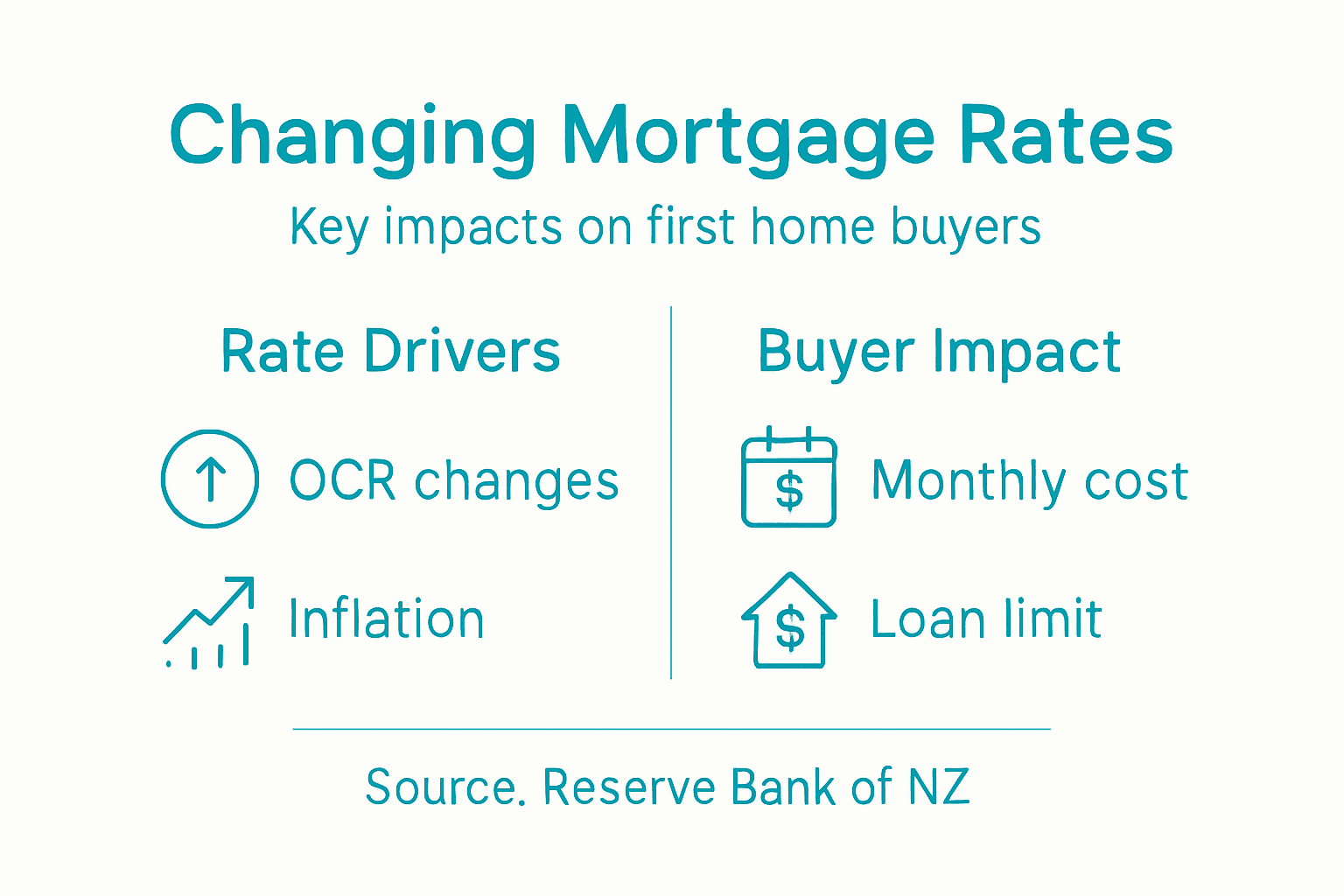
The financial strain of interest rate changes is particularly acute for first home buyers who typically operate with tighter budgets and less financial flexibility. A small percentage increase in mortgage rates can translate to hundreds of additional dollars in monthly repayments, potentially pushing home ownership out of reach. This sensitivity means first home buyers must carefully monitor interest rate trends, consider fixed versus floating rate options, and develop robust financial strategies that can withstand potential rate fluctuations.
Government support mechanisms have evolved to help first home buyers navigate these challenging financial landscapes. Recent policy initiatives have included raising house price caps for grants, reducing insurance premiums, and implementing targeted financial support programs. These interventions aim to mitigate the impact of interest rate volatility, providing additional financial buffers and support mechanisms that can help first home buyers maintain their home ownership aspirations even during periods of economic uncertainty.
Pro tip: Create a comprehensive financial buffer of at least three to six months of potential mortgage repayments to protect against unexpected interest rate increases.
Mistakes to avoid with fluctuating rates
Navigating mortgage rates requires strategic decision-making, and understanding common financial pitfalls is crucial for protecting your financial future. One of the most significant errors first home buyers make is selecting a mortgage type without fully comprehending the associated risks and potential long-term implications. Floating rates might seem attractive during periods of low interest, but they can quickly become a financial burden when rates unexpectedly surge.
Another critical mistake is overextending borrowing capacity without considering potential rate increases. Many first home buyers calculate their mortgage affordability based on current interest rates, failing to build a financial buffer that can absorb potential rate hikes. This approach can lead to significant financial strain, potentially risking home ownership if monthly repayments become unsustainable. Borrowers should always stress-test their finances by calculating potential repayments at 2-3% higher interest rates to ensure long-term financial resilience.
Financial discipline and proactive management are essential when dealing with fluctuating mortgage rates. Many borrowers neglect to regularly review their mortgage structure, missing opportunities to refinance or negotiate better terms. Complex loan features like revolving credit accounts require exceptional financial management, and failing to understand these intricacies can lead to unexpected financial challenges. Borrowers must remain vigilant, continuously educating themselves about market trends and being prepared to adapt their financial strategies as economic conditions change.
Pro tip: Maintain a comprehensive financial buffer of at least six months of potential mortgage repayments and regularly consult with a mortgage adviser to review your loan structure.
Navigate Changing Mortgage Rates with Expert Local Advice
Understanding how mortgage rates fluctuate can feel overwhelming, especially for first home buyers trying to secure their future in New Zealand’s competitive housing market. The challenge lies in managing uncertainty caused by factors like the Official Cash Rate, inflation, and global economic shifts. It is vital to choose the right mortgage type and build a financial buffer to withstand rate changes without risking your dream home.
At Mortgage Managers, we specialise in personalised mortgage advice tailored to your unique needs. As a locally owned business based in Hobsonville with expert Auckland mortgage advisers, we understand the pressures first home buyers face when mortgage rates change. We guide you through options like fixed and floating rates, help you plan for potential rate increases, and work diligently to find the most competitive rates available.

Take control of your home buying journey today. Visit Mortgage Managers and discover how our expert advisers can help you make confident, informed decisions about your mortgage. Don’t let rising rates hold you back from owning your first home. Reach out now to secure personalised support that ensures your financial safety and peace of mind. Learn more and get started at https://mortgagemanagers.co.nz.
Frequently Asked Questions
Why do mortgage rates change?
Mortgage rates change due to several economic factors, including the Official Cash Rate set by central banks, inflation levels, employment statistics, and global market conditions that affect the cost of borrowing.
How do changing mortgage rates impact first home buyers?
Changing mortgage rates can significantly affect first home buyers by altering their monthly repayments and borrowing capacity. Higher rates can make home ownership more difficult, while lower rates can enhance affordability and accessibility to the property market.
Should first home buyers choose fixed or floating mortgage rates?
First home buyers should consider their financial situation and risk tolerance when choosing between fixed or floating rates. Fixed rates provide stability and predictability, while floating rates offer flexibility but come with the risk of increasing repayments.
What mistakes should first home buyers avoid when interest rates fluctuate?
First home buyers should avoid overextending their borrowing capacity and not preparing for potential rate increases. They should stress-test their finances against higher interest rates and regularly review their mortgage structure to ensure they are getting the best terms.