
Many first-time home buyers in Auckland are surprised to learn that early repayment penalties on fixed-rate mortgages can reach thousands of dollars, a detail often misunderstood by those comparing australian lender options. With so much at stake for your long-term financial plans, knowing how these fees work can make or break your budget. This article sheds light on what early repayment penalties mean for you and helps you choose a loan option that safeguards both your goals and your wallet.
Table of Contents
- Early Repayment Penalties Defined For NZ Loans
- Types Of Home Loans Affected By Penalties
- How Early Repayment Fees Are Calculated
- Legal Rights Under The CCCFA 2003
- Practical Ways To Minimise Or Avoid Fees
- Comparing Alternatives: Floating Vs Fixed Loans
Key Takeaways
| Point | Details |
|---|---|
| Understand Early Repayment Penalties | Early repayment penalties, or break fees, can significantly impact finances when terminating fixed-rate loans early. Borrowers should seek clarity on these charges before making repayment decisions. |
| Fixed-Rate vs Floating Loans | Fixed-rate loans typically incur substantial early repayment charges, while floating rate loans offer more flexibility with minimal penalties. Evaluating personal circumstances is key in choosing between these options. |
| Legal Protections Under CCCFA | The Credit Contracts and Consumer Finance Act 2003 protects borrowers from unfair lending practices and requires clear disclosure of potential fees before loan agreements are signed. |
| Strategies to Minimise Penalties | Homeowners can reduce early repayment fees through strategic management, such as using offset accounts and negotiating terms with lenders prior to signing. |
Early Repayment Penalties Defined For NZ Loans
Early repayment penalties represent a critical financial mechanism within New Zealand mortgage contracts that borrowers must understand before signing their loan agreement. These charges, also known as break fees, occur when a fixed-rate home loan is paid off earlier than the originally agreed term. Early repayment charges compensate lenders for potential lost earnings and interest they would have received if the loan remained active.
In the New Zealand lending landscape, these penalties are governed by specific regulations designed to protect both lenders and borrowers. The Credit Contracts and Consumer Finance Act 2003 mandates that lenders must clearly disclose these charges in loan contract terms. Typically, penalties emerge when wholesale interest rates fall below the original lending rate, creating a financial discrepancy that lenders seek to recoup. Borrowers can expect these charges to vary based on multiple factors including remaining loan term, current market interest rates, and specific contractual arrangements.
Calculating early repayment penalties isn’t straightforward and depends on complex financial calculations. Lenders may use different methodologies to determine the exact charge, which could involve assessing the difference between the original loan’s interest rate and current wholesale rates. This means that borrowers considering early loan repayment should request a detailed breakdown of potential penalties from their financial institution before making any decisions.
Pro tip: Always request a precise penalty calculation from your lender before initiating an early loan repayment to avoid unexpected financial surprises.
Types Of Home Loans Affected By Penalties
In the New Zealand mortgage market, not all home loans are equally susceptible to early repayment penalties. Fixed-rate home loans are the primary type impacted by these financial charges. These loans lock borrowers into a specific interest rate for a predetermined period, typically ranging from one to five years, and come with strict conditions regarding early termination or significant repayment changes.

Floating rate loans, in contrast, offer more flexibility and generally do not incur substantial penalties. Borrowers with floating rate mortgages can typically make additional payments or adjust their loan structure with minimal financial consequences. However, fixed-rate loans represent a different scenario. When borrowers decide to break their fixed-rate contract—whether by switching lenders, making large lump-sum payments beyond allowed thresholds, or converting to a different rate—they may face significant early repayment charges.
The complexity of these penalties varies depending on several factors. The remaining term of the fixed-rate period, current wholesale interest rates, and the specific terms outlined in the original loan contract all play crucial roles in determining the exact penalty amount. Some lenders offer annual prepayment allowances that permit a certain percentage of the loan to be repaid without incurring penalties, providing some flexibility for borrowers who want to make additional payments.
Pro tip: Always review your loan contract’s specific terms regarding early repayment allowances and consult with your lender to understand the exact financial implications before making any significant changes to your mortgage.
How Early Repayment Fees Are Calculated
Understanding the intricacies of early repayment fee calculations can be complex for Auckland homeowners. Early repayment charges involve sophisticated financial calculations that consider multiple economic variables. These fees are designed to compensate lenders for potential financial losses when borrowers terminate fixed-rate loans before their scheduled completion.
The calculation typically hinges on three primary components: the outstanding loan balance, the difference between current wholesale interest rates and the original fixed-rate, and the remaining duration of the fixed-rate term. Lenders assess the potential lost interest by comparing the original loan’s interest rate with current market rates. If wholesale rates have dropped since the loan’s origination, the early repayment fee becomes more substantial, reflecting the potential revenue the lender would have earned had the loan continued under the original terms.
Most New Zealand financial institutions follow guidelines established by the Credit Contracts and Consumer Finance Act, which permits two primary calculation methods. The first is a statutory ‘safe harbour’ formula that provides a standardised approach to determining penalties. The second method allows lenders to develop their own reasonable estimate of financial loss, provided they can transparently justify the calculation. This flexibility ensures that early repayment charges reflect genuine economic impacts rather than arbitrary penalties.
Pro tip: Request a detailed breakdown of your potential early repayment fees directly from your lender, and consider obtaining the calculation in writing to fully understand the financial implications.
Legal Rights Under The CCCFA 2003
The Credit Contracts and Consumer Finance Act (CCCFA) 2003 stands as a critical safeguard for New Zealand borrowers, providing comprehensive legal protections against unfair lending practices. Consumer protection laws mandate transparent financial disclosures that empower borrowers with critical information about their loan agreements. This legislation ensures that lenders cannot impose arbitrary or unreasonable charges, particularly when it comes to complex financial mechanisms like early repayment penalties.
Under the CCCFA, lenders are legally required to provide borrowers with clear, comprehensive documentation that explicitly outlines all potential fees, interest rates, and repayment conditions before a credit contract is signed. This includes a detailed breakdown of how early repayment charges are calculated, ensuring borrowers understand the potential financial implications of terminating their loan early. The Act specifically prohibits lenders from implementing hidden or excessive fees, requiring all charges to be justifiable and directly related to genuine financial losses.
Moreover, the legislation provides borrowers with robust dispute resolution mechanisms. If a lender fails to comply with the Act’s provisions or attempts to impose unreasonable penalties, borrowers have the right to challenge these charges through formal complaint channels. Financial institutions must be able to transparently demonstrate how early repayment fees are calculated, with the burden of proof resting on the lender to justify any additional charges. This legal framework ensures that borrowers are protected from potential financial exploitation and have clear recourse if their rights are not respected.
Pro tip: Always request a written explanation of any potential fees and keep a copy of your loan contract, as these documents are your primary defence in understanding and challenging improper financial charges.
Practical Ways To Minimise Or Avoid Fees
Homeowners in Auckland seeking to minimise early repayment penalties have several strategic approaches at their disposal. Strategic loan management techniques can significantly reduce potential financial penalties. Understanding the nuanced ways to navigate mortgage contracts allows borrowers to maintain financial flexibility while avoiding unnecessary charges.
One effective strategy involves leveraging offset accounts and redraw facilities, which enable borrowers to make additional payments without technically breaking their fixed-rate contract. By accumulating extra funds in an offset account, homeowners can effectively reduce their interest payments while maintaining the structural integrity of their original loan agreement. Timing is crucial – planning additional repayments around natural loan transition points, such as the conclusion of a fixed-rate term, can help borrowers avoid substantial penalties.
Another critical approach involves proactive communication with lenders and mortgage brokers. Negotiating loan terms upfront, seeking lenders with more flexible early repayment conditions, and understanding the specific details of your mortgage contract can provide significant financial advantages. Some lenders offer annual prepayment allowances that permit a certain percentage of the loan to be repaid without incurring penalties, which can be strategically utilised to reduce long-term interest expenses while maintaining contractual compliance.
Here’s a summary of key strategies to minimise early repayment fees on New Zealand mortgages:
| Strategy | How It Works | Potential Financial Benefit |
|---|---|---|
| Use Offset Accounts | Extra funds reduce interest owed | Save on interest, avoid penalties |
| Annual Prepayment Allowance | Repay within lender’s limit each year | Reduce principal with no fees |
| Time Repayments | Pay at fixed-rate period end | Can avoid most break fees |
| Negotiate Terms | Seek flexible contracts pre-signing | Lower exposure to penalties |
Pro tip: Request a detailed breakdown of your loan’s early repayment terms before signing, and consider scheduling any significant repayments to align with natural contract transition periods to minimise potential fees.
Comparing Alternatives: Floating Vs Fixed Loans
Auckland homebuyers face a critical decision when selecting between floating and fixed-rate home loans, each presenting unique advantages and potential drawbacks. Loan structure options significantly impact financial flexibility and long-term financial planning. Understanding the fundamental differences between these loan types can help borrowers make more informed mortgage decisions.
Fixed-rate loans provide stability and predictability, locking in an interest rate for a specified period, typically between one and five years. This approach allows borrowers to budget with certainty, knowing their repayment amounts will remain constant regardless of market fluctuations. Conversely, floating rate loans offer greater flexibility, with interest rates that adjust according to market conditions. Floating rates enable borrowers to make additional repayments without penalties and often come with more versatile features like redraw facilities and offset account options.
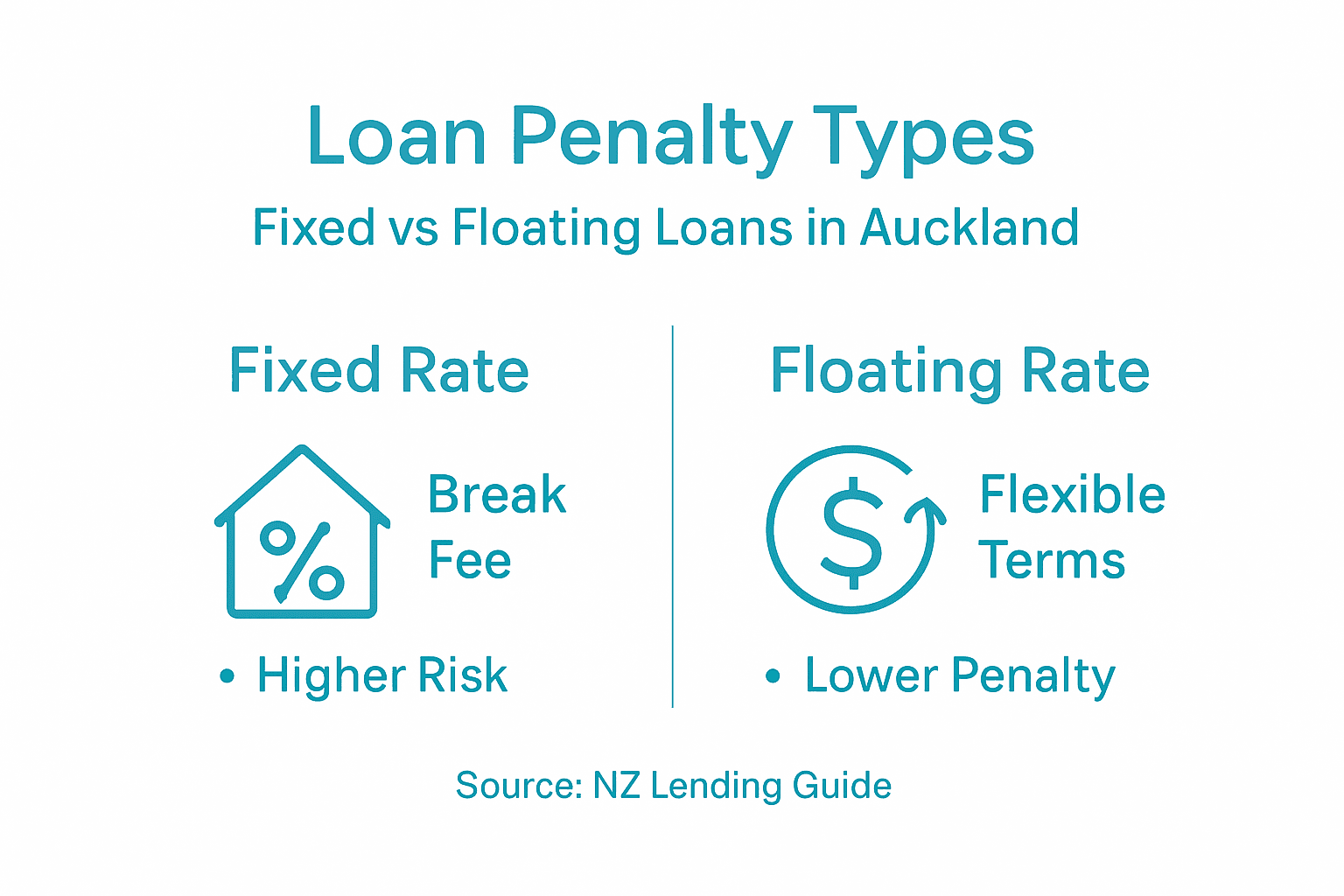
The choice between floating and fixed rates depends on individual financial circumstances and risk tolerance. Fixed-rate loans are ideal for borrowers who prioritise financial stability and prefer consistent repayment schedules. Floating rates suit those who anticipate potential interest rate decreases or require more flexibility in their loan structure. Some borrowers even opt for a split loan approach, dividing their mortgage between fixed and floating components to balance risk and flexibility. This strategy allows them to hedge against potential market changes while maintaining some predictability in their financial planning.
Here’s a quick comparison of fixed-rate and floating home loans in New Zealand:
| Feature | Fixed-Rate Loan | Floating Rate Loan |
|---|---|---|
| Interest Rate | Locked for set period | Adjusts with market |
| Early Repayment Fees | Significant penalty possible | Minimal to no penalty |
| Repayment Flexibility | Strict repayment structure | Flexible repayment allowed |
| Best For | Stability and budgeting | Flexibility and market response |
Pro tip: Consult a mortgage adviser to analyse your specific financial situation and risk profile before deciding between floating and fixed-rate loan structures.
Take Control of Your Mortgage and Avoid Early Repayment Penalties
Navigating early repayment penalties can be overwhelming, especially when fixed-rate home loans come with complex break fees that may catch you by surprise. At Mortgage Managers, we understand the challenges Auckland buyers face in managing these financial hurdles while protecting their investment. Our expert mortgage advisers specialise in tailoring loan structures that minimise penalties and maximise your flexibility in repayment.

Discover how our local knowledge and strategic loan management can help you make confident decisions about your home loan. Don’t let unexpected fees limit your financial freedom. Visit Mortgage Managers today to explore practical solutions, get personalised advice, and learn more about managing your loan with minimal risk. Take the first step now to secure a mortgage plan that works in your favour.
Frequently Asked Questions
What are early repayment penalties?
Early repayment penalties are fees charged by lenders when a borrower pays off their fixed-rate home loan earlier than the agreed term. These charges, often referred to as break fees, compensate lenders for potential lost earnings from interest that would have been accrued if the loan remained active.
How are early repayment fees calculated?
Early repayment fees depend on several factors, including the outstanding loan balance, the difference between the original fixed interest rate and current wholesale rates, and the remaining fixed-rate term. Lenders may use standard calculation methods or develop their own reasonable estimates for the fees.
Which types of loans are affected by early repayment penalties?
Fixed-rate home loans are primarily affected by early repayment penalties. These loans lock borrowers into a specific interest rate for a set period, whereas floating rate loans generally offer more flexibility and typically do not incur substantial fees for early repayment.
How can I minimise or avoid early repayment fees?
To minimise early repayment fees, borrowers can consider using offset accounts and redraw facilities, negotiate flexible loan terms before signing, or plan additional repayments at natural contract transition points. Additionally, some lenders provide annual prepayment allowances that permit a certain percentage of the loan to be repaid without penalties.