
Nearly one in three Auckland first-time home buyers face credit report errors that lower their borrowing power. If your dream of home ownership seems out of reach because of poor credit, you are not alone. Even australian lenders use similar credit checks, making accuracy and smart rebuilding strategies vital. This guide reveals clear actions to fix your report, manage debts, and improve payment habits so you can qualify for a mortgage with confidence.
Table of Contents
- Step 1: Review Your Current Credit Report For Accuracy
- Step 2: Resolve Outstanding Debts And Overdue Accounts
- Step 3: Establish Reliable Payment Habits
- Step 4: Increase Available Credit Responsibly
- Step 5: Monitor Your Credit Progress Regularly
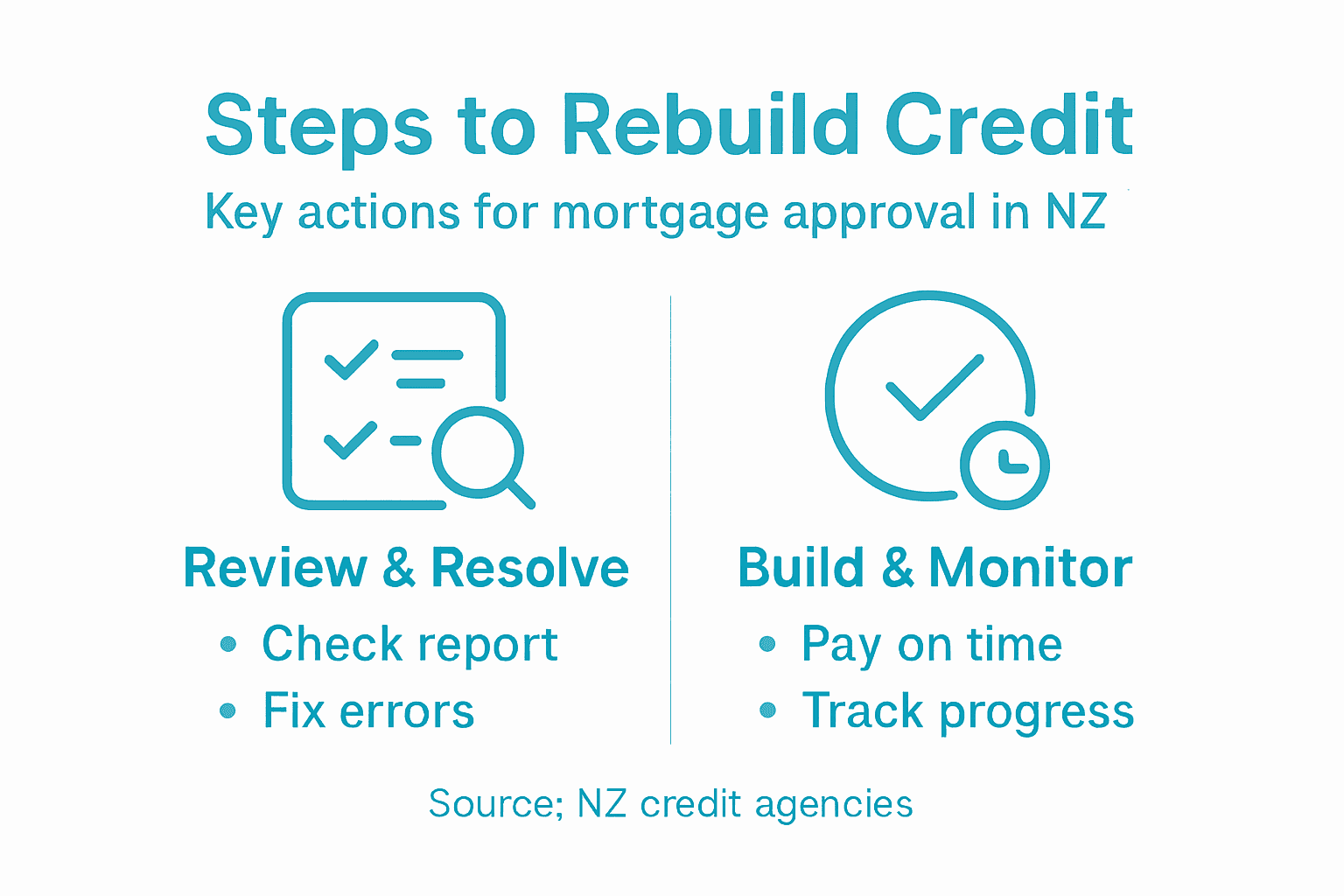
Quick Summary
| Important Insight | Detailed Explanation |
|---|---|
| 1. Review Your Credit Report | Regularly check for errors in your credit report to ensure accurate information and improve your credit score. |
| 2. Address Outstanding Debts | Create a list of debts and communicate with lenders to set up manageable repayment plans. |
| 3. Establish Reliable Payment Habits | Set up automatic payments for bills to maintain a consistent record of timely payments. |
| 4. Increase Credit Responsibly | Request modest credit limit increases and maintain a low utilisation rate of available credit. |
| 5. Monitor Your Credit Progress | Regularly review credit reports and track scores to catch errors and demonstrate financial improvement. |
Step 1: Review your current credit report for accuracy
Tracking down and meticulously examining your credit report is the foundational first step in rebuilding your financial reputation and mortgage prospects. Your credit report serves as a financial snapshot that lenders will scrutinise when considering your mortgage application, making its accuracy paramount.
To begin, request a free credit report from New Zealand’s major credit reporting agencies like Equifax, Centrix, and Illion. These reports comprehensively document your borrowing and repayment history, including existing loans, credit card accounts, and past payment behaviours. Carefully review each section for potential errors such as incorrect personal details, unrecognised accounts, outdated information, or fraudulent activities that could negatively impact your credit score.
Should you discover any inaccuracies, contact the relevant credit bureau immediately to dispute these errors. Most bureaus have established processes for investigating and correcting mistaken entries. Removing incorrect negative information can significantly improve your credit profile and increase your chances of mortgage approval.
Hot tip: Request reports from multiple credit agencies to cross-reference and ensure comprehensive accuracy of your financial records.
To help you compare New Zealand’s main credit reporting agencies, here is a quick reference table:
| Agency | Report Features | How to Request |
|---|---|---|
| Equifax | Comprehensive financial track record | Online portal, email, post |
| Centrix | Utilised by major lenders | Online form, written request |
| Illion | Monitors credit usage and defaults | Download request form online |
Step 2: Resolve outstanding debts and overdue accounts
Addressing outstanding debts is a critical step in rebuilding your credit profile and improving your mortgage eligibility. Your primary goal is to demonstrate financial responsibility and proactively manage any existing financial obligations that might be hindering your credit recovery.

Start by creating a comprehensive list of all outstanding debts, including credit card balances, personal loans, and utility bills. Communicate proactively with lenders to negotiate realistic repayment plans that suit your current financial situation. Consider exploring options such as debt consolidation, hardship applications, or structured payment arrangements that can help you systematically clear your overdue accounts while minimising further credit damage.
If you are experiencing significant financial challenges, investigate formal debt resolution mechanisms like Debt Repayment Orders. These legal frameworks can provide structured pathways to manage complex debt scenarios, offering a structured approach to clearing outstanding balances and rebuilding your financial standing.
Hot tip: Always document all communications with creditors and keep detailed records of negotiated payment arrangements to protect your financial interests.
Step 3: Establish reliable payment habits
Building a consistent and dependable payment track record is crucial for restoring your financial credibility and demonstrating your capacity to manage credit responsibly. Your goal is to transform your past financial inconsistencies into a pattern of reliable financial management.
To establish reliable payment habits, start by setting up automatic payment structures for all recurring bills and financial obligations. This approach eliminates the risk of missed payments and creates a systematic approach to meeting your financial commitments. Consider scheduling payments just after your regular income arrives, ensuring you consistently have sufficient funds and demonstrating financial discipline to potential lenders.
Implement a comprehensive tracking system for all your financial responsibilities. This might involve using digital budgeting apps, creating spreadsheets, or maintaining a dedicated folder where you record payment dates, amounts, and confirmation details. Consistently meeting payment deadlines across credit cards, utility bills, personal loans, and other financial commitments will gradually rebuild your credit reputation and signal to mortgage providers that you are a reliable borrower.
Hot tip: Create calendar reminders for payments that cannot be automated to prevent accidental defaults and maintain your emerging positive financial reputation.
Step 4: Increase available credit responsibly
Carefully expanding your available credit can be a strategic approach to rebuilding your financial profile and demonstrating responsible financial management. The key is to approach credit expansion thoughtfully and with a clear understanding of your long term mortgage goals.
Begin by understanding responsible lending principles before applying for additional credit. Consider requesting a modest credit limit increase on existing credit cards or opening a small secured credit line that you can manage meticulously. Each new credit avenue should be viewed as an opportunity to showcase your financial discipline rather than an invitation to accumulate more debt.
When exploring credit expansion, focus on maintaining low credit utilisation rates. Aim to use no more than 30% of your available credit limit and consistently make full repayments before their due dates. This approach signals to potential mortgage lenders that you can handle credit responsibly and are committed to maintaining financial stability. Remember that each credit application generates a hard inquiry on your credit report, so be selective and strategic about when and how you seek additional credit.
Hot tip: Space out credit applications by at least six months to minimise negative impacts on your credit score and demonstrate measured financial planning.
Step 5: Monitor your credit progress regularly
Tracking your credit journey is a critical ongoing process that transforms financial recovery from a one time effort into a sustained strategy. Your consistent attention will be the compass guiding you towards mortgage success.
Begin by reviewing credit reports from multiple bureaus every three to four months. This practice allows you to catch potential errors, track incremental improvements, and ensure all your positive financial behaviours are accurately recorded. Obtain free reports from different credit reporting agencies like Equifax, Centrix, and Illion to cross reference and validate your credit information.
Develop a systematic approach to credit monitoring by creating a dedicated folder or digital spreadsheet to document your credit scores over time. Record the date of each report, your current score, and any notable changes or improvements. This methodical tracking not only helps you understand your progress but also provides tangible evidence of your financial rehabilitation that can be valuable when discussing mortgage applications with potential lenders.
Hot tip: Set quarterly calendar reminders to pull your credit reports and schedule a personal financial review to maintain consistent monitoring and proactive credit management.
Here’s a summary of ongoing credit monitoring practices and their key benefits:
| Monitoring Method | Frequency | Main Benefit |
|---|---|---|
| Multiple bureau reports | Quarterly | Early error detection and correction |
| Credit score tracking | Regular review | Track progress, show improvement |
| Financial review reminders | Every three months | Maintain discipline and readiness |
Take Control of Your Credit Journey with Expert Mortgage Advice
Rebuilding your credit for mortgage success in New Zealand can feel overwhelming. From reviewing your credit report for accuracy to establishing reliable payment habits and increasing credit responsibly every step is crucial. If you are facing challenges like correcting errors on your credit file or negotiating repayment plans you are not alone. At Mortgage Managers, we understand the emotional weight of restoring your financial reputation and are here to guide you through the complexities with clarity and confidence.

Discover how our locally owned Auckland-based mortgage advisers can support your path to home ownership. We specialise in tailored mortgage solutions that align with your credit rebuilding goals. Visit Mortgage Managers now to start your personalised mortgage journey and see how partnering with experienced advisers improves your chances of success. Take the next step towards mortgage approval with trustworthy guidance at Mortgage Managers and learn how to manage your credit effectively by reviewing helpful insights on rebuilding credit at How to Rebuild Credit for Mortgage Success in NZ. Act today to secure your financial future and turn your mortgage dreams into reality.
Frequently Asked Questions
How can I check my credit report in New Zealand?
To check your credit report in New Zealand, request a free report from major credit reporting agencies such as Equifax, Centrix, or Illion. Visit their websites and follow their instructions to obtain your report, ensuring you review it thoroughly for accuracy.
What should I do if I find errors on my credit report?
If you find errors on your credit report, contact the relevant credit bureau immediately to dispute the inaccuracies. Follow their established process, which may involve submitting documentation for correction, and aim to resolve disputes within a few weeks.
How can I improve my credit score before applying for a mortgage?
To improve your credit score, start by resolving any outstanding debts and establishing reliable payment habits, such as setting up automatic payments. Consistently make on-time payments for at least six months to show potential lenders your financial responsibility.
What steps can I take to increase my available credit responsibly?
You can increase your available credit by requesting a modest credit limit increase on existing credit cards or opening a small secured credit line. Focus on using no more than 30% of your available credit and making full repayments each month to maintain good financial standing.
How often should I monitor my credit progress?
Monitor your credit progress by reviewing your credit reports from different bureaus every three to four months. Keep track of your credit score changes over time, and establish a system to do this regularly to stay informed of any improvements or issues.
What are the benefits of regular credit monitoring?
Regular credit monitoring helps detect potential errors early, allows you to track improvement in your credit score, and ensures all positive financial behaviours are accurately recorded. By reviewing your credit status every few months, you can make informed decisions leading up to a mortgage application.