
Most australian home buyers learn quickly that lenders in New Zealand judge mortgage applications with strict criteria. With more than 40 percent of buyers having their first loans rejected due to gaps in savings, high debts, or documentation errors, understanding your real financial health matters. This guide lays out proven steps to help you meet lender expectations, reduce risk factors, and make yourself a stronger candidate for home loan approval in New Zealand.
Table of Contents
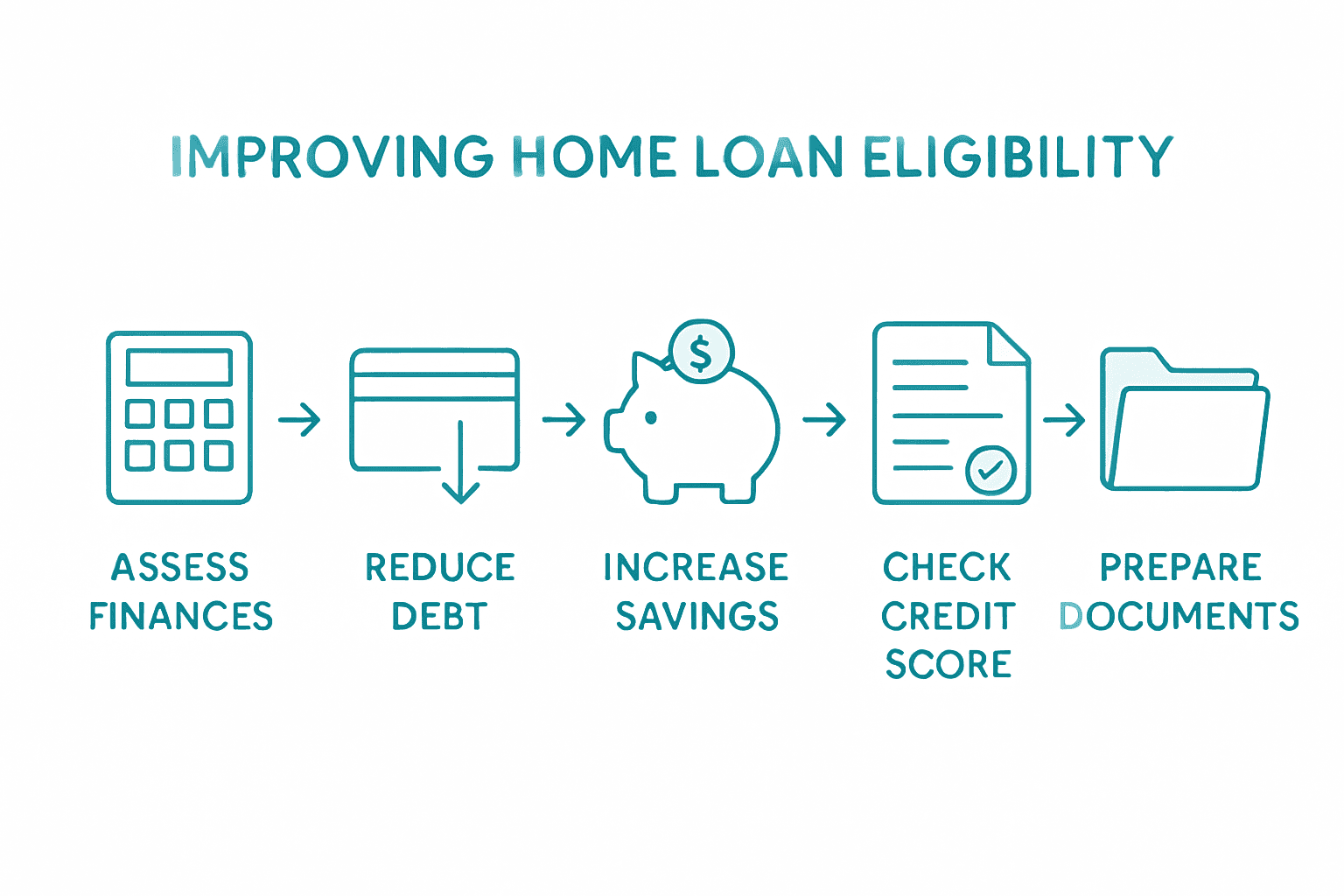
- Step 1: Assess Your Current Financial Situation
- Step 2: Reduce Existing Debts and Liabilities
- Step 3: Increase Your Savings and Deposit
- Step 4: Strengthen Your Credit Score
- Step 5: Provide Accurate and Complete Documentation
- Step 6: Review Your Eligibility With a Mortgage Adviser
Quick Summary
| Key Point | Explanation |
|---|---|
| 1. Assess your financial situation | Gather payslips, bank statements, and debt records to understand your financial health before applying for a home loan. |
| 2. Reduce your debts | Minimise outstanding liabilities to improve your debt-to-income ratio, which is crucial for obtaining a mortgage. |
| 3. Increase your savings | Aim to save 10-20% of your annual income for a deposit, enhancing your mortgage terms and approval chances. |
| 4. Strengthen your credit score | Pay bills timely and maintain low credit utilisation to boost your credit score, making you more attractive to lenders. |
| 5. Provide accurate documentation | Compile organised, complete financial documents to demonstrate reliability and speed up your mortgage application process. |
Step 1: Assess your current financial situation
Getting a clear picture of your financial health is the first critical step towards improving your home loan eligibility. Understanding your current financial landscape will help you identify strengths and potential areas for improvement before approaching lenders.
Start by gathering comprehensive documentation that paints a complete picture of your financial status. This includes recent payslips, tax returns, bank statements, and a detailed record of your monthly income and expenses. Checking your bank statements thoroughly helps ensure you present a clear and accurate financial profile to potential lenders. Make sure to list all regular income sources including salary, investments, rental income, and any additional earnings.
Next, calculate your total monthly expenses and existing debt obligations. Break down your spending into categories like rent or current mortgage, utilities, groceries, transport, insurance, and discretionary spending. Lenders will closely examine your debt-to-income ratio, so understanding this metric is crucial. Aim to keep your total monthly debt payments under 40% of your gross monthly income. This demonstrates financial discipline and increases your attractiveness to mortgage providers.
Pro tip: Create a comprehensive spreadsheet tracking your income and expenses for the past three to six months. This detailed financial snapshot will not only help you understand your spending habits but also provide concrete evidence of your financial stability to potential lenders.
Step 2: Reduce existing debts and liabilities
Reducing your existing debts is a critical strategy for improving your home loan eligibility and demonstrating financial responsibility to potential lenders. By strategically minimising your outstanding liabilities, you can significantly enhance your borrowing potential and show financial discipline.
Begin by comprehensively listing all your current debts including credit card balances, personal loans, vehicle finance, and any other outstanding financial obligations. Explore debt consolidation strategies that can help streamline multiple debt payments into a single, more manageable arrangement. The Reserve Bank of New Zealand emphasises that managing your debt-to-income ratio is crucial, as lenders carefully assess your ability to take on additional financial commitments.

Implement a systematic debt reduction plan by prioritising high interest debts first. Consider strategies like the snowball method where you pay minimum amounts on all debts while concentrating extra funds on the smallest debt, then progressively moving to larger obligations. Aim to reduce your total debt to under 40% of your annual income to improve your mortgage application prospects. This approach demonstrates financial prudence and increases your attractiveness to potential lenders.
Pro tip: Create a dedicated debt repayment fund by cutting unnecessary expenses and redirecting those savings directly towards debt reduction. Automating these payments can help you stay consistent and disciplined in your financial management.
Step 3: Increase your savings and deposit
Building a robust savings strategy is fundamental to improving your home loan eligibility and demonstrating financial discipline to potential lenders. A substantial deposit not only increases your chances of mortgage approval but also provides you with more favourable lending terms.
Maximising your borrowing power requires a targeted approach to savings. Start by creating a dedicated high interest savings account specifically for your home deposit. Aim to save at least 10% to 20% of your annual income, with the goal of accumulating a deposit that represents 20% of the property’s value. Explore strategies that help Kiwis save more effectively to accelerate your savings journey.
Implement aggressive savings techniques by reviewing and cutting unnecessary expenses. Consider setting up automatic transfers to your deposit account immediately after receiving your salary. Look for opportunities to increase your income through side gigs, overtime, or negotiating a pay rise. Track your progress meticulously and celebrate milestones to stay motivated. Remember that a larger deposit reduces your loan to value ratio, making you a more attractive candidate to mortgage lenders.
Pro tip: Open a separate high interest savings account and set up automatic weekly transfers that match the amount you would spend on discretionary items like takeaway meals or unnecessary subscriptions.
Step 4: Strengthen your credit score
Your credit score plays a pivotal role in determining your home loan eligibility and the lending terms offered by financial institutions. A strong credit profile can significantly improve your chances of securing a mortgage with favourable conditions.
Understanding the impact of credit history is crucial for potential home buyers. Start by obtaining a free copy of your credit report from authorised credit reporting agencies. Explore strategies to improve your credit score systematically by addressing any existing negative marks or discrepancies. Pay all bills and existing debt obligations consistently and on time, as payment history represents the most significant factor in credit scoring.
Take proactive steps to build a positive credit reputation. Avoid applying for multiple credit products in a short timeframe, as this can signal financial stress to potential lenders. Maintain a low credit utilisation ratio by keeping your credit card balances well below the maximum limit. Consider keeping older credit accounts open to demonstrate a longer credit history, which can positively influence your overall creditworthiness. Regularly monitor your credit report for accuracy and address any errors promptly.
Pro tip: Set up automatic bill payments and calendar reminders to ensure you never miss a payment deadline, which can quickly and negatively impact your credit score.
Step 5: Provide accurate and complete documentation
Compiling a comprehensive and precise documentation package is crucial for demonstrating your financial reliability and increasing your home loan approval chances. Lenders rely heavily on your submitted documents to assess your financial health and borrowing potential.
Consumer Protection NZ recommends a thorough documentation approach for mortgage applications. Gather essential documents including recent payslips covering the past three months, comprehensive tax returns for the last two financial years, bank statements showing consistent income and responsible spending patterns, and proof of current employment. Include additional documentation such as rental agreements, investment statements, and detailed records of existing assets and liabilities.
Ensure all documentation is current, clearly legible, and presents a consistent financial narrative. Double check that personal details match across all documents precisely. Be prepared to provide supplementary evidence if requested, such as explanations for any irregular income or significant financial transactions. Organise your documents systematically in a clear folder or digital file to demonstrate professionalism and attention to detail.
Pro tip: Create a digital backup of all important financial documents and store them securely in cloud storage with password protection to ensure you can quickly reproduce any paperwork if required by lenders.
Here’s how typical lender requirements compare when assessing home loan applications in New Zealand:
| Lender Criterion | Minimum Standards | Impact on Eligibility |
|---|---|---|
| Deposit Amount | 20% of property value preferred | Lower deposit reduces approval odds |
| Debt-to-Income Ratio | Under 40% recommended | High ratio raises rejection risk |
| Credit Score Range | Above 650 typically favourable | Low score leads to higher rates |
| Documentation Accuracy | No errors or inconsistencies | Incomplete docs can delay approval |
Step 6: Review your eligibility with a mortgage adviser
Engaging a mortgage adviser represents a strategic move to comprehensively assess and improve your home loan prospects. These financial professionals offer personalised insights that can significantly enhance your understanding of lending requirements and your individual borrowing potential.
Consulting a financial advisor helps assess your true affordability and provides a nuanced perspective on your mortgage application. Understanding the role of an independent mortgage adviser can help you navigate complex lending criteria more effectively. During your consultation, prepare to discuss your complete financial profile including income, existing debts, credit history, and long term financial goals. An experienced adviser will conduct a thorough evaluation of your circumstances and provide tailored recommendations to strengthen your loan application.
A professional mortgage adviser can identify potential obstacles in your application before you submit it to lenders. They will help you understand specific lender requirements, recommend strategies to improve your eligibility, and potentially connect you with lenders most likely to approve your specific financial situation. This proactive approach can save you time, reduce unnecessary credit enquiries, and increase your chances of successful mortgage approval.
Below is a summary of strategies and their impact on home loan eligibility:
| Strategy Applied | Immediate Benefit | Long Term Impact |
|---|---|---|
| Reduce debts | Improves debt-to-income ratio | Builds sustainable finances |
| Increase savings | Demonstrates financial discipline | Enables better loan conditions |
| Strengthen credit score | Lowers risk for lenders | Access to lower interest rates |
| Detailed documentation | Speeds up application process | Boosts credibility with lenders |
Pro tip: Compile a comprehensive financial summary document before meeting your mortgage adviser, including recent payslips, tax returns, and a list of current assets and liabilities to facilitate a more productive consultation.
Boost Your Home Loan Eligibility with Expert Mortgage Advice
Navigating the challenge of improving your home loan eligibility requires more than just understanding debt ratios and credit scores. If you are aiming to reduce your liabilities, strengthen your credit, or build a solid deposit, the right guidance makes all the difference. Mortgage Managers, a trusted team of Auckland mortgage advisers based in Hobsonville, specialise in tailoring strategies that align with your unique financial situation and goals.

Take control of your mortgage journey today by consulting with professionals who know the New Zealand lending landscape inside out. Visit Mortgage Managers to explore how our expert advice can help you streamline your application, improve your eligibility, and secure better loan terms. Discover why independent mortgage advice is a crucial step in realising your dream home. Don’t wait until challenges become setbacks – get personalised support now to boost your confidence and increase your chances of home loan approval.
Frequently Asked Questions
How can I assess my current financial situation to improve my home loan eligibility?
Start by gathering documentation such as recent payslips, tax returns, and bank statements. Create a detailed spreadsheet of your income and expenses for the past three to six months to understand your financial landscape and identify areas for improvement.
What steps can I take to reduce my existing debts effectively?
Begin by listing all your current debts, focusing on high-interest obligations first. Consider implementing a debt reduction plan, such as the snowball method, to systematically lower your total debt, ideally to under 40% of your annual income to enhance your mortgage application.
How much should I ideally save for a home deposit?
Aim to accumulate a deposit that represents at least 20% of the property’s value. This not only increases your chances of mortgage approval but also provides more favourable lending terms; for example, if you are buying a property worth AUD 500,000, strive to save AUD 100,000 for your deposit.
What strategies can I use to strengthen my credit score?
Pay all bills and debts on time to build a positive credit history, as this represents a significant impact on your credit score. Regularly check your credit report for inaccuracies and maintain a low credit utilisation ratio by keeping credit card balances below 30% of your maximum limit.
Why is accurate documentation important for my home loan application?
Providing accurate and complete documentation can significantly speed up the loan approval process and demonstrate your financial reliability to lenders. Gather recent payslips, comprehensive tax returns, and consistent bank statements to present a clear financial picture.
How can a mortgage adviser help improve my home loan eligibility?
Engaging a mortgage adviser can help you understand specific lender requirements and identify potential obstacles before submission. Prepare a comprehensive financial summary for your meeting, which will assist the adviser in recommending tailored strategies to enhance your loan application.