
TL;DR:
- Applying for a home mortgage in New Zealand involves meeting strict eligibility criteria based on income, residency, deposit size, and credit history. Preparation of complete documentation and maintaining financial discipline throughout the process are crucial to avoid delays or rejection. Engaging a mortgage adviser can streamline the application, help navigate schemes like Kāinga Ora, and ensure you understand all loan conditions before signing.
A home mortgage application is the formal process of requesting a loan from a lender to purchase property, requiring you to prove your income, savings, and creditworthiness before a bank commits funds. In New Zealand, this process involves meeting lender criteria set by banks like ANZ, Westpac, and Kiwibank, as well as government-backed schemes such as Kāinga Ora and KiwiSaver. Whether you are a first-time buyer or returning to the market, understanding the mortgage loan application process from start to finish gives you a real advantage. This guide walks you through eligibility, documentation, application steps, and the pitfalls that catch too many Kiwis off guard.
What are the eligibility criteria for a home mortgage in NZ?
Eligibility for a home mortgage in New Zealand is determined by your income, residency status, deposit size, and credit history. Lenders assess these factors together, not in isolation, which means a strong deposit can sometimes offset a modest income, and vice versa.

The Kāinga Ora First Home Loan is one of the most accessible pathways for buyers with smaller deposits. First Home Loan eligibility sets income caps at $95,000 for individuals and $150,000 for households, and requires New Zealand citizenship or permanent residency, plus a minimum 5% deposit. That 5% threshold is significant because most standard bank loans require at least 10% to 20% without additional mortgage insurance. You can learn more about Kāinga Ora loan criteria and how they apply to your situation before approaching a lender.
Key eligibility requirements across most NZ lenders include:
- Residency: NZ citizenship, permanent residency, or an eligible work visa (criteria vary by lender)
- Income: Stable, verifiable income from employment or self-employment; lenders typically want at least two years of history
- Deposit: A minimum of 5% for Kāinga Ora First Home Loan; 10% or more for standard bank products
- Credit history: No recent defaults, bankruptcies, or dishonoured payments; a clean credit file signals reliability
- Loan-to-value ratio (LVR): Deposits under 10% face stricter scrutiny and possible lending restrictions under Reserve Bank rules
- First Home Grant: Subject to strict eligibility and price caps; misunderstanding the conditions can result in having to repay the grant
Banks also apply a serviceability stress test, assessing your ability to repay at rates 2 to 3% above current market rates. This means your borrowing capacity is calculated on a higher hypothetical rate, not the rate you will actually pay. It is a conservative measure designed to protect you from rate rises, but it does reduce the maximum loan amount most buyers qualify for.
What documents do you need for a full mortgage application?
A full mortgage application requires a complete picture of your financial life, and incomplete or inconsistent paperwork is one of the most common reasons applications stall. Missing or inconsistent documents such as unexplained bank deposits or gaps in employment history can pause your application for weeks.
Gather these documents before you approach any lender:
- Proof of identity: Passport or NZ driver’s licence
- Income evidence: Your three most recent payslips and an IRD earnings summary for the past two years
- Bank statements: Three to six months of statements across all accounts, showing regular savings and no unexplained large deposits
- Tax returns: Two years of personal tax returns; if you are self-employed, include financial statements prepared by an accountant
- Deposit source: Evidence of where your deposit comes from, whether that is savings, a KiwiSaver withdrawal, a gift from family, or a combination
- Additional income: Documentation for rental income, dividends, or other sources; note that lenders typically discount rental income to 75 to 80% of its actual value when calculating serviceability
Pro Tip: Clean up your bank statements at least three months before applying. Avoid irregular spending patterns, subscription services you rarely use, and any transfers that could look unexplained to a credit analyst. Lenders read bank statements the way a detective reads a crime scene.
Self-employed applicants face additional scrutiny. Two years of financial statements signed by a chartered accountant, plus your most recent GST returns, are standard requirements. If your income has fluctuated, lenders will often average the two years rather than use the most recent figure, which can reduce your assessed income. Preparing a clear explanation letter for any income variations is worth the effort.
How do you navigate the mortgage application steps from pre-approval to settlement?
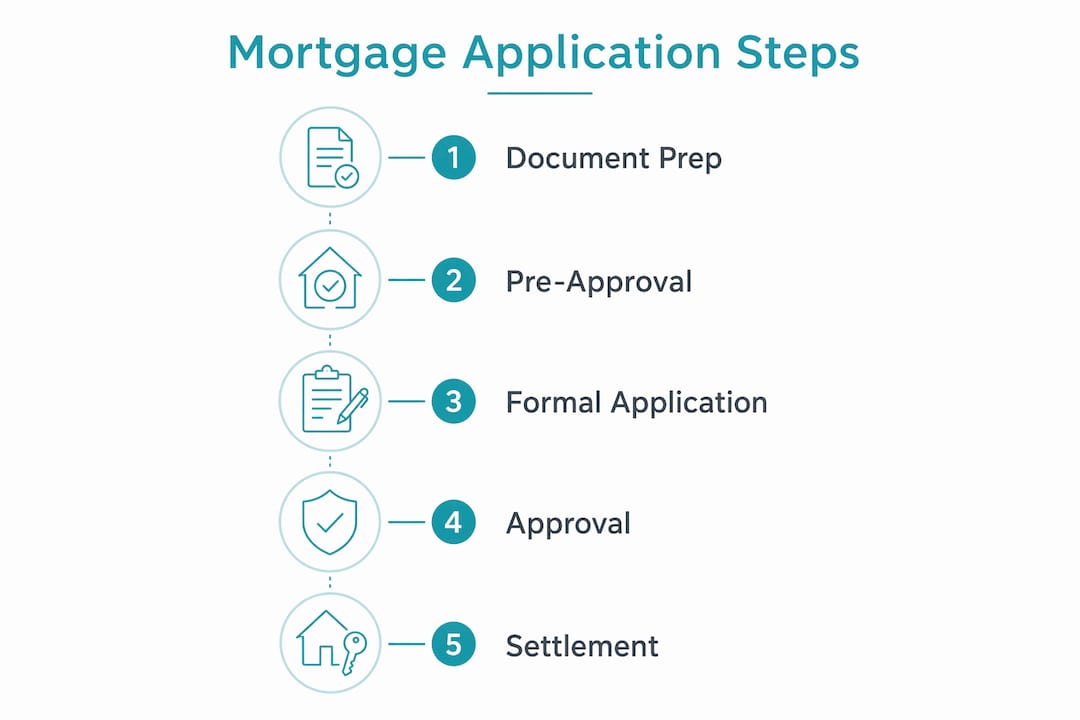
The mortgage loan application process in New Zealand follows a clear sequence, and knowing what happens at each stage removes a great deal of uncertainty. Here is the standard pathway:
- Financial preparation: Organise your documents, check your credit file through Centrix or Equifax NZ, and calculate your borrowing capacity using an online mortgage calculator.
- Pre-approval: Submit your application to a lender or through a mortgage adviser. Pre-approval typically takes 3 to 7 business days with complete documentation and remains valid for 60 to 90 days. Use this window actively.
- Property search: With pre-approval in hand, you can make offers with confidence. Always include a finance condition in your Sale and Purchase Agreement.
- Formal approval: Once your offer is accepted, the lender orders a registered valuation and conducts a final credit check before issuing unconditional approval.
- KiwiSaver withdrawal: If you are using KiwiSaver funds as part of your deposit, initiate the withdrawal immediately after signing the agreement. KiwiSaver withdrawals take 10 to 15 working days to process, and delays here can push back your settlement date.
- Settlement: Your solicitor coordinates the transfer of funds and title. The mortgage is registered, and you receive the keys.
The table below outlines typical timeframes for each stage:
| Stage | Typical timeframe |
|---|---|
| Document preparation | 2 to 4 weeks |
| Pre-approval | 3 to 7 business days |
| Property search | 4 to 12 weeks |
| Formal approval | 5 to 10 business days |
| KiwiSaver withdrawal | 10 to 15 working days |
| Settlement | 1 to 4 weeks after unconditional |
Pre-approval is conditional, not a guaranteed loan offer. Formal pre-approval is based on your current financial position and the lender’s criteria at that moment. If your circumstances change between pre-approval and final approval, the lender can revise or withdraw the offer. Treat pre-approval as a strong indicator, not a guarantee, and avoid any financial changes during this period.
What are the most common mistakes to avoid during your application?
The mortgage application process rewards preparation and punishes complacency. Several mistakes appear repeatedly among applicants, and most of them are entirely avoidable.
Treating pre-approval as passive. Many buyers receive pre-approval and then relax their financial discipline. Mortgage advisers consistently recommend cleaning up bank accounts and avoiding new credit for at least three months before applying, and that discipline should continue through to settlement. A credit card application or a new car loan during this period can reduce your borrowing capacity or trigger a reassessment.
Taking on new debt or large discretionary spending. New borrowing or significant spending during the pre-approval phase can negatively affect your serviceability calculation. Banks run stress tests at rates well above current levels, so even a modest new liability can push you outside their lending criteria.
Pro Tip: Set a personal spending freeze from the moment you decide to apply until settlement day. No new credit cards, no buy-now-pay-later accounts, and no large purchases on existing cards. Your bank statements are your financial CV, and you want them to look their best.
Signing contracts without a finance condition. In a competitive market, some buyers feel pressure to go unconditional immediately to win a property. Signing without a finance condition exposes you legally if formal loan approval fails due to a valuation shortfall or a change in lender criteria. The risk is rarely worth the reward.
Delaying the KiwiSaver withdrawal request. Given that withdrawals take 10 to 15 working days, waiting until the week before settlement to initiate the process is a genuine risk. Start the paperwork the day you sign the Sale and Purchase Agreement.
Misunderstanding the First Home Grant is another costly error. The grant comes with occupation conditions and price caps, and failure to comply can result in a repayment demand from Kāinga Ora. Read the conditions carefully, or ask your mortgage adviser to walk you through them before you apply.
Key takeaways
A successful home mortgage application in New Zealand depends on meeting lender eligibility criteria, preparing complete documentation, following the application sequence carefully, and avoiding financial missteps between pre-approval and settlement.
| Point | Details |
|---|---|
| Eligibility comes first | Check income caps, residency status, and deposit size before approaching any lender. |
| Documentation drives speed | Incomplete or inconsistent paperwork is the leading cause of application delays. |
| Pre-approval is conditional | Treat it as a strong indicator, not a guarantee, and maintain financial discipline throughout. |
| KiwiSaver timing is critical | Initiate your withdrawal immediately after signing the Sale and Purchase Agreement. |
| Avoid new debt during application | New credit or large spending can reduce your borrowing capacity and trigger reassessment. |
What I have learned from helping Kiwis through the mortgage process
After working with hundreds of buyers across Auckland and beyond, the pattern I see most often is not a lack of money. It is a lack of preparation. Buyers who spend three to six months actively organising their finances before they apply consistently have smoother experiences and better outcomes than those who rush in with a rough idea of their savings.
The thing most articles do not tell you is that the emotional weight of buying a home can cloud your financial judgement. I have seen buyers make impulsive purchases or take on new debt simply because the process felt overwhelming and they wanted to feel in control of something. That impulse is understandable, but it works directly against your application.
Working with a mortgage adviser is not just about accessing more lenders, though that matters too. It is about having someone who can read your financial picture objectively and tell you what a bank will actually see. The role of a mortgage adviser is part financial analyst, part translator, and part steady hand when the process gets stressful.
One more thing worth saying: understand your loan conditions before you sign. Fixed versus floating rates, break fees, and repayment flexibility all affect your long-term position. A lower rate with no flexibility can cost you more than a slightly higher rate with the ability to make lump-sum repayments. Ask the questions, read the fine print, and do not let urgency override understanding.
— Stuart
How Mortgagemanagers can help with your home loan application
Applying for a home loan is one of the most significant financial decisions you will make, and having the right support can make a real difference to both the process and the outcome.

Mortgagemanagers is a locally owned Auckland mortgage brokerage based in Hobsonville, serving buyers across West Auckland, the North Shore, and remotely throughout New Zealand. As mortgage advisers who access multiple lenders, the team at Mortgagemanagers shops your application across banks and non-bank lenders to find terms that suit your situation, at no direct cost to you. They also specialise in government-backed schemes including the Kāinga Ora First Home Loan, helping first-home buyers understand eligibility and navigate the application with confidence. If you are ready to take the next step, talk to a mortgage adviser who knows both the lenders and the local market.
FAQ
What is the minimum deposit for a home mortgage in NZ?
The minimum deposit for most standard bank mortgages in New Zealand is 10%, though the Kāinga Ora First Home Loan allows eligible buyers to purchase with as little as 5%. Deposits below 10% face stricter lender scrutiny under Reserve Bank LVR rules.
How long does mortgage pre-approval take in New Zealand?
Pre-approval typically takes 3 to 7 business days when you submit complete documentation, and it remains valid for 60 to 90 days. Incomplete paperwork is the most common cause of delays, so having all documents ready before you apply is the fastest path to approval.
Can I use KiwiSaver for my home deposit?
Yes, eligible first-home buyers can withdraw most of their KiwiSaver balance to put towards a deposit. The withdrawal process takes 10 to 15 working days, so you should initiate it immediately after signing your Sale and Purchase Agreement to avoid settlement delays.
Do mortgage brokers cost extra in New Zealand?
Mortgage brokers in New Zealand are typically paid by lender commissions, meaning their service comes at no direct cost to you as the borrower. They access multiple lenders on your behalf, which can improve both your approval chances and the loan terms you receive.
What income do I need for the Kāinga Ora First Home Loan?
The Kāinga Ora First Home Loan sets an income cap of $95,000 for individual applicants and $150,000 for households. You must also be a New Zealand citizen or permanent resident and have a minimum 5% deposit to qualify.