
Most australian home buyers face a mountain of paperwork before even starting their mortgage application. Gathering and organising everything from bank statements to employment records is often cited as the biggest hurdle for over 60 percent of borrowers. With strict documentation required at every step, knowing exactly what lenders need makes the difference between a smooth process and costly delays. This guide breaks down each stage so you can approach your mortgage journey with clarity and confidence.
Table of Contents
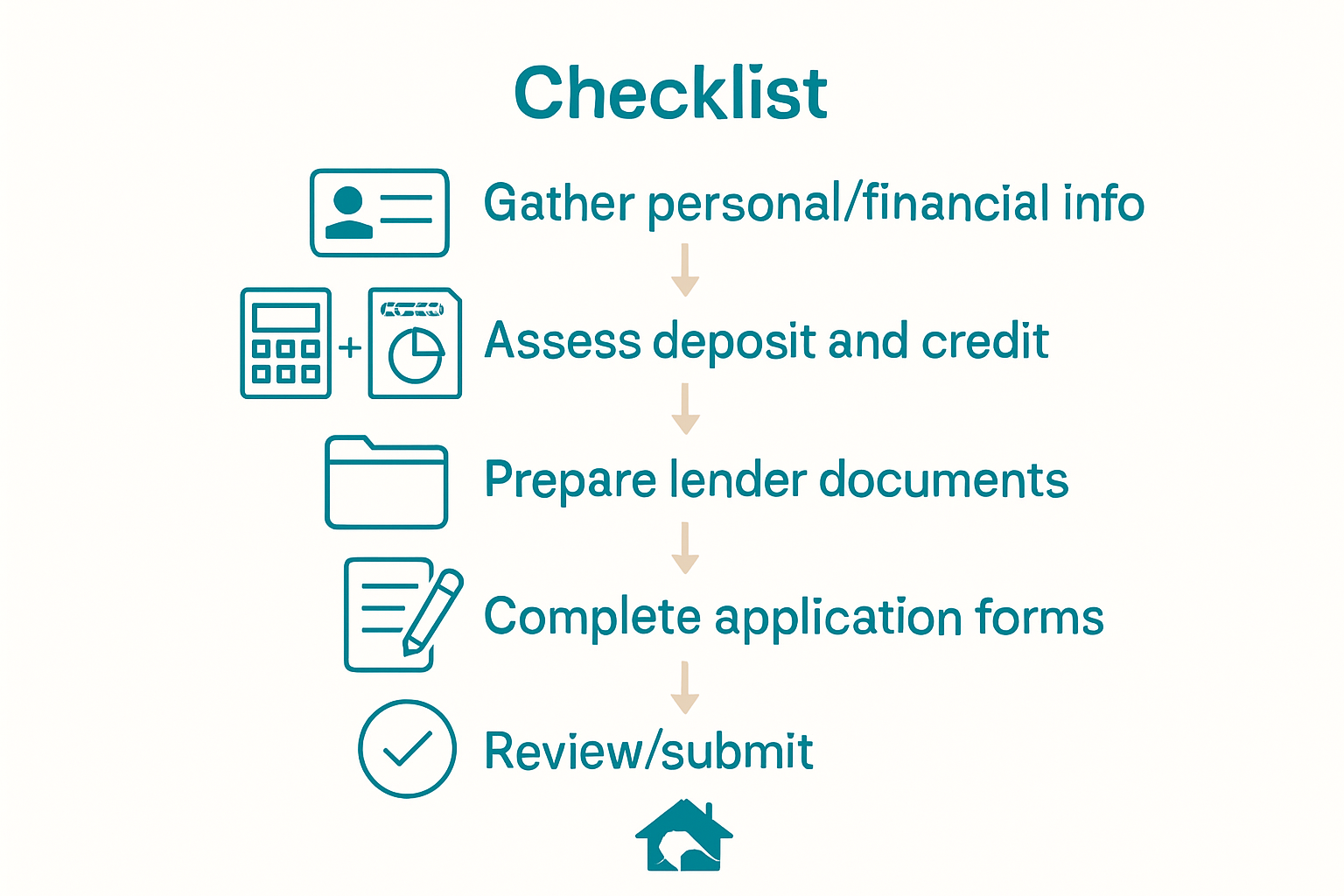
- Stage 1: Gather Personal And Financial Information
- Stage 2: Assess Your Deposit And Credit Readiness
- Stage 3: Prepare Required Documents For Lenders
- Stage 4: Complete Your Mortgage Application Forms
- Stage 5: Review And Submit Your Entire Checklist
Quick Summary
| Important Insight | Explanation |
|---|---|
| 1. Organise your financial documents | Gather identification, address proof, income verification, and existing financial commitments for a smooth application process. |
| 2. Assess your deposit and credit score | Know your deposit size and check your credit report to address any issues that could affect your loan application. |
| 3. Prepare comprehensive documents for lenders | Compile required documents, including identification, income proof, and residential address to ensure a complete mortgage application. |
| 4. Double-check application forms for accuracy | Fill out application forms meticulously, ensuring consistent and correct information throughout all documents to avoid errors. |
| 5. Conduct a thorough review before submission | Carefully review your entire application and checklist, confirming all documents are accurate and complete prior to submission. |
Stage 1: Gather personal and financial information
Launching your mortgage application requires comprehensive personal and financial documentation. A focused financial checklist will help you organise the essential paperwork needed for a successful home loan application.
Your mortgage application demands several critical documents. You will need to compile identification records including your passport or driver’s licence, proof of current residential address such as utility bills, recent bank statements covering the past three to six months, comprehensive income verification documents like payslips or tax returns for the last two years, and records of any existing financial commitments including credit card statements, personal loans, and hire purchase agreements. Employment verification is crucial this includes employment contract details, employer contact information, and evidence of stable income.
Pro tip: Create a dedicated folder or digital file to store all these documents systematically. This approach prevents last minute scrambling and demonstrates financial organisation to potential lenders. Having everything prepared in advance significantly streamlines your mortgage application process and presents you as a credible borrower.
Once you have gathered these materials, you are ready to progress to the next stage of your mortgage application journey.
Stage 2: Assess your deposit and credit readiness
Assessing your deposit and credit readiness is a critical step in preparing for a successful mortgage application. Understanding how your credit score works will help you navigate this important financial evaluation.
Start by calculating your potential deposit amount. Most lenders in New Zealand require a minimum deposit of 10% to 20% of the property value. Review your current savings and determine how much you can realistically contribute. Check your credit report from major credit bureaus to identify your current credit score and address any potential issues. Look for any outstanding debts, late payments, or errors that might negatively impact your loan application. How to improve your credit score can provide valuable strategies for enhancing your financial profile.

Pro tip: If your deposit is less than 20%, you may need to budget for lenders mortgage insurance. This additional cost protects the bank in case of default and can significantly impact your borrowing capacity. Consider consulting a mortgage adviser who can help you understand the specific requirements and potential strategies for maximising your loan potential.
With a clear understanding of your deposit and credit standing, you are now prepared to move forward with confidence in your mortgage application journey.
Stage 3: Prepare required documents for lenders
Preparing the right documents is crucial for a smooth mortgage application process. 7 Essential Mortgage Application Tips for Kiwi Home Buyers can help you navigate this critical stage with confidence.
Gather a comprehensive set of documents that lenders will require to assess your financial standing. This includes original or certified copies of government issued photo identification such as your passport or driver’s licence, proof of residential address through recent utility bills or bank statements, and comprehensive income verification documents. Your income documentation should include recent payslips covering the past three months, group investment certificates, and the most recent two years of tax returns or notices of assessment. For self employed applicants, you will need additional documentation including financial statements, business registration documents, and evidence of consistent income.
Pro tip: Create digital and physical copies of all documents and organise them systematically. Are Your Bank Statements Ready For A Mortgage Approval can provide guidance on presenting your financial records most effectively. Consider using a secure folder or digital file system to keep everything accessible yet protected.
With your documents meticulously prepared, you are now ready to move to the next critical phase of your mortgage application journey.
Stage 4: Complete your mortgage application forms
Compiling your mortgage application forms requires precision and careful attention to detail. 7 Essential Steps to Get a Mortgage in New Zealand can guide you through this crucial stage of your home loan journey.
Begin by carefully reading through each section of the mortgage application form. Ensure you provide accurate and consistent information across all documents. Double check personal details like your full legal name, date of birth, contact information, current residential address, and employment history. Be prepared to provide comprehensive information about your income sources, including base salary, bonuses, rental income, or any additional earnings. Financial institutions require detailed documentation to assess your borrowing capacity and risk profile. Fill out sections related to assets and liabilities with absolute transparency including current bank account balances, investments, existing loans, credit card limits, and any financial commitments.
Pro tip: Consider having a trusted friend or family member review your application before submission to catch any potential errors or inconsistencies. Basic 101 On How To Apply For A Home Loan offers additional insights into navigating this complex process. Take your time and avoid rushing through the paperwork to ensure accuracy and completeness.
With your application meticulously completed, you are now ready to submit your mortgage application and move forward in your home ownership journey.
Stage 5: Review and submit your entire checklist
The final stage of your mortgage application requires a systematic and thorough review of all documentation. Preparing and Applying Checklist provides essential guidance for ensuring a comprehensive submission.
Carefully go through each section of your mortgage application checklist with meticulous attention. Verify that every document is current accurate and complete. Cross reference your financial statements identification documents income verification and personal details to confirm consistency across all paperworks. Check that all required signatures are in place and that you have included copies of all necessary supporting documentation. Ensure that your application presents a clear and transparent picture of your financial situation highlighting your stability and ability to manage mortgage repayments.
Pro tip: Before final submission create a digital and physical backup of all submitted documents. This provides a safety net and allows you to quickly reference information if required during the application process. If possible have a financial professional or trusted advisor review your complete application to catch any potential oversights or areas that might raise questions from lenders.
With your comprehensive checklist reviewed and submitted you have now completed a critical milestone in your journey towards homeownership.
Simplify Your Mortgage Journey with Expert Guidance
Navigating the detailed steps of a mortgage application can feel overwhelming. From gathering personal and financial documents to completing forms with precision, the process demands careful attention and organisation. The key challenges you face include ensuring your financial readiness, preparing all necessary paperwork, and submitting a comprehensive application that impresses lenders with your credibility.
At Mortgage Managers, we understand these pain points and are here to help. Our experienced Auckland mortgage advisers provide tailored support to help you assess your deposit and credit standing, prepare the right documents, and complete your application accurately. Dont let uncertainty or paperwork delays hold you back. With our local expertise and personalised approach, you gain confidence and clarity every step of the way.

Ready to take control of your mortgage application today Visit Mortgage Managers for trusted advice and practical solutions or explore how our team can assist you in preparing for success at A focused financial checklist and 7 Essential Mortgage Application Tips for Kiwi Home Buyers. Let us help turn the hassle of applying into a smooth path to your new home.
Frequently Asked Questions
What documents do I need to gather for my mortgage application?
You will need identification records such as your passport or driver’s licence, proof of your current residential address, recent bank statements, income verification like payslips or tax returns, and details of any existing financial commitments. Start by organising these documents into a dedicated folder to streamline your application process.
How do I assess my deposit and credit readiness?
Begin by calculating your potential deposit against the property value, aiming for a minimum of 10% to 20%. Check your credit score through credit reports, addressing any outstanding debts or inconsistencies to ensure you present a strong financial profile.
What should I include in my income verification documents?
Include recent payslips that cover the last three months, tax returns from the past two years, and, if self-employed, additional financial statements and business registration documents. Collect these documents early to avoid last-minute hurdles in your application.
How do I complete the mortgage application forms accurately?
Carefully read each section of the application and ensure that all personal and financial information is accurate and consistent across documents. Take your time to double-check details, and consider asking a friend or family member to review your application for any errors.
What steps should I take before submitting my checklist?
Review your entire mortgage application checklist meticulously, verifying that all documents are current, accurate, and complete. Create digital and physical backups of everything submitted to have quick access to information during the approval process.
How can I improve my chances of mortgage approval?
Present a comprehensive and organised application, including all required documents and verifying your financial stability. Consider consulting a mortgage adviser for tailored strategies to enhance your eligibility, especially if your deposit is below 20%.
Recommended
- Mortgage Approval Process Guide NZ Home Loans – Mortgage Managers
- 7 Essential Steps to Get a Mortgage in New Zealand – Mortgage Managers
- 7 Essential Steps to Get a Mortgage in New Zealand – Mortgage Managers
- What Is a Mortgage? Complete NZ Home Loan Guide
- 7 Essential Tips for First Home Buyers in Melbourne – Onyx Removals