
TL;DR:
- Asking the right questions helps first-home buyers find mortgage products that align with their financial goals and circumstances.
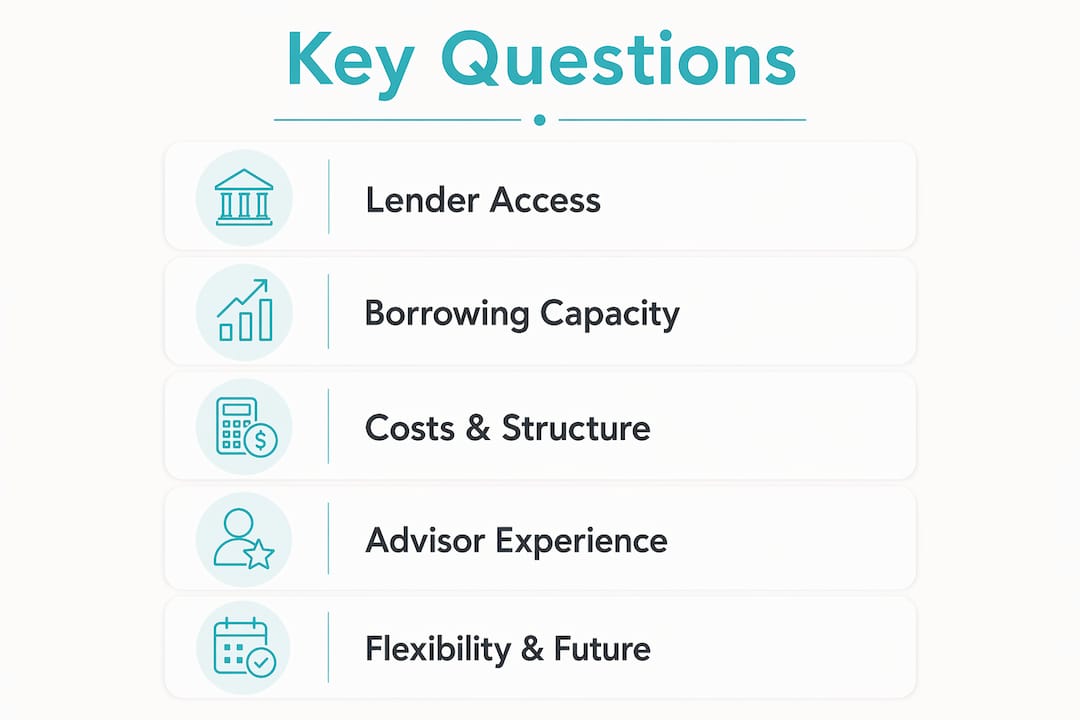
- Key questions include lender access, borrowing capacity, total costs, advisor licensing, and loan flexibility to ensure an informed decision.
- Engaging a transparent, licensed advisor who offers ongoing support increases the likelihood of securing a suitable, future-proof home loan.
Knowing exactly what to ask a mortgage advisor is the single most effective way for first-time home buyers in New Zealand to secure a home loan that genuinely fits their circumstances. A mortgage advisor, also known as a mortgage broker, acts as your financial GPS through New Zealand’s lending rules, Reserve Bank restrictions, and government schemes like Kāinga Ora. The questions you ask before signing anything shape your borrowing capacity, your costs, and your long-term financial comfort. This guide gives you the specific questions that matter most, tailored to how NZ lending actually works in 2026.
What to ask a mortgage advisor about lender access and loan options
The first question every first-home buyer should ask is: “Are you whole-of-market, or do you work from a restricted panel of lenders?” Whole-of-market advisors access multiple lenders and offer products beyond restricted panels, which directly affects the rates, terms, and eligibility options available to you. An advisor tied to a small panel may genuinely not be able to offer you the most competitive deal, even if they are skilled and well-intentioned.
New Zealand’s banking market has meaningful variation between lenders. ANZ, ASB, BNZ, Westpac, and Kiwibank each apply their own credit policies, serviceability calculations, and product structures. A whole-of-market advisor can compare these differences on your behalf, whereas a restricted advisor cannot. This matters especially if your situation is non-standard, such as being self-employed, having a smaller deposit, or carrying existing debt.
Here are the key questions to ask about lender access:
- Which lenders do you work with, and are there any you cannot access?
- Can you access non-bank lenders if the main banks decline my application?
- Do any lenders on your panel offer better rates or terms for first-home buyers specifically?
- Will you explain why you are recommending one lender over another?
Pro Tip: Ask your advisor to show you at least two or three lender comparisons in writing before you commit to any application. This gives you confidence that the recommendation is based on your best interests, not convenience.
Understanding the role of a mortgage adviser before your first meeting helps you ask sharper questions and get more from the conversation.
How can I understand my borrowing capacity and deposit requirements?
Borrowing capacity in New Zealand is defined by the Reserve Bank of New Zealand’s debt-to-income (DTI) restriction, which limits borrowing to approximately six times gross annual income for owner-occupiers. This is a hard ceiling, and no amount of goodwill from a lender can move it. Banks also apply stress tests, typically adding two to three percentage points to current interest rates, to confirm you can still service the loan if rates rise.

Existing debts such as car loans, student loans, and credit card limits all reduce your borrowing capacity under DTI rules. Many first-home buyers are surprised to discover that a $10,000 credit card limit, even if unused, can reduce the amount a bank will lend. Ask your advisor exactly which debts affect your serviceability and whether closing or reducing any of them before applying would improve your position.
Deposit requirements add another layer of complexity. The table below summarises the key options:
| Deposit option | Minimum deposit | Key condition |
|---|---|---|
| Standard bank loan | 20% of purchase price | No additional restrictions apply |
| High-LVR bank loan | Less than 20% | Extra costs and conditions apply |
| Kāinga Ora First Home Loan | 5% of purchase price | Income and price caps apply |
Standard lending requires at least a 20% deposit, though the Kāinga Ora First Home Loan allows eligible buyers to enter the market with as little as 5%. Ask your advisor whether you qualify for this scheme and how your deposit size affects both your approval chances and your interest rate.
Pro Tip: Ask your advisor which living expenses the banks they work with use for serviceability assessments. Some banks use benchmark minimums, while others use your actual declared expenses. The difference can shift your borrowing offer by tens of thousands of dollars.
Many first-home buyers overestimate their borrowing capacity because online calculators do not account for DTI rules, stress tests, or existing debt. A good advisor will give you a realistic number before you fall in love with a property that is out of reach.
What questions reveal the total costs and payment structure?
Understanding the full cost of a mortgage goes well beyond the interest rate on the tin. Mortgage advisors should clearly disclose fees, commissions, and any costs if a client withdraws, and you should receive a written breakdown before proceeding. If an advisor is reluctant to provide this, that reluctance tells you something important.
Ask these questions to uncover the complete cost picture:
- What is your fee, and is it paid by me, the lender, or both?
- What commission do you receive from the lender if I proceed?
- Are there any break fees or early repayment charges if I refinance or sell within the fixed term?
- What is the comparison rate, and how does it differ from the advertised interest rate?
Understanding both interest rates and comparison rates is vital to evaluate true loan costs and avoid hidden fees. The comparison rate folds in most fees and charges into a single annual percentage figure, making it far more useful for comparing loan products than the headline rate alone.
Loan structuring in NZ often involves splitting fixed terms to manage refix risk and maintain cash flow stability. For example, splitting your mortgage across a one-year and a two-year fixed term means you are not exposed to the full rate environment at a single refix point. Ask your advisor whether this strategy suits your situation and what the cost implications are.
Pro Tip: Request a full loan cost summary that includes total interest paid over the loan term, not just the monthly repayment. This single figure often reframes the conversation about which loan structure is actually cheaper.
How do I evaluate my advisor’s experience and regulatory compliance?
Choosing the right advisor is as important as choosing the right loan. In New Zealand, mortgage advisors are regulated by the Financial Markets Authority (FMA), and regulatory requirements enforce clear disclosure and record keeping. Asking for evidence of licensing and compliance is not rude. It is responsible.
Use these questions to assess your advisor’s credibility and the scope of their service:
- Are you a licensed financial adviser under the Financial Markets Conduct Act, and can you show me your disclosure statement?
- How are you paid, and does your payment structure create any conflicts of interest?
- What services do you provide from pre-approval through to settlement?
- How do you keep records of the advice you give me, and can I access those records?
- What happens if I am unhappy with the advice I receive? Do you have a complaints process?
Asking to see written disclosures and understanding exactly what the advice covers helps confirm the process is both tailored to your needs and regulatory-compliant. A professional advisor will welcome these questions. They demonstrate that you are an engaged client, and engaged clients tend to get better outcomes.
One barrier to using mortgage advice is a lack of clarity around costs and service scope. Asking what will be done at each stage, and for what fee, removes that barrier immediately. You deserve to know what you are getting before you commit.
What flexibility and future-proofing should I ask about?
A mortgage is not a static product. Your life will change, and your loan needs to be able to change with it. Understanding penalties and costs related to changes after loan approval, including early repayment and refinancing fees, is critical to avoiding expensive surprises down the track.
Ask your advisor about the following flexibility features:
- Can I make extra repayments during the fixed term without penalty, and if so, up to what amount?
- Does the loan include a redraw facility, and what are the conditions for accessing those funds?
- What are the break costs if I need to sell or refinance before my fixed term ends?
- How will you help me manage my refix decisions when my fixed term expires?
- Can I split my loan across multiple fixed terms to reduce my exposure to rate movements?
Splitting fixed terms reduces exposure to refixing risk and smooths household cash flow, which is particularly valuable for first-home buyers managing a tight budget. A good advisor will not just set up your loan and disappear. They will coach you through refix decisions, help you understand your options as your circumstances evolve, and act as a long-term financial partner rather than a one-time transaction processor.
Knowing how to choose a financial adviser who offers this kind of ongoing support is itself one of the most valuable things you can do before your first meeting.
Key takeaways
Asking the right questions before you commit to a mortgage advisor and a loan structure is the most direct path to a home loan that works for your life, not just your lender’s balance sheet.
| Point | Details |
|---|---|
| Confirm whole-of-market access | Ask if your advisor can access all major NZ lenders, including non-bank options. |
| Know your real borrowing limit | DTI rules cap borrowing at roughly six times gross income; existing debts reduce this further. |
| Understand all costs upfront | Request a written fee and commission disclosure before proceeding with any application. |
| Check licensing and compliance | Confirm your advisor holds a licence under the Financial Markets Conduct Act and has a complaints process. |
| Ask about loan flexibility | Clarify break fees, extra repayment options, and split-term structuring before you sign. |
Stuart’s take on what first-home buyers actually need to ask
From my experience working with first-home buyers across Auckland and wider New Zealand, the questions most people forget to ask are the ones that cost them the most later. Almost no one asks about break fees upfront, and then they are genuinely shocked when a change in circumstances makes refinancing expensive. That shock is entirely avoidable.
The other pattern I see repeatedly is buyers focusing almost entirely on the interest rate. The rate matters, but it is one variable in a much larger equation. Loan structure, flexibility, and the advisor’s ability to coach you through refix decisions over a 25 or 30-year term are worth far more than shaving a few basis points off the headline rate.
My honest advice is to treat your first meeting with a mortgage advisor the way you would treat a job interview, except you are the one doing the hiring. Come with a written list of questions. Ask about licensing. Ask about commissions. Ask what happens after settlement. The advisors who welcome those questions are the ones worth working with. The ones who deflect or rush past them are telling you something important about how they operate.
First-home buying is one of the biggest financial decisions of your life. You deserve an advisor who treats it that way.
— Stuart
How Mortgagemanagers can help you ask the right questions
Mortgagemanagers is a locally owned Auckland advisory business that specialises in guiding first-home buyers through exactly these conversations. As personal shoppers for your home loan, the team at Mortgagemanagers works across the full range of NZ lenders, including banks and non-bank options, to find the loan structure that fits your deposit, income, and long-term goals.

Whether you are trying to understand Kāinga Ora eligibility, work out your realistic borrowing capacity under DTI rules, or simply want someone to walk you through the costs before you commit, Mortgagemanagers offers transparent, client-focused advice from advisors who know the Auckland and wider NZ market well. Based in Hobsonville, the team services West Auckland, the North Shore, and clients remotely throughout New Zealand. Reach out to Mortgagemanagers to book a consultation and get the expert mortgage guidance you deserve before making your biggest financial decision.
FAQ
What does a mortgage advisor actually do for first-home buyers?
A mortgage advisor, also called a mortgage broker, assesses your financial situation, compares loan products across multiple lenders, and recommends a structure suited to your deposit, income, and goals. They manage the application process and guide you from pre-approval through to settlement.
How do DTI rules affect how much I can borrow in NZ?
The Reserve Bank of New Zealand limits owner-occupier borrowing to approximately six times gross annual income under DTI rules. Existing debts such as car loans and credit card limits reduce this figure further, so ask your advisor for a personalised calculation before setting your property budget.
Do I need a 20% deposit to get a home loan in NZ?
Standard bank lending requires a 20% deposit, but the Kāinga Ora First Home Loan allows eligible buyers to purchase with as little as 5% deposit, subject to income and property price caps. Ask your advisor whether you qualify and how your deposit size affects your interest rate.
How is a mortgage advisor paid in New Zealand?
Most mortgage advisors in NZ are paid a commission by the lender when a loan settles, which means their service is often free to the borrower. However, you should always ask for a written disclosure of all fees and commissions before proceeding, as some advisors also charge client fees.
What questions should I ask to check if my advisor is trustworthy?
Ask whether they are licensed under the Financial Markets Conduct Act, how they are paid, whether they have a written disclosure statement, and what their complaints process is. A trustworthy advisor will answer all of these questions clearly and without hesitation.