
Applying for a home loan in Auckland when your credit history is less than perfect can feel overwhelming. Lenders examine your financial past closely, but bad credit does not mean home ownership is out of reach. With expert advice and a strong strategy, you can still secure a property even if defaults or missed payments are holding you back. This guide outlines practical steps tailored for first-time buyers facing credit challenges, empowering you to approach the process with confidence and build your path towards owning a home.
Table of Contents
- Step 1: Assess Your Credit Situation Thoroughly
- Step 2: Organise Financial Documents and Evidence
- Step 3: Engage a Specialised Mortgage Adviser
- Step 4: Strengthen Your Loan Application Strategy
- Step 5: Verify Approvals and Prepare for Settlement
Quick Summary
| Main Insight | Information |
|—————————|——————————-|
| 1. Assess Your Credit Situation | Obtain your credit report and understand your financial history to position yourself effectively for a mortgage application. |
| 2. Organise Financial Documents | Gather documents, including income proof and bank statements, to present a reliable picture to lenders during your application. |
| 3. Engage a Specialised Mortgage Adviser | Work with an adviser who understands bad credit to increase your chances of approval through expertise and lender connections. |
| 4. Strengthen Your Application Strategy | Improve your financial position by paying down debts, increasing your deposit, and maintaining steady employment before applying. |
| 5. Verify Approval Conditions Carefully | Thoroughly review your loan approval letter to address any conditions and prepare for settlement to avoid setbacks. |
Step 1: Assess Your Credit Situation Thoroughly
Before you can move forward with a bad credit home loan application, you need to understand exactly where you stand. Think of this step as taking your financial pulse. You wouldn’t walk into a doctor’s appointment without knowing your basic health stats, and assessing your credit works the same way. This isn’t about judgment or shame, it’s about gathering the information you need to position yourself for success. You’re basically conducting an honest audit of your financial history so you can make informed decisions about your mortgage strategy.
Start by obtaining your credit report from a New Zealand credit reporting agency. The major ones include Equifax, Centrix, and Dun & Bradstreet. You’re entitled to access your credit report for free, so take advantage of this. When you review it, look for every account listed, every payment history, and every default or missed payment that appears. Pay special attention to the dates these events occurred. A default from 2019 carries different weight than one from 2023. Look for inaccuracies too, because sometimes errors slip onto reports and damage your score unfairly. If you spot something wrong, dispute it immediately with the credit reporting agency. These corrections can genuinely improve your position before you even approach a lender.
Here’s a quick reference to New Zealand’s main credit reporting agencies and their unique features:
| Agency | Free Report Access | Credit Score Range | Key Special Feature |
|---|---|---|---|
| Equifax | Yes, once per year | 0 – 1000 | Offers comprehensive credit files |
| Centrix | Yes, can access online | 0 – 1000 (varies) | Fastest online dispute process |
| Dun & Bradstreet | Yes, with proof of ID | 0 – 1000 (varies) | Longest market presence in NZ |
Next, calculate your credit score. This three-digit number tells lenders at a glance how risky they consider you. Most New Zealand credit scores range from 0 to 1000, though different agencies use slightly different scales. Understanding your specific score helps you gauge which lenders might be willing to work with you. If your score is particularly low, knowing this now means you can develop a strategy before applying. Some lenders specialise in bad credit mortgages and know how to assess applications beyond just the number. That’s where your detailed credit story matters more than the bare facts. Review your debt to income ratio as well. Add up all your monthly debt payments (car loans, credit cards, student loans, existing mortgages) and divide by your gross monthly income. If this ratio is high, you’ll need to address it either by paying down debt or increasing income before applying. This calculation gives you a realistic view of how much mortgage you can actually afford, regardless of what lenders might pre-approve you for.
Don’t ignore late payments or defaults, even if they’re old. Instead, understand them. A missed payment from five years ago affects you differently than one from last month. If you’ve had recent defaults, lenders will want to understand what happened. Were you between jobs? Did you face unexpected medical costs? Life happens, and many lenders understand that. However, a pattern of defaults suggests deeper problems that require genuine solutions before you apply. Work out a timeline of your credit challenges. When did they start? When did they stop? What changed? This narrative matters because it shows lenders you’ve learned from past difficulties and taken action to fix things. Getting how to rebuild credit for mortgage success is often the practical next step after you understand your current position.
Finally, gather documentation. Collect bank statements from the last three months, proof of your income (payslips or tax returns), and any letters explaining previous defaults or financial hardship. Having these ready speeds up your application process and demonstrates you’re serious and prepared. This documentation becomes your supporting evidence, the story behind the numbers on your credit report.
Pro tip: Request your credit report at least two months before you plan to apply for a mortgage, giving yourself time to dispute any errors and implement quick credit score improvements like paying down credit card balances.
Step 2: Organise Financial Documents and Evidence
Organising your financial documents is where preparation meets opportunity. This step transforms a chaotic pile of paperwork into a compelling narrative that tells lenders you’re a responsible borrower worth backing. When you walk into a mortgage application with everything organised and ready, you’re already ahead of most applicants. Lenders see organisation as a sign of reliability. It shows you take this seriously and understand what’s required. More importantly, it speeds up your application process significantly, which means faster decisions and fewer opportunities for things to go wrong.

Start by gathering your income documentation. You’ll need the last three months of payslips showing your current earnings. If you’re self-employed, collect your last two years of tax returns along with financial statements from your accountant. If you’ve recently changed jobs, include payslips from both your old and new positions. This shows continuity of income or explains any gaps. If you receive income from multiple sources, document all of it. Some lenders view diverse income streams positively because they show resilience. Next, collect your bank statements covering the last three to six months. These statements reveal your spending patterns, regular expenses, and how you manage cash flow. Lenders scrutinise these carefully, so make sure they’re genuine and unaltered. They want to see that you can afford your regular commitments and handle a mortgage payment on top of everything else. Include statements from all accounts you use regularly, not just your main one.
Gather your asset documentation. If you own property, collect recent council rates notices or mortgage statements. If you have savings, include bank statements showing these funds. Investments, superannuation statements, or any other assets all contribute to your overall financial picture. When lenders see you have savings or assets, it demonstrates financial discipline and provides security. Don’t hide assets thinking they’re irrelevant. They strengthen your application considerably. Document all your liabilities as well. List every loan, credit card, personal loan, and any other debt you carry. Include the creditor’s name, account number, outstanding balance, and monthly payment amount. This debt inventory gives lenders a complete view of your obligations. When combined with your income documentation, it creates your debt-to-income ratio, which heavily influences lending decisions.
Prepare explanatory letters for any credit issues. If you have defaults, missed payments, or significant credit problems, write brief, honest explanations. What happened? When did it happen? What have you done since then? These letters humanise your application. A default caused by redundancy looks different from one caused by recklessness, especially if you’ve since rebuilt your finances. Understanding how to qualify for a mortgage with defaults can help you frame these explanations effectively. Create a master folder, either physical or digital, containing everything organised chronologically or by category. Label each document clearly. Use a spreadsheet to index everything, noting what you have, where it is, and when it was last updated. This organisation system makes it easy to provide documents quickly when lenders request them. When you can produce requested documents within hours rather than days, you demonstrate professionalism and reliability.
Finally, make copies of everything. Keep originals safe at home and prepare a clean set for your mortgage broker or lender. If you’re dealing with mortgage advisers from Mortgage Managers, they’ll guide you on exactly what they need. Different lenders sometimes request slightly different documentation, so having duplicates means you’re ready for any request without scrambling.
Practical tip: Use a cloud storage service like Google Drive or Dropbox to keep digital copies of all your documents, ensuring you can access them from anywhere and have them automatically backed up.
Step 3: Engage a Specialised Mortgage Adviser
This is where your application transforms from a solo effort into a strategic partnership. Engaging a specialised mortgage adviser isn’t about admitting defeat, it’s about gaining an experienced ally who knows exactly how lenders think and what they want to see. A good adviser levels the playing field, especially when you’re dealing with bad credit. They understand the landscape in ways that self-directed borrowers simply cannot, and they have relationships with lenders who specialise in exactly your situation.
Start by understanding what a specialised adviser actually does. These professionals work with multiple lenders across the market, not just one bank. This matters enormously when you have bad credit, because mainstream banks often won’t touch your application, but specialist lenders will. A mortgage adviser explores alternative lending options and structures your application to improve your approval chances. They manage your documentation requirements, negotiate loan terms on your behalf, and provide expert guidance tailored to your unique circumstances. When you have defaults or credit problems, an adviser knows how to present your situation in the best possible light without being dishonest. They craft your narrative, ensuring lenders understand what happened and why you’re now a better risk. They also handle the constant back and forth with lenders, saving you time and frustration.
Look for an adviser who specialises in bad credit mortgages specifically. Not all advisers have equal experience with difficult credit situations. Some focus purely on prime lending and won’t know the specialist lenders or how to structure applications for non bank options. Ask potential advisers directly about their experience with clients who have defaults, missed payments, or poor credit scores. How many applications have they successfully placed with bad credit? Which lenders do they work with regularly? A quality adviser will give you honest answers. They should also be willing to explain their process upfront. Will they review your documents before formally applying? How do they communicate with you? What are their fees? Transparency matters because you’re about to share sensitive financial information and you need to trust them completely. Many New Zealanders still rely on mortgage advisers to navigate home finance precisely because mortgage brokers provide personalised service and help with loan structuring that simplifies complex processes.
Choose an adviser based on their location and accessibility as much as their credentials. If you’re in Auckland, working with local advisers like those at Mortgage Managers means you can meet in person, which often leads to better communication and faster turnaround times. You want someone who’s available when you need them, not someone who responds to emails days later. Ask for references from previous clients with bad credit if possible. A genuine adviser will have satisfied clients they can point you towards. During your initial conversation, notice how they make you feel. Are they judgmental about your credit history or sympathetic? Do they listen more than they talk? The best advisers ask detailed questions about your situation because they understand that bad credit rarely tells the whole story. Your adviser should feel like someone who’s genuinely on your team.
Once you’ve engaged an adviser, be completely honest with them. Don’t hide liabilities, previous defaults, or difficult circumstances. Your adviser can only help you if they have the full picture. The relationship works best when it’s built on trust and transparency. They’ve likely seen worse situations than yours and know how to work with them. They’ll tell you if your application is unlikely to succeed or if you should wait and rebuild further before applying. That honesty is valuable, even if it’s not what you want to hear initially.
Professional tip: Interview at least two specialised mortgage advisers before committing, asking specific questions about their experience with bad credit applications and which lenders they partner with most frequently.
Step 4: Strengthen Your Loan Application Strategy
Now that you’ve assessed your credit, organised your documents, and engaged an adviser, it’s time to actively strengthen your position before submitting your application. Think of this as polishing your case. The decisions you make in the next few weeks can genuinely improve your approval chances, sometimes dramatically. You’re not trying to hide anything or misrepresent yourself, you’re simply presenting the strongest version of your financial story to lenders.
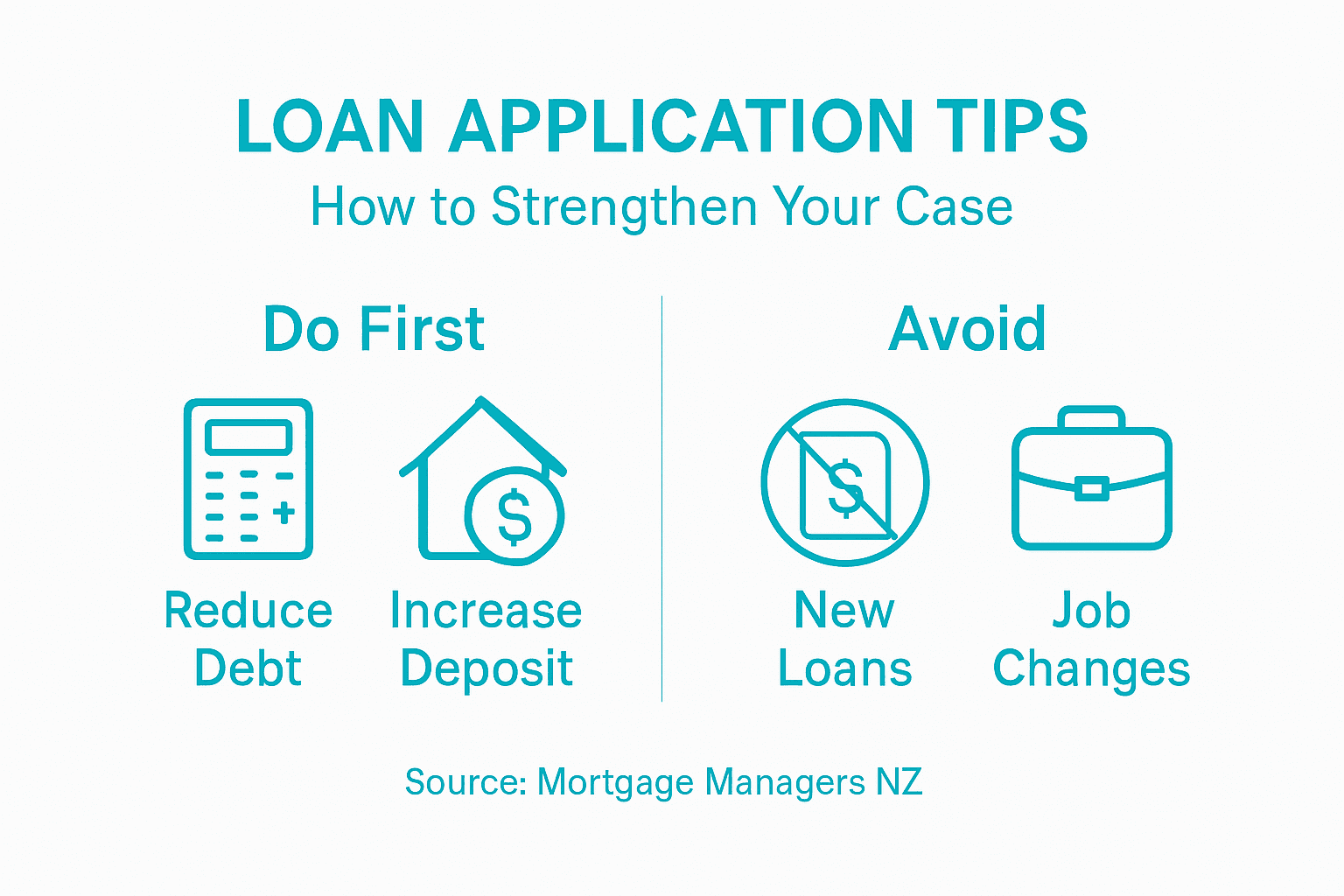
Start with your debt management. High debt levels signal to lenders that you’re already stretched financially and adding a mortgage could push you over the edge. Review every debt you carry and identify which ones you can pay down quickly. Credit cards are particularly important because lenders view them as risky. If you have a credit card with a high limit but a low balance, consider paying it down to below 30 percent of the limit. This single action can boost your credit score noticeably within weeks. Personal loans and car loans matter less urgently, but if you can eliminate one entirely, do it. Paying off a smaller debt completely looks better to lenders than reducing all debts slightly. It shows commitment and decisiveness. Next, focus on your bill payments. From this moment forward, pay every single bill on time, without exception. Rent, utilities, phone bills, insurance, everything. Lenders review your recent payment behaviour closely, and a string of on-time payments in the lead up to your application demonstrates real change. Even if your historical credit was poor, showing that you’ve turned things around recently carries enormous weight. Set up automatic payments if you struggle with remembering dates.
Increasing your deposit is perhaps the single most powerful thing you can do. A larger deposit reduces the lender’s risk because they’re lending you less money relative to the property’s value. Even increasing your deposit by 5 percent can shift a decline into an approval. If you have family members willing to gift money towards your deposit, this is the time to explore that option. Some lenders accept family gifts without requiring repayment, which strengthens your position further. Start saving aggressively now. Every pound you add to your deposit makes your application stronger. Beyond debt and deposits, work on your credit score actively. Strategies for boosting your approval chances involve managing finances by paying bills on time and reducing debt consistently. Check your credit file one more time to ensure no new errors have appeared and that corrections you made previously are reflected. Some credit agencies allow you to add explanatory statements to your file, which can help contextualise past problems.
Consider your employment situation carefully. If you’re in a probationary period at a new job, wait until it ends before applying if possible. Lenders prefer to see established employment because it suggests income stability. If you’re self-employed, ensure your accounts are as clean and professional as possible. Messy bookkeeping raises red flags, whilst organised financial records demonstrate credibility. If you’ve recently experienced a period of unemployment, the longer your current employment history, the better. Some lenders require six months or twelve months of employment history before they’ll approve, so knowing this helps you time your application strategically. Your adviser can tell you the specific requirements of different lenders.
Finally, avoid making major financial decisions in the weeks before you apply. Don’t take on new debt, don’t change jobs if you can avoid it, and don’t make large purchases. Every new financial commitment makes you appear riskier. Similarly, don’t close old credit accounts trying to improve your score. It actually damages your score because it reduces your total available credit. Your adviser will guide you through these details, but the principle is simple, stay stable and demonstrate financial responsibility through consistent, sensible decisions.
Below is a comparison of actions that strengthen or weaken your mortgage application, for easy planning:
| Action | Impact on Application | Reason for Impact |
|---|---|---|
| Paying debts consistently | Strongly positive | Shows financial discipline |
| Missing bill payments | Negative | Indicates ongoing financial stress |
| Increasing deposit size | Strongly positive | Lowers lender risk significantly |
| Taking on new loans before applying | Strongly negative | Adds repayment burden and risk |
| Maintaining stable employment | Positive | Demonstrates steady income source |
Professional tip: Create a three-month pre-application timeline with specific debt reduction targets and savings goals, then track your progress weekly to maintain momentum and accountability.
Step 5: Verify Approvals and Prepare for Settlement
You’ve made it through the application process and received approval. Brilliant. But this isn’t quite the finish line yet. The period between loan approval and settlement is when you need to stay sharp and ensure everything stays on track. Settlement is the legal moment when you officially own the property and your mortgage begins. Getting there requires careful verification of your approval conditions and methodical preparation for the final steps.
First, read your approval letter from the lender extremely carefully. Don’t just skim it looking for the approval decision. Look for conditions attached to your approval. These are requirements you must meet before settlement can proceed. Common conditions include obtaining a building inspection, providing proof of home insurance, confirming your employment is still current, or verifying your deposit is genuinely available. Some lenders require an updated credit report closer to settlement to ensure nothing has changed negatively in the meantime. If conditions are attached, tackle them immediately. Don’t assume they’re minor formalities. Lenders won’t release settlement funds until every condition is satisfied. Create a checklist of each condition and track your progress. When you’ve completed something, get written confirmation from whoever verified it. This documentation protects you if there’s any question later about whether conditions were met.
Verify your loan details match what you discussed and expected. Check the loan amount, interest rate, loan term, and any special conditions like fixed rate periods or offset accounts. If anything looks wrong, contact your lender immediately to clarify. Small errors now become major headaches at settlement. Confirm the settlement date with your solicitor and lender. Settlement typically occurs three to five weeks after unconditional approval, though this can vary. Lock this date in your calendar and ensure you’ll be available. If you’re relying on someone else for the settlement process, brief them thoroughly on what’s happening and when. Next, arrange your home insurance and inform your lender. Your lender will require you to have home insurance in place before settlement, and the insurance documents must list the lender as a mortgagee. Don’t leave this to the last minute. Get multiple quotes and choose a policy that covers your needs. When you’ve selected insurance, provide the policy documents and proof of payment to your lender promptly. They’ll confirm they’re satisfied with the coverage before proceeding.
Conduct a thorough pre-settlement property inspection. This is your final chance to identify any problems with the property before you own it. Walk through every room, check all fixtures and fittings that should be included, test taps and lights, and look for any damage that wasn’t disclosed. Take photos of anything concerning. If you discover issues, discuss them with the seller’s agent immediately. Sometimes problems can be resolved before settlement, sometimes credits can be negotiated, and sometimes you might choose to renegotiate or withdraw. This inspection protects your interests significantly. Coordinate closely with your solicitor about settlement details including payment transfers and ownership registration. Your solicitor handles the legal formalities, but you need to understand the process and be responsive when they request information. They’ll confirm final loan details, arrange for the lender to release funds, transfer payment to the seller, notify relevant authorities, and register ownership in your name. Ask your solicitor to walk you through the timeline so you understand what happens when and what you need to do.
Finally, prepare yourself emotionally and practically for moving day. You’ve worked incredibly hard to get here, particularly given your credit challenges. This is a significant achievement worth acknowledging. Make sure you have funds set aside for moving costs, immediate repairs if needed, and settling into your new home. Notify your current landlord if applicable, arrange removalists or helpers, and plan your moving day logistics. Check that utilities can be connected when you take possession and that you have keys arranged. This final preparation transforms settlement from an abstract legal process into the concrete reality of moving into your new home.
Professional tip: Create a settlement folder containing copies of your approval letter, loan conditions checklist, insurance documents, property inspection notes, and solicitor communications, reviewing it weekly to ensure nothing is overlooked.
Take Control of Your Bad Credit Home Loan Journey Today
Navigating the complexities of securing a mortgage with bad credit can feel overwhelming but you do not have to face this challenge alone. This article highlights the importance of assessing your credit thoroughly, organising your financial documents, and strengthening your application strategy to improve your chances of success. If you are ready to move beyond confusion and uncertainty, Mortgage Managers in Auckland offers expert mortgage advisers who specialise in turning your bad credit situation into a smart home loan solution.

Partnering with Mortgage Managers means gaining access to specialists who understand the unique hurdles you face. They will guide you through every step, from understanding your credit reports to preparing the strongest loan application possible. Act now to secure expert advice tailored for people dealing with credit defaults and complex financial histories. Don’t wait until your situation worsens. Start your journey with trusted Auckland mortgage advisers who prioritise honesty, transparency, and results. Visit Mortgage Managers and take the confident step towards home ownership today.
Frequently Asked Questions
What should I check first when applying for a bad credit home loan?
To assess your situation, start by obtaining your credit report from a New Zealand credit reporting agency. Review the report for inaccuracies, defaults, and your credit score to understand where you stand.
How do I improve my credit score before applying for a mortgage?
Focus on paying down existing debts, especially credit card balances, and make every bill payment on time. Aim to reduce your credit card utilisation to below 30% to help boost your score within 30–60 days.
What documents do I need to prepare for a bad credit home loan application?
Gather documentation that includes recent payslips, bank statements from the last three to six months, and a list of your liabilities. Also, prepare any explanatory letters regarding past credit issues to support your application.
How can a specialised mortgage adviser assist me with my bad credit home loan?
A specialised mortgage adviser can help by identifying lenders that accept bad credit applications and presenting your financial situation in the best light. Engage an adviser who understands your specific challenges and can tailor your application strategy effectively.
What strategies can I use to strengthen my loan application?
Work on paying down debts and increasing your deposit to reduce lender risk. For example, try to save aggressively to increase your deposit by at least 5% to improve your approval chances significantly.
How can I ensure I meet the conditions of my loan approval before settlement?
Carefully review your loan approval letter for any attached conditions and create a checklist to track them. Complete each requirement promptly to avoid delays at settlement.