
In the banking world mortgage defaults are seen as being the worst type of missed payments – the type that can lead to the loss of your home if left without action to resolve them.
Facing the reality of a falling behind with your mortgage repayments can leave home owners feeling overwhelmed, especially with default mortgage interest rates putting extra pressure on your finances.
Understanding what mortgage defaults mean is vital as missed payments can lead to legal action and even the loss of your property.
We have written this as a guide that explains the how to deal with mortgage defaults, the process that the lenders might follow, its financial consequences to you the home owner, and practical steps that we use to help safeguard your credit and to retain home ownership.
Table of Contents
- What Mortgage Default Means In New Zealand
- Common Causes And Early Warning Signs
- Legal Process And Lender Actions Explained
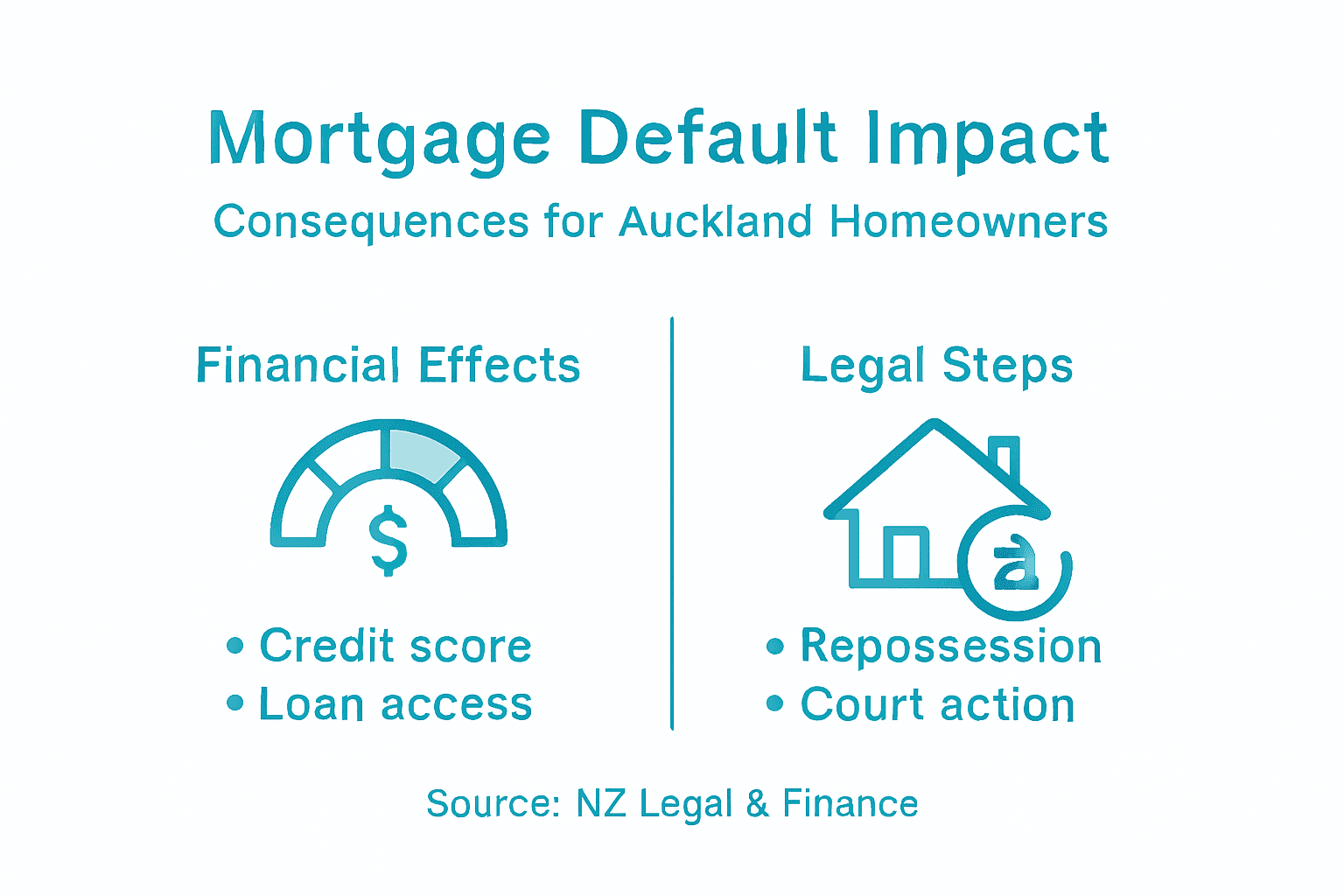
- Financial, Legal, And Credit Score Consequences
- How To Prevent Mortgage Default In Auckland
Key Takeaways
| Point | Details |
|---|---|
| Understanding Default Process | Recognising the stages of mortgage defaults is vital in mitigating financial impacts; taking early action can prevent severe consequences. |
| Financial and Legal Implications | A mortgage default affects credit scores, increases borrowing costs, and may lead to legal actions, making prompt communication with lenders essential. |
| Proactive Prevention Strategies | Maintaining a strong budget, emergency fund, and open communication with lenders are key strategies to minimise the risk of mortgage default. |
| Monitoring Warning Signs | Identifying early financial distress signals can allow homeowners to seek help before facing a default situation. |
What Mortgage Default Means In New Zealand
Mortgage defaults represent a serious financial situation where a homeowner fails to meet their contractual mortgage repayment obligations to their lender. In New Zealand, this occurs when borrowers cannot consistently make their scheduled loan payments, triggering potential legal and financial consequences.
The default process typically unfolds through several critical stages:
- Missed initial payment
- Notification from lender about overdue amount
- Opportunity to remedy the default
- Potential legal proceedings
- Potential mortgagee sale
When a borrower defaults on mortgage payments, lenders have specific legal mechanisms to recover their funds. This often involves issuing formal notices, providing opportunities for repayment, and ultimately pursuing a mortgagee sale if no resolution can be reached.
Understanding the default process is crucial for home owners. A default can significantly impact your credit rating, making future borrowing more challenging and potentially expensive. Banks may record these mortgage defaults, which can remain on your credit history for up to five years, affecting your ability to secure loans, credit cards, or even rental agreements.
Financial Implications of Default:
- Immediate credit score reduction
- Higher interest rates on future loans
- Potential legal costs
- Risk of property repossession
A mortgage default is not just a financial setback, but a critical moment that requires immediate and strategic action.
Trivia: The word “default” originated in Middle English (circa 1200s–1300s) from the Old French defaute (“fault, failure, lack”). It derives from the Vulgar Latin dēfallīre (“to fail”), combining de- (“away”) and fallere (“to deceive, fail, or lead astray”). Historically, it meant a failure to act, a shortcoming, or an offense. Source: https://www.etymonline.com/word/defaulter
Common Causes And Early Warning Signs
Financial challenges leading to mortgage defaults can stem from various complex and interconnected factors. Understanding these potential triggers helps homeowners proactively manage their financial risks before they escalate into serious default scenarios.
Key causes of potential mortgage default include:
- Unexpected job loss or significant income reduction
- Major health emergencies or prolonged medical expenses
- Relationship breakdowns or even divorce proceedings
- Sudden increases in mortgage interest rates
- Overwhelming personal debt from multiple sources
Early warning signs that indicate potential financial distress require careful monitoring. Homeowners should pay close attention to adverse credit mortgage indicators that might signal impending financial challenges. These symptoms often manifest gradually, giving homeowners critical opportunities to intervene before defaulting.
Financial Red Flags to Watch:
- Consistently missing bill payments
- Using credit cards for essential living expenses
- Depleting emergency savings rapidly
- Receiving repeated late payment notices
- Experiencing significant unexpected expenses
Financial challenges do not emerge overnight but develop through a series of compounding economic pressures.
It’s easy to bury your head in the sand when you are not sure how to resolve issues; however your home a special part of your families life and therefore it’s worth making an extra effort to address the issues and keep your home.
Pro tip: Create a comprehensive monthly budget tracking system that alerts you to potential cash flow issues before they become unmanageable financial crises.
Legal Process And Lender Actions Explained
Understanding the legal process surrounding mortgage defaults is crucial for Kiwi homeowners facing financial challenges. Mortgage defaults trigger a specific sequence of legal actions designed to protect both the lender’s financial interests and provide borrowers with opportunities to remedy their situation.
The legal framework for mortgage defaults in New Zealand is primarily governed by specific legislative requirements:
- Mandatory notice periods for lenders
- Specified timeframes for borrower response
- Clear procedures for potential property repossession
- Legal protections for borrowers
- Structured communication protocols
When a borrower misses mortgage payments, lenders must first issue a Property Law Act notice detailing the default specifics. This official document provides homeowners with a critical 20-working-day window to rectify their financial situation and prevent further legal escalation.
Typical Lender Actions in Default Scenarios:
- Issue official default notification
- Request immediate outstanding payment
- Offer potential repayment restructuring
- Initiate legal consultation
- Consider mortgagee sale proceedings
Legal processes are designed to provide fair opportunities for resolution, not immediate punitive action.
Pro tip: Seek immediate advice and communicate proactively with your mortgage adviser the moment you anticipate potential payment difficulties.
Financial, Legal, And Credit Score Consequences
A mortgage default carries profound and long-lasting consequences that extend far beyond the immediate financial challenge. Credit score damage represents one of the most significant and enduring impacts, potentially affecting a homeowner’s financial landscape for years to come.
The multifaceted consequences of mortgage default include:
- Immediate credit score reduction
- Increased difficulty securing future loans
- Potential legal judgments against the borrower
- Higher interest rates on future credit
- Reduced financial credibility
Homeowners who experience a mortgage default will face substantial challenges in their credit score recovery. Credit reporting agencies typically maintain default records for up to five years, creating significant barriers to accessing financial products, rental agreements, and even employment opportunities.
Long-Term Financial Repercussions:
Here’s a summary of how various mortgage default consequences affect Auckland homeowners:
| Consequence Type | Immediate Effect | Long-Term Impact |
|---|---|---|
| Credit Score | Sharp reduction in score | Difficult to borrow for years |
| Legal Standing | Risk of legal action | Potential judgments and liability |
| Loan Eligibility | Limited access to credit | Higher interest or special terms |
| Property Ownership | Threat of repossession | Foreclosure history on record |
| Financial Credibility | Damaged reputation with lenders | May need guarantors in future |
- Reduced borrowing capacity
- Potential requirement for high-interest secured loans
- Limited access to competitive financial products
- Increased scrutiny from future lenders
- Potential need for guarantors on future loans
A single mortgage default can create a ripple effect that disrupts financial stability for years.
Pro tip: Proactively communicate with your mortgage adviser and seek financial counselling immediately upon experiencing payment difficulties to mitigate potential long-term credit consequences.
How To Prevent Mortgage Defaults
Preventing mortgage defaults requires proactive financial management and strategic planning tailored to New Zealand’s challenging housing market. Financial preparedness is the cornerstone of maintaining stable home ownership and avoiding potential default scenarios.
Key strategies for preventing mortgage default include:
- Maintaining a robust emergency fund
- Regularly reviewing household budget
- Understanding total home ownership costs
- Exploring mortgage protection insurance
- Communicating early with lenders
Homeowners can significantly reduce default risks by understanding home buying tips that provide insight into comprehensive financial planning. This approach involves carefully assessing personal financial capacity, anticipating potential income fluctuations, and creating sustainable long-term financial strategies.
Practical Default Prevention Steps:
Compare these proactive steps to minimise mortgage default risks in New Zealand:
| Strategy | Main Benefit | Recommended Frequency |
|---|---|---|
| Emergency fund savings | Covers unexpected expenses | Update every 6 months |
| Regular budget review | Detects cash flow gaps early | Monthly |
| Communication with lender | Opens options for hardship support | At first sign of difficulty |
| Mortgage protection insurance | Provides payment coverage during crisis | Review annually |
| Financial planning check-up | Adjusts strategy for changing needs | Every 6-12 months |
- Create a detailed monthly budget using the budgeting software Pocketsmith or a similar App
- Build an emergency fund – aim to cover 3-6 months of expenses
- Maintain open communication with your mortgage adviser
- Explore mortgage protection insurance options or create passive income
- Regularly review and adjust financial commitments
Proactive financial management is your strongest defence against potential mortgage default.
Pro tip: Conduct a comprehensive financial review every six months to identify and address potential cash flow challenges before they escalate.
Protect Your Home From Mortgage Default Risks
Facing the threat of mortgage default can be deeply stressful and impact your financial future in ways you never imagined. The article highlights critical challenges like credit score damage, legal action, and potential property repossession that Auckland home buyers must understand and avoid. If you are navigating missed payments, rising living costs, or sudden income changes, it is essential to take control now before these issues escalate.

At Mortgage Managers, we specialise in offering personalised mortgage advice designed to help you overcome these risks. Our expert Auckland mortgage advisers will work closely with you to create practical strategies such as budgeting, repayment restructuring, and hardship support. Don’t wait for missed payments to become a default notice. Visit our website at Mortgage Managers to discover how we can guide you through financial challenges and protect your home ownership dreams. Take action today for a more secure tomorrow.
Frequently Asked Questions
What are mortgage defaults?
Mortgage defaults occurs when a borrower fails to make the scheduled mortgage payments to their lender, potentially leading to serious financial consequences, including legal actions and property repossession.
What are the common causes of mortgage defaults?
Common causes include unexpected job loss, major health emergencies, relationship breakdowns, sudden increases in mortgage interest rates, and overwhelming personal debt from multiple sources.
How does a mortgage default affect my credit score?
A mortgage default starts with a missed repayment and can show in your credit report as arrears and therefore lead to an immediate reduction in your credit score. These make it significantly harder to secure future loans or credit, and if left to be recorded as a default these records can potentially end up affecting you for up to five years.
What steps can I take to prevent mortgage default?
To prevent mortgage defaults, maintain a robust emergency fund, regularly review your budget, understand all your home ownership costs, explore mortgage protection insurance, and communicate early with your mortgage adviser if you foresee payment difficulties.
Recommended Reading
We have listed some other recommended reading here: