
TL;DR:
- Debt consolidation loans replace multiple debts with a single loan to simplify repayment and potentially reduce interest costs. In New Zealand, options include unsecured personal loans or mortgage top-ups, both subject to affordability checks, with risks of increased total interest or secured debt. Success depends on comparing total costs, assessing comfort with security, and ensuring affordability before proceeding.
A debt consolidation loan is one new loan you use to pay off several existing debts, leaving you with a single repayment instead of many. In New Zealand, this typically means either an unsecured personal consolidation loan or a mortgage top-up, both subject to CCCFA affordability checks that every lender must complete before approving you.
The quick verdict: consolidation can genuinely help when it lowers your total interest bill and simplifies your finances. It often doesn’t help when a longer repayment term quietly increases what you pay overall, or when unsecured debt becomes secured against your home.
Before you go further, check these three things:
- Total cost: does the new loan cost less in total interest and fees than your current debts combined?
- Secured vs unsecured: are you comfortable putting your home at risk to clear personal debts?
- Serviceability: can you pass a lender’s stress-test at the rates they apply?
Table of Contents
- How does debt consolidation work in New Zealand?
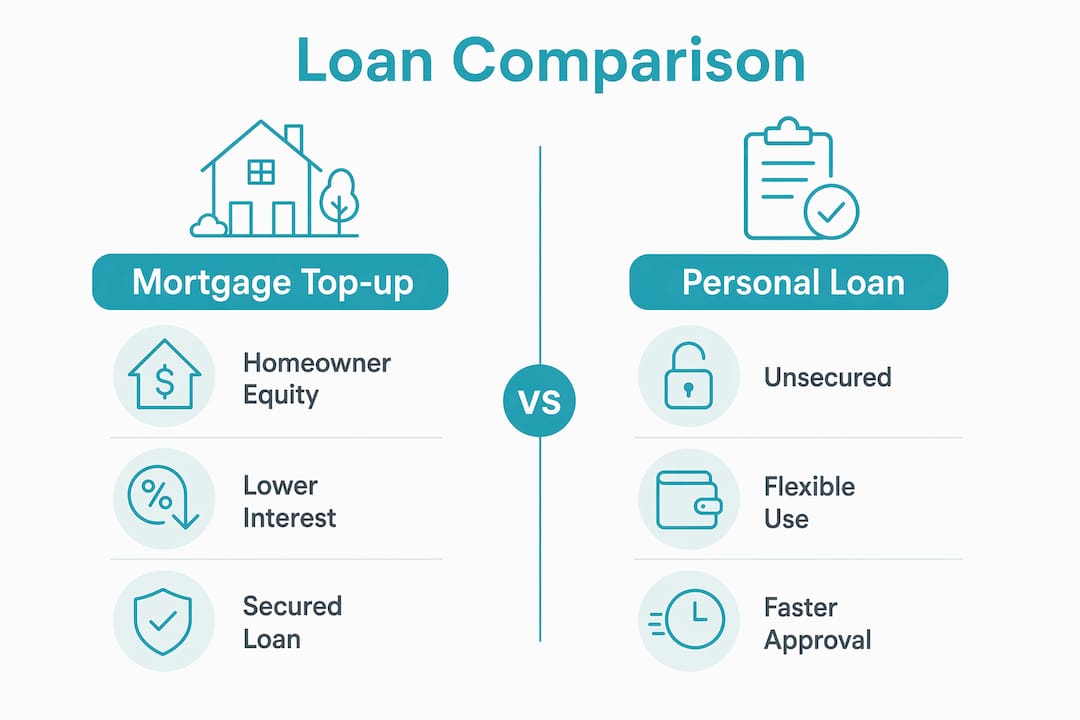
- Mortgage top-up versus personal consolidation loan: which suits you?
- What does consolidation actually cost? A worked example
- How to apply for debt consolidation in New Zealand
- When consolidation can make things worse
- Alternatives to debt consolidation worth considering
- How a mortgage broker can help with debt consolidation
- Key takeaways
- A local perspective on debt consolidation enquiries
- Mortgagemanagers can help you work through your consolidation options
- Useful New Zealand sources and further reading
How does debt consolidation work in New Zealand?
There are two common routes for Kiwi borrowers, and the mechanics differ meaningfully between them.
Route 1: Unsecured personal consolidation loan. You apply for a personal loan large enough to clear your existing credit cards, store cards, and other personal debts. Once approved, the lender either pays your creditors directly or deposits funds into your account for you to clear each debt. You then repay one loan, usually over one to seven years, at a fixed rate.

Route 2: Mortgage top-up. If you own a home with sufficient equity, your lender may allow you to borrow additional funds against your mortgage to clear personal debts. The money flows from your lender to your creditors, and the amount is added to your mortgage balance. Your repayments increase slightly, but the rate is typically lower than personal loan rates.
Under the CCCFA, every lender must assess whether the loan is affordable and suitable for your situation before approving either route. This includes a stress-test, where the lender checks whether you could still meet repayments if interest rates rose. Banks commonly apply a stress-test at typical interest rates used for mortgage assessments when evaluating mortgage top-ups.
Pro Tip: Once a debt is cleared through consolidation, close the account or reduce its limit immediately. Leaving a cleared credit card open is the fastest way to accumulate new debt on top of your consolidation loan.
Mortgage top-up versus personal consolidation loan: which suits you?
| Dimension | Mortgage top-up | Personal consolidation loan |
|---|---|---|
| Best for | Homeowners with usable equity and multiple high-rate debts | Borrowers without sufficient equity or who prefer not to secure personal debt against their home |
| Interest rate | Generally lower (mortgage rates) | Higher than mortgage rates; varies by credit profile |
| Repayment term | Tied to remaining mortgage term (often 15 years) | Typically 1–5 years |
| Secured vs unsecured | Secured against your property | Usually unsecured |
| Fees and establishment costs | Valuation fee, possible break fee, establishment fee | Establishment fee; no valuation required |
| Effect on mortgage/LVR | Increases mortgage balance; lenders commonly require total LVR to stay within 80% | No effect on your mortgage |
| Eligibility checks | Full serviceability reassessment, property valuation, CCCFA affordability test | Income and credit assessment, CCCFA affordability test |
Homeowner with equity: a borrower with a $600,000 home and a $400,000 mortgage has $80,000 of usable equity before reaching the 80% LVR threshold. A $30,000 top-up to clear car finance and credit cards is feasible, and the lower mortgage rate reduces monthly outgoings. The risk is that $30,000 of personal debt is now secured against the home and spread over a much longer term.
Borrower without equity: someone who purchased recently with a small deposit and sits above 80% LVR cannot access a top-up. A personal consolidation loan is the practical path, even at a higher rate, because it keeps the debt unsecured and repaid over a shorter term.
What does consolidation actually cost? A worked example
The fees you need to account for include establishment fees on the new loan, documentation fees, and payout or discharge fees on each existing debt. Lenders often roll these into the new loan balance, which means you pay interest on the fees too.
The monthly payment drops by more than $560, but total interest paid rises by over $12,000. This is the core trap Sorted and financial advisers consistently flag: a lower monthly payment is not the same as a lower total cost.
To compare properly, gather these numbers from each lender: the interest rate, the full loan term, all upfront fees, any ongoing fees, and the total amount repayable. Then compare that total against the remaining cost of your current debts if you kept paying them down as planned.
How to apply for debt consolidation in New Zealand
Follow these steps to move from enquiry to funded loan without unnecessary delays.
- Gather your statements. Collect the most recent statements for every debt you want to consolidate: credit cards, personal loans, car finance, and any buy-now-pay-later balances.
- Check your equity position. If you own a home, calculate your current LVR. Divide your mortgage balance by your property’s estimated value. If the result is below 80%, a top-up may be available.
- Engage a mortgage broker. A broker can run lender comparisons across multiple institutions, identify which lenders will accept your application, and present your affordability case clearly.
- Provide documentation. Lenders will ask for recent payslips or proof of income, three to six months of bank statements, details of all existing debts, and a property valuation if you are applying for a mortgage top-up.
- Complete the CCCFA assessment. Your lender will run a mandatory affordability and suitability check. Be prepared to explain your living expenses in detail.
- Receive conditional approval and settle. Once approved, the lender pays out your existing creditors. Your new single repayment begins on the agreed date.
When consolidation can make things worse
Converting unsecured debt to secured debt is the most significant risk. If you add personal debt to your mortgage and later cannot meet repayments, your home is at risk in a way it was not before.
Extending the repayment term restarts the interest clock. As the worked example above shows, a $20,000 debt cleared over 20 years at a lower rate can cost far more than the same debt cleared over three years at a higher rate. The re-accumulation trap compounds this: many borrowers clear their credit cards through consolidation, then gradually reload them, ending up with the original debts plus the new consolidated loan.
Watch for these red flags from lenders or providers:
- High establishment fees that are added to the loan balance without clear disclosure
- Pressure to include non-essential costs in a mortgage top-up
- Vague total-cost figures that focus only on the monthly repayment
Pro Tip: After consolidation, set up automatic repayments on the new loan and cancel or reduce the credit limits on every account you have cleared. Treat the consolidation as the first step in a broader plan, not the whole plan.
Alternatives to debt consolidation worth considering
Consolidation is not always the right answer. These alternatives are worth weighing first.
Balance transfer cards can work well for credit card debt if you can clear the balance within the interest-free period, typically 12–24 months. The risk is a high revert rate once the promotional period ends.
Negotiating directly with creditors is underused. Many lenders will agree to a reduced interest rate or a temporary payment pause if you contact them early and explain your situation honestly.
Hardship assistance is available through most New Zealand banks and is a legal right under the CCCFA. If you are genuinely struggling, apply for hardship before taking on new debt.
Targeted repayment means paying off your highest-rate debt first while maintaining minimum payments on others. This is mathematically optimal when your debts are manageable and you have some spare cash flow. Sorted’s debt tools can help you model this approach for free.
Credit counselling through community financial capability services, available via the MBIE’s MoneyTalks helpline, provides free, impartial guidance on debt management without requiring you to take on new credit.
How a mortgage broker can help with debt consolidation
A broker’s value in consolidation goes well beyond finding a lower rate. Mortgagemanagers can calculate your exact LVR position, identify which lenders will accept your application given your credit profile, and present your affordability case in a way that meets CCCFA requirements. That last point matters more than most borrowers realise: a well-prepared application with clear income evidence and a documented budget is far more likely to be approved at a competitive rate than a self-submitted one.
Consider a homeowner with $45,000 spread across three credit cards and a car loan, paying an average rate well above their mortgage rate. With a mortgage balance sitting comfortably below the 80% LVR threshold, a broker can identify a top-up structure that clears all four debts, negotiates the payout timing to minimise break costs, and models the total repayment across multiple term options so the client can choose the one that genuinely costs less overall.
Before your first broker meeting, prepare a list of every debt including the balance, interest rate, and minimum repayment. Know your property’s approximate value and your current mortgage balance. The more complete your picture, the faster a broker can identify the right path.
Key takeaways
A debt consolidation loan only saves you money when the total cost of the new loan, including all fees and interest over the full term, is genuinely lower than the remaining cost of your current debts.
| Point | Details |
|---|---|
| Definition | One new loan replaces multiple debts, creating a single repayment under CCCFA rules. |
| When it helps | Lower total interest and simplified repayments, especially for homeowners with usable equity below 80% LVR. |
| Biggest risk | Converting unsecured debt to secured debt and extending the term can increase total interest paid substantially. |
| Red flags | High undisclosed fees, pressure to extend your mortgage term, and no total-cost comparison provided. |
| Next step | Mortgagemanagers can run a full LVR and total-cost comparison across multiple lenders before you commit to anything. |
Your immediate next steps:
- Gather statements for every debt you want to consolidate
- Calculate your current LVR (mortgage balance ÷ property value)
- Run a total-cost comparison, not just a monthly payment comparison
- Book a conversation with a mortgage broker to review your options
A local perspective on debt consolidation enquiries
The consolidation enquiries we see at Mortgagemanagers most often come from homeowners who are managing three to five separate debts and feeling the pressure of multiple due dates and varying interest rates. The relief of a single repayment is real, and for clients with genuine equity and stable income, a well-structured top-up or personal consolidation loan can make a meaningful difference to their monthly cash flow and long-term interest bill.
What we always ask first is simple: have you modelled the total cost, not just the monthly saving? That one question changes the conversation. Our team will walk you through your LVR position, the lender options available to you, and the honest numbers before you sign anything. We work with lenders across New Zealand and can access options that a single bank visit won’t show you.
If you’d like to talk through your situation, contact the Mortgagemanagers team. We’ll ask for your current debt details, an idea of your property value, and your income picture. From there, we can give you a clear view of what’s possible.
Mortgagemanagers can help you work through your consolidation options
Clearing multiple debts is one thing. Doing it in a way that actually costs you less over time is another. Mortgagemanagers gives you access to lenders across New Zealand, runs the total-cost numbers honestly, and handles the CCCFA paperwork so you are not navigating it alone.

Unlike walking into a single bank, working with Mortgagemanagers means your application is matched to the lender most likely to approve it at the best available rate for your situation. The team covers Auckland, West Auckland, the North Shore, and clients remotely throughout New Zealand. There are no upfront fees for the advice, and the commission structure is disclosed clearly from the first conversation.
To get started, talk to our Auckland brokers or visit the debt consolidation services page to book an initial conversation. Bring your debt statements and a rough idea of your property value, and the team will take it from there.
This article provides general information only and is not financial advice. Please seek guidance from a qualified financial adviser for advice specific to your circumstances.
Useful New Zealand sources and further reading
- Sorted — Consolidating Debt: New Zealand’s government-backed personal finance site. Covers the pros, cons, and the re-accumulation risk in plain language. Reliable for consumer guidance and free debt modelling tools.
- MBIE — CCCFA Summary: The primary government source for understanding lender obligations under the Credit Contracts and Consumer Finance Act. Use this to verify what lenders must assess before approving any consolidation loan.
- MoneyHub — Dangers of Debt Consolidation: A detailed NZ consumer guide covering the risks of mortgage top-ups and the total-cost trap. Useful for anyone weighing a secured consolidation option.