
You don’t need a 20% deposit to buy your first home in New Zealand. The Kāinga Ora First Home Loan allows eligible buyers to purchase with just 5%, opening doors for thousands of first home buyers who thought homeownership was years away. This guide breaks down the key eligibility factors—deposits, income caps, credit requirements, and lender fees—so you can confidently evaluate your financing options and choose the right home loan for your situation.
Table of Contents
- How To Choose The Right Home Loan: Key Eligibility Criteria
- The Kāinga Ora First Home Loan Scheme: Eligibility And Benefits
- Credit Considerations: How Your Credit History Affects Your Mortgage Eligibility
- Other Low Deposit Options For First Home Buyers
- Costs, Fees, And Risks To Consider With Low Deposit Home Loans
- Comparing Home Loan Eligibility Factors: Summary Table
- Situational Recommendations For Choosing The Best Home Loan Option
- Get Expert Help With Your Home Loan Journey
Key Takeaways
| Point | Details |
|---|---|
| Government schemes reduce barriers | Kāinga Ora First Home Loan requires only 5% deposit with income caps of $95K single or $150K combined. |
| Credit history matters significantly | Your payment history and credit score directly affect loan approval rates and interest rates. |
| Alternative pathways exist | Shared ownership programs and new build exemptions offer additional low deposit entry points. |
| Expect additional costs | Lender mortgage insurance adds 0.5% to 1.2% of loan value to low deposit loans. |
| Match loan to your circumstances | Your savings level, income, and credit status determine which home loan option suits you best. |
How to Choose the Right Home Loan: Key Eligibility Criteria
Understanding eligibility criteria helps you prepare a strong home loan application and avoid surprises during the approval process. Four main factors determine whether you qualify for a home loan in New Zealand.
Deposit requirements in New Zealand traditionally sit at 20% of the property price. Government schemes dramatically lower this barrier. The Kāinga Ora First Home Loan allows eligible buyers to purchase with a 5% deposit, significantly lower than the standard 20%. This difference means buying a $600,000 home with $30,000 instead of $120,000.
Income caps apply under government schemes to target affordability for genuine first home buyers. These caps ensure assistance reaches people who need it most. Single buyers face a $95,000 income limit while multiple buyers have a combined $150,000 cap.
Lenders conduct thorough credit checks reviewing your payment history, outstanding debts, and credit score. The importance of credit scores for mortgages cannot be overstated. Poor credit leads to higher interest rates or outright loan denials.
Lender mortgage insurance (LMI) protects lenders when you borrow more than 80% of property value. This insurance adds substantial upfront costs to your loan but makes low deposit purchases possible.
Key eligibility factors include:
- Deposit size ranging from 5% to 20% depending on loan type
- Income limits for government backed schemes
- Credit history and score requirements
- LMI fees for deposits under 20%
- Property price caps in some programs
Pro Tip: Calculate your total borrowing capacity before house hunting to avoid disappointment and focus on properties within your realistic price range.
The Kāinga Ora First Home Loan Scheme: Eligibility and Benefits
The Kāinga Ora First Home Loan represents the most accessible pathway to homeownership for qualifying New Zealanders in 2026. This government backed scheme removes the largest barrier facing first home buyers: saving a massive deposit.
Income caps for Kāinga Ora First Home Loan are $95,000 for single buyers and $150,000 combined for multiple buyers. These limits target the scheme toward people who need assistance most while ensuring government support reaches genuine first home buyers.
Kāinga Ora underwrites up to 15% of the loan allowing lenders to offer 5% deposit loans without requiring lender’s mortgage insurance. Government underwriting reduces lender risk dramatically. You avoid paying thousands in LMI fees that would otherwise apply to low deposit loans.
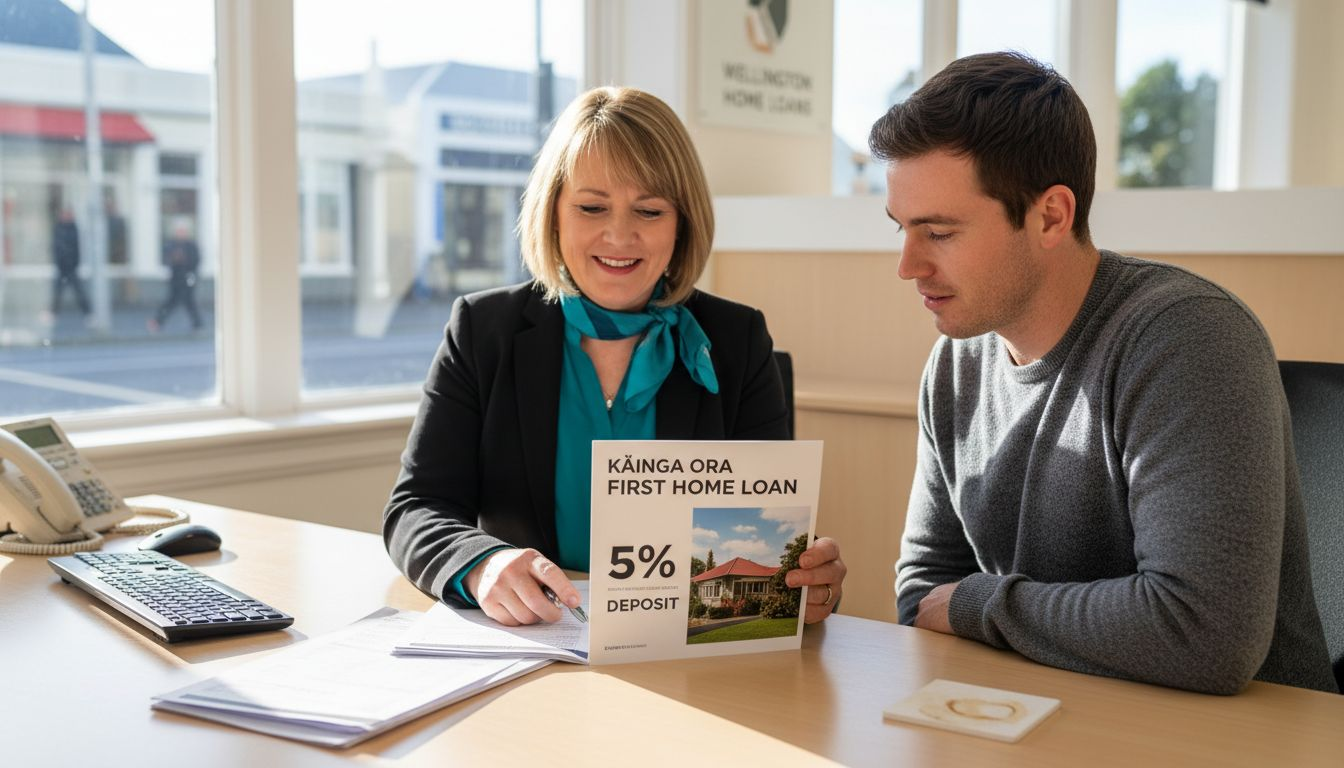
Participating lenders for the First Home Loan scheme include Westpac, Co-operative Bank, SBS Bank, Unity, NZCU Baywide, Nelson Building Society, and First Credit Union. This wide participation gives you genuine choice and competitive rates. You can compare offerings from multiple lenders to find the best terms.
The scheme has no property price caps. You can purchase any home as long as you meet eligibility criteria and can service the loan. This flexibility beats older schemes that restricted purchase prices by region.
Key benefits of applying for Kāinga Ora First Home Loan:
- 5% minimum deposit requirement
- No LMI fees due to government guarantee
- Multiple participating lenders for competitive rates
- No property price restrictions
- Available nationwide for eligible buyers
You must be a New Zealand citizen or permanent resident, purchasing your first home or in a similar financial position to a first home buyer. Understanding the best Kāinga Ora loan option for your situation requires comparing lender offerings carefully.
Pro Tip: Check official Kāinga Ora First Home Loan details directly to confirm your eligibility before starting property viewings.
Credit Considerations: How Your Credit History Affects Your Mortgage Eligibility
Your credit history plays a decisive role in mortgage approval. Lenders use credit files to predict whether you’ll repay the loan reliably. Understanding this process helps you prepare effectively.
Lenders assess credit score and payment history; higher credit risk leads to higher interest rates or loan denial. Every missed payment, default, or high credit card balance appears on your credit file. These red flags signal risk to lenders.
New Zealand lenders check credit files through agencies like Centrix and Illion. They review payment patterns on existing debts, credit card usage, and any defaults or judgments. A clean credit history opens doors. Blemishes close them or make loans more expensive.
Maintaining timely payments on all debts builds creditworthiness. Pay bills before due dates. Keep credit card balances below 30% of limits. Avoid applying for multiple credit products simultaneously as this suggests financial stress.
Some lenders under government schemes show flexibility for imperfect credit. They understand that past financial difficulties don’t always predict future behavior. Credit scoring impact on mortgages varies between lenders significantly.
Steps to improve credit readiness:
- Check credit reports for errors and dispute inaccuracies immediately
- Pay all bills on time for at least six months before applying
- Reduce outstanding debt levels where possible
- Avoid new credit applications during mortgage preparation
- Resolve any defaults or arrange payment plans
If you have serious credit issues, second chance home loans exist through specialist lenders. These come with higher rates but provide pathways when mainstream lenders decline applications.
Pro Tip: Request your credit report from Centrix or Illion at least three months before applying for a mortgage so you have time to address any errors or issues you discover.
Understanding low deposit loan credit risks and fees helps you prepare realistic expectations about approval chances and potential interest rates.
Other Low Deposit Options for First Home Buyers
Beyond the Kāinga Ora scheme, additional pathways help first home buyers enter the property market with smaller deposits. These options suit different circumstances and risk profiles.
Shared home ownership programs allow buyers to purchase a majority share (usually 60%+) with help from housing providers, gradually buying more over time. You own and occupy the home while a community housing provider owns the remaining share. You pay rent on their portion and gradually buy additional shares as finances allow.
New builds benefit from exemptions on Loan to Value Ratio (LVR) and Debt to Income (DTI) restrictions under current Reserve Bank rules. Lenders can offer more flexible deposit requirements on brand new properties. This makes new builds attractive for buyers with limited savings.
Shared ownership reduces entry costs substantially. Instead of a $30,000 deposit on a $600,000 property, you might need just $18,000 to purchase 60% ($360,000 worth). The housing provider covers the rest. You build equity gradually rather than waiting years to save a full deposit.
Risks include complexity in ownership arrangements and potential resale challenges. Shared ownership properties may have restrictions on selling or refinancing. Read agreements carefully and get independent legal advice.
How shared ownership works:
- Identify an approved housing provider in your region
- Find a property within program guidelines
- Purchase majority share (typically 60% to 80%)
- Pay mortgage on your share plus rent on provider’s share
- Gradually purchase additional shares when financially able
Alternative low deposit mortgage options expand possibilities beyond standard bank loans. Some specialist lenders offer 10% to 15% deposit loans outside government schemes. These carry higher interest rates but provide flexibility.
Home deposit requirements alternatives include guarantor loans where family members use their property equity to secure part of your loan. This reduces your required deposit but places risk on guarantors.
Explore shared ownership and new build schemes thoroughly to understand eligibility and long term implications before committing.
Costs, Fees, and Risks to Consider with Low Deposit Home Loans
Low deposit loans enable earlier homeownership but come with financial trade offs. Understanding these costs helps you make informed decisions and budget accurately.
Low deposit home loans typically come with higher interest rates and require payment of Lender’s Mortgage Insurance of around 0.5% to 1.2%. On a $570,000 loan (95% of $600,000), LMI could add $2,850 to $6,840 upfront. This fee protects lenders if you default but provides no benefit to you.
Application fees vary by lender, ranging from zero to several hundred dollars. Factor these into your upfront costs alongside legal fees, building inspections, and moving expenses.
Smaller deposits mean larger loan amounts relative to property value. You pay more interest over the loan term. Monthly repayments increase. On a 95% loan versus 80%, you might pay an extra $200 to $300 monthly depending on rates.
Negative equity risk emerges if property values decline after purchase. Owing more than your home’s worth traps you financially. You cannot refinance or sell without bringing cash to settlement. This risk is highest immediately after purchase before principal reduction builds equity.
Comparing low deposit loan costs:
| Cost Type | Traditional 20% | Kāinga Ora 5% | Standard 10% |
|---|---|---|---|
| LMI Fee | $0 | $0 (government backed) | $2,850 to $6,840 |
| Deposit Amount | $120,000 | $30,000 | $60,000 |
| Loan Amount | $480,000 | $570,000 | $540,000 |
| Monthly Repayment* | $2,880 | $3,420 | $3,240 |
| Interest Rate | 6.5% | 6.5% | 6.8% |
*Estimates based on 30 year terms at indicated rates for a $600,000 property
Pro Tip: Calculate total cost including LMI and fees before committing to a low deposit loan to ensure you can afford both upfront expenses and ongoing repayments comfortably.
Low deposit loan costs and fees extend beyond LMI. Budget for valuation fees, legal costs, and potential higher interest rates that accumulate over decades.
Understanding costs and risks of low deposit loans prevents nasty surprises and helps you decide whether waiting to save a larger deposit makes more financial sense.
Comparing Home Loan Eligibility Factors: Summary Table
Comparing loan types side by side clarifies which option matches your financial situation best. Each pathway has distinct advantages and limitations.
| Factor | Traditional Loan | Kāinga Ora First Home | Shared Ownership |
|---|---|---|---|
| Minimum Deposit | 20% ($120K on $600K) | 5% ($30K on $600K) | Variable (typically lower) |
| Income Cap | None | $95K single / $150K combined | Varies by provider |
| Credit Requirements | Moderate to strict | Moderate with flexibility | Flexible |
| LMI Fee | Not required | $0 (government guarantee) | Not typically required |
| Interest Rate | Competitive | Competitive | Variable |
| Property Restrictions | None | None | Provider specific |
| Ownership | Full immediate | Full immediate | Gradual increase |
| Resale Flexibility | Full control | Full control | May have restrictions |
| Best For | Established savers | Income eligible first buyers | Limited deposit buyers |
Traditional loans suit buyers with substantial savings and strong credit. You get full ownership immediately without government scheme restrictions. No income caps limit eligibility. However, saving $120,000 takes years for most first home buyers.
Kāinga Ora shines for income eligible buyers with limited savings but steady employment. The 5% deposit requirement and zero LMI fees make homeownership achievable years earlier. Government backing means competitive interest rates despite low deposits.
Shared ownership works when you have minimal savings and potentially don’t meet traditional lending criteria. You build equity gradually while living in your home. The trade off is shared ownership complexity and potential resale restrictions.
Match your personal circumstances—savings level, income, credit history, and timeline—to the loan type that best fits. No single option suits everyone. Understanding eligibility factors for each pathway helps you choose wisely.
Situational Recommendations for Choosing the Best Home Loan Option
Applying eligibility knowledge to your specific situation leads to confident loan selection. Different circumstances call for different strategies.
If you have low savings but steady income under scheme caps, the Kāinga Ora First Home Loan offers the fastest path to homeownership. You need just 5% deposit and avoid LMI fees. Focus your efforts on confirming income eligibility and strengthening your credit score before applying.
Buyers with imperfect credit face tougher approval processes. Second chance buyers who previously owned property may qualify for the First Home Loan scheme if in a similar financial position to a first home buyer. Consult specialist lenders who work with credit impaired borrowers. Shared ownership programs may accept applications that mainstream banks decline.
New build purchasers leverage current LVR and DTI exemptions for smaller deposits and easier qualification. Lenders offer more flexible terms on new properties. This advantage makes new builds worth considering even if not your first preference.
Lender mortgage insurance fees significantly impact total costs. Factor these into your budget calculations. On a $570,000 loan, paying $6,000 in LMI adds real expense. Compare this against waiting to save a larger deposit and avoiding the fee entirely.
Situational recommendations:
- Low savings, good income, clean credit: Choose Kāinga Ora First Home Loan for 5% deposit and no LMI
- Limited savings, income over caps: Explore new build exemptions or 10% deposit options
- Imperfect credit history: Consult second chance home loan eligibility specialists
- Very limited deposit: Consider shared ownership programs for gradual equity building
- Substantial savings available: Traditional 20% deposit avoids LMI and secures best rates
Pro Tip: Evaluate all eligibility criteria and costs before applying to avoid surprises and ensure your chosen loan type actually fits your financial reality rather than wishful thinking.
No single loan type suits everyone. Your savings, income, credit status, and timeline determine which option makes most sense. Take time to assess your situation honestly before committing.
Get Expert Help with Your Home Loan Journey
Navigating home loan eligibility factors and comparing complex options can feel overwhelming. You don’t have to figure it out alone.

Mortgage Advisers for Home Loans at Mortgage Managers bring expertise that simplifies the entire process. Our advisers understand every eligibility criterion, government scheme, and lender requirement. We match your specific circumstances to the best available home loan options.
Our expert mortgage advisers and brokers work throughout Auckland and remotely across New Zealand. We handle the complex paperwork, negotiate with lenders on your behalf, and guide you through each step from application to settlement.
Understanding the role of a mortgage adviser in NZ helps you appreciate the value of professional guidance. We access lending options across multiple banks and specialist lenders. This gives you more choices than approaching a single bank directly.
Contact Mortgage Managers today to start your journey to homeownership with confidence. Our personalized approach ensures you find the right home loan for your situation, budget, and goals.
FAQ
What is the minimum deposit required for the Kāinga Ora First Home Loan?
The Kāinga Ora First Home Loan allows eligible buyers to purchase with a 5% deposit. This is significantly lower than the standard 20% deposit required for traditional home loans. For a $600,000 property, you would need just $30,000 instead of $120,000.
Can I qualify for a First Home Loan if I have a low credit score?
While good credit improves your chances substantially, some lenders offer more flexible credit criteria for First Home Loan applicants. Improving your credit score before applying increases approval odds and may secure better interest rates. Work on paying bills on time and reducing debts for at least six months before application.
What are the main costs I should expect with a low deposit home loan?
Lender’s Mortgage Insurance fees typically range from 0.5% to 1.2% of the loan amount on low deposit home loans. You may also face application fees varying by lender. Additionally, lower deposits mean higher monthly repayments and increased risk of negative equity if property values decline after purchase.