
Most Australian banks offer flexible mortgage repayment options, yet many West Auckland homeowners miss thousands in potential equity growth by sticking with the default plan. Understanding your loan details matters more right now, as interest rates fluctuate and financial security is a top concern for local families. This guide cuts through the confusion, revealing smart steps for accelerating your mortgage payoff without risking your financial stability.
Table of Contents
- Step 1: Assess Your Current Mortgage Terms
- Step 2: Increase Regular Repayment Amounts
- Step 3: Utilise Lump Sum Payments Wisely
- Step 4: Refinance For Better Interest Rates
- Step 5: Monitor Progress And Adjust Strategies
Quick Summary
| Main Insight | Detailed Explanation |
|---|---|
| 1. Assess your mortgage terms | Review interest rates, loan balance, and repayment frequency to discover opportunities for faster paydown. |
| 2. Increase regular repayments | A small, manageable increase in payments can significantly reduce interest costs and shorten your loan term over time. |
| 3. Use lump sum payments effectively | Apply unexpected funds directly to your mortgage principal to maximise savings and reduce loan duration. |
| 4. Refinance for lower interest rates | Consider refinancing options to secure better rates and terms, contextualised by current financial goals. |
| 5. Regularly monitor your progress | Consistently review your repayment strategy and adjust based on financial changes and overall performance. |
Step 1: Assess your current mortgage terms
Understanding your current mortgage terms is essential for creating an effective strategy to accelerate repayments and build home equity. This initial assessment provides critical insights into your financial landscape, helping you identify potential opportunities for faster mortgage paydown.
Start by gathering all your mortgage documentation and carefully reviewing the key details. You’ll want to examine your current interest rate, remaining loan balance, loan term, and repayment frequency. Mortgage comparison calculators can help you analyse these specifics and understand the broader financial implications of your home loan. Pay special attention to details like fixed versus variable rates, any break fees associated with refinancing, and your current repayment schedule.
Your goal is to develop a comprehensive understanding of your mortgage’s structure. Look for potential opportunities such as additional repayment options, the ability to make lump sum payments without penalties, or whether you might benefit from restructuring your loan. Some homeowners discover they can save significant amounts by making small changes to their repayment strategy.
Expert Tip: Request a detailed mortgage statement from your lender and schedule a review to discuss potential optimization strategies for your specific financial situation.
Step 2: Increase regular repayment amounts
Accelerating your mortgage paydown starts with strategically increasing your regular repayment amounts a manageable amount. This approach allows you to chip away at your principal balance more quickly, reducing overall interest costs and shortening your loan term.
Taking a deliberate approach to increasing mortgage payments can yield significant long-term benefits. Even small increments can make a substantial difference. Consider options like rounding up your current repayment to the nearest hundred dollars, allocating unexpected income like tax refunds or work bonuses directly to your mortgage, or setting up an automatic slightly higher monthly payment. Some lenders permit additional repayments without penalty up to specific limits, so check your loan terms carefully.
While increasing repayments might seem challenging, start modestly. Review your budget and identify areas where you can redirect funds. Perhaps you can trim discretionary expenses like dining out or subscription services. The key is consistency the amount you increase should be sustainable for your financial situation. Over time, these additional contributions can potentially shave years off your mortgage and save thousands in interest.
Expert Tip: Calculate your potential savings using online mortgage calculators and speak with your lender about the most effective strategy for additional repayments.
Here’s a quick comparison of common mortgage repayment strategies and their primary benefits:
| Strategy | Key Benefit | Consideration |
|---|---|---|
| Extra regular payments | Faster loan repayment | Must check for penalty thresholds |
| Lump sum payments | Reduce total interest | Possible fixed rate restrictions |
| Refinancing | Lower ongoing costs | Upfront fees may apply |
| Repayment frequency | Minimise interest amount | Confirm lender options |
Step 3: Utilise lump sum payments wisely
Strategically applying lump sum payments can dramatically accelerate your mortgage paydown, potentially saving you thousands in interest and years off your loan term. This approach requires careful planning and understanding of your specific mortgage conditions.
Applying unexpected funds towards your mortgage can be a powerful strategy for reducing your overall loan balance. Consider directing windfalls such as tax refunds, work bonuses, inheritance, or annual performance payouts directly to your mortgage principal. However, it is crucial to understand your bank’s specific rules about early repayments, particularly during fixed rate periods where penalty thresholds may apply. Some lenders restrict the amount of additional payments you can make without incurring fees, so carefully review your loan agreement or consult with your mortgage adviser before making substantial lump sum contributions.

To maximise the impact of your lump sum payments, timing and frequency matter. Aim to make these additional payments when they will have the most significant effect on reducing your principal balance. If possible, split larger lump sums into multiple payments throughout the year to reduce interest more consistently. Always ensure you have an emergency fund in place before committing substantial amounts to mortgage reduction, maintaining a balanced approach to your overall financial health.
Expert Tip: Before making a lump sum payment, request a detailed breakdown from your lender showing exactly how the additional payment will impact your loan term and total interest paid.
Step 4: Refinance for better interest rates
Refinancing your mortgage offers a strategic opportunity to potentially reduce your overall loan costs and accelerate your path to home ownership. By securing a lower interest rate, you can significantly decrease your monthly repayments and build equity more quickly.
Exploring mortgage refinancing options requires careful consideration of several key factors. Start by thoroughly reviewing your current mortgage terms, assessing your credit score, and comparing current market interest rates. Look for opportunities where the potential savings from a lower interest rate outweigh the costs associated with refinancing, such as application fees, valuation expenses, and potential break costs from your existing loan. Consider consulting a mortgage adviser who can help you navigate the complex landscape of refinancing and identify the most suitable options for your specific financial situation.
When evaluating refinancing, focus on more than just the interest rate. Examine loan features like flexibility of repayments, offset account options, and potential for additional repayments without penalties. Calculate the long term financial impact by comparing not just monthly repayments, but total interest paid over the life of the loan. Remember that refinancing is not just about securing a lower rate, but about finding a loan structure that aligns with your broader financial goals and helps you build home equity more effectively.
Expert Tip: Request quotes from multiple lenders and negotiate terms, as even a small reduction in interest rate can translate to substantial savings over your loan term.
Step 5: Monitor progress and adjust strategies
Successful mortgage paydown requires ongoing attention and strategic adaptation. Your financial journey is dynamic, and regularly reviewing your mortgage strategy ensures you remain on the most effective path to building home equity.
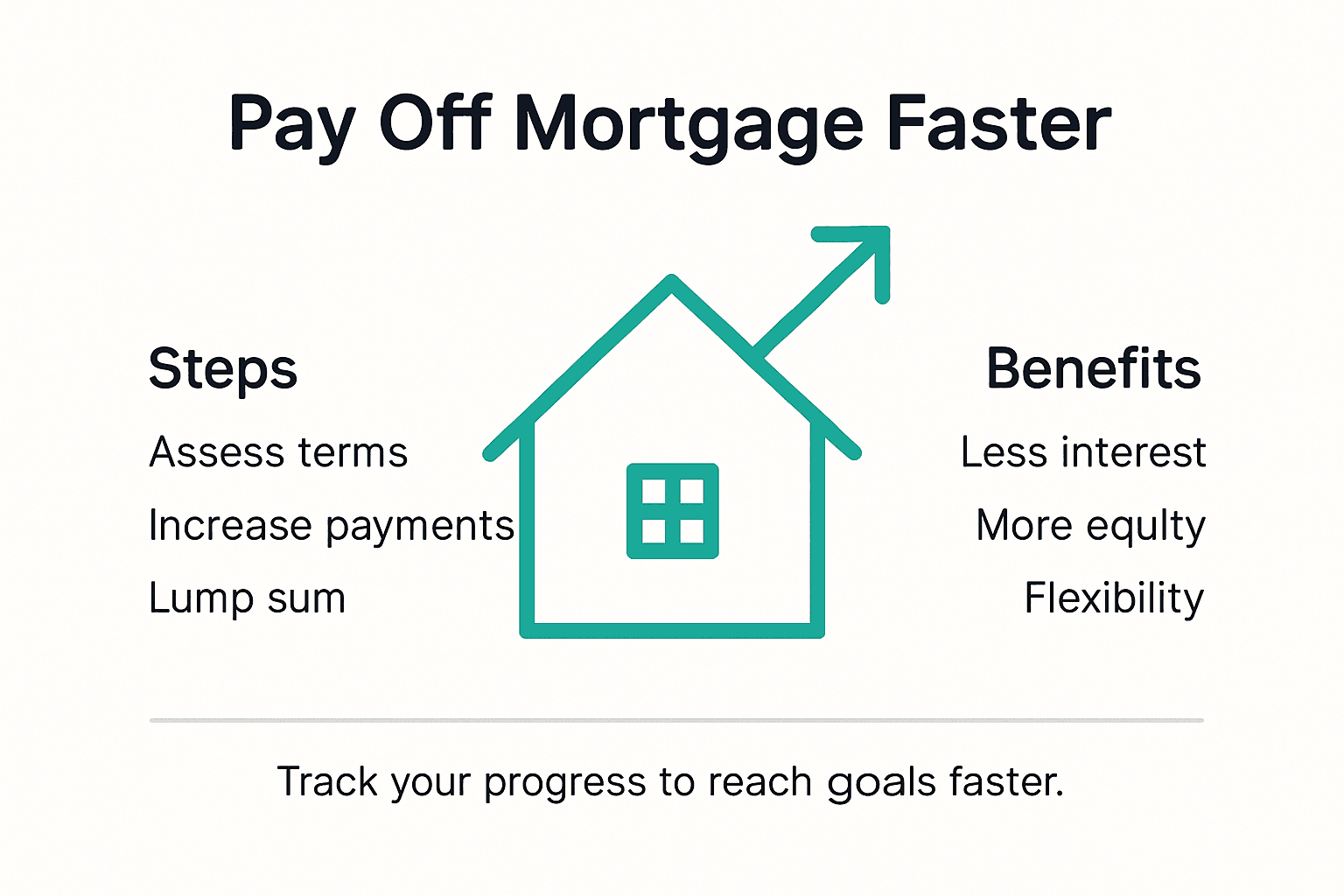
Personalised mortgage payment planning involves consistent monitoring and willingness to adjust your approach. Schedule quarterly reviews of your mortgage performance, tracking key metrics such as principal reduction, interest paid, and how your current strategy aligns with your long term financial goals. Compare your original projections with actual progress, identifying areas where you can optimise your repayment strategy. This might involve increasing regular payments, making additional lump sum contributions, or exploring refinancing options if market conditions have changed.
Consider working with a financial adviser or mortgage broker who can provide objective insights and help you navigate complex financial decisions. They can offer perspective on market trends, interest rate movements, and potential strategies for accelerating your mortgage paydown. Be prepared to be flexible your initial plan might need tweaking as your income, expenses, and broader financial circumstances evolve. The key is maintaining a proactive approach that keeps you focused on reducing your loan balance and building home equity over time.
Expert Tip: Create a dedicated spreadsheet or use a mortgage tracking app to visualise your progress and maintain motivation throughout your home loan journey.
Use this reference table to track important metrics for effective mortgage monitoring:
| Metric | What to Review | Impact on Loan |
|---|---|---|
| Principal balance | Amount owed | Shows loan reduction |
| Interest paid | Cost since last review | Reveals savings |
| Strategy alignment | Matches financial goals | Ensures progress |
| Market conditions | Changes in rates or terms | May prompt refinancing |
Take Control of Your Mortgage Journey with Expert Guidance
Paying off your mortgage faster and building home equity can feel overwhelming without the right support. The challenges of understanding complex mortgage terms, increasing repayments responsibly, and navigating refinancing options require a tailored strategy. If you want to reduce years off your loan and save thousands in interest, Mortgage Managers offers personalised advice designed to suit your unique financial situation.

Discover how working with trusted Auckland mortgage advisers can make all the difference. Whether you are based in Hobsonville, West Auckland, the North Shore or remotely across New Zealand, our expert team can help you review your current mortgage, plan additional repayments, and explore refinancing opportunities to maximise your savings. Don’t wait to accelerate your path to home ownership. Take the first step with Mortgage Managers and benefit from a strategic mortgage plan that truly works for you. Learn more about our mortgage refinancing services and personalised mortgage payment planning solutions today.
Frequently Asked Questions
How can I assess my current mortgage terms?
Understanding your current mortgage terms is essential for creating an effective repayment strategy. Gather your mortgage documents and review your interest rate, remaining loan balance, loan term, and repayment frequency. This will help you identify opportunities for faster paydown and optimise your financial situation.
What are some effective ways to increase my regular mortgage repayments?
You can accelerate your mortgage paydown by increasing your regular payments slightly, such as rounding up to the nearest hundred dollars. Consider allocating unexpected income like tax refunds directly to your mortgage, and ensure that the increase is manageable for your budget to maintain consistency.
How do I effectively utilise lump sum payments towards my mortgage?
Strategically applying lump sum payments can significantly reduce your mortgage balance and interest costs. Direct any unexpected funds like bonuses or tax refunds to your mortgage principal, and check your bank’s rules on early repayments to avoid potential penalties.
When should I consider refinancing my mortgage?
You should consider refinancing if current market interest rates are significantly lower than your existing rate. Evaluate potential savings versus refinancing costs, and if possible, secure a loan structure that aligns better with your financial goals to build equity more efficiently.
How can I monitor my mortgage repayment progress effectively?
Regularly monitoring your mortgage strategy is crucial for staying on track. Schedule quarterly reviews of your mortgage performance, tracking metrics like principal reduction and total interest paid, and adjust your repayment strategy as necessary based on your financial circumstances.
What should I look for in a financial adviser regarding mortgage strategies?
When seeking a financial adviser, look for someone with expertise in mortgage strategies and market trends. They should provide insights on repayment options, potential refinancing strategies, and help you navigate the complexities of managing your home loan effectively.