
Applying for your first mortgage in Auckland with a limited credit history can feel uncertain. For many first-home buyers, the anxiety lies in how a lender will judge your financial past and what this means for approval and loan costs. Understanding your credit score and what lenders see in your credit report gives you control, helping you improve your position and unlock better loan terms.
Table of Contents
- Credit Score Basics For Home Loans
- How Lenders Assess Your Credit History
- Common Credit Score Tiers And What They Mean
- Improving Your Score Before Applying For A Mortgage
- Pitfalls And Misconceptions For First Home Buyers
Key Takeaways
| Point | Details |
|---|---|
| Understand Your Credit Score | Your credit score significantly affects mortgage approval and interest rates; a higher score leads to better terms. |
| Regular Payments Matter | Consistent, on-time repayments enhance your credit profile and increase your chances of mortgage approval. |
| Know Your Rights | You have the legal right to request your credit report for free; review it before applying to address any discrepancies. |
| Avoid Common Misconceptions | Many first-time buyers underestimate the importance of their credit score and the necessity of seeking professional advice. |
Credit Score Basics for Home Loans
Your credit score is a three-digit number that tells Auckland lenders whether you’re reliable with borrowed money. Think of it as your financial reputation on file.
When you apply for a mortgage, lenders pull your credit report to assess risk. Your score influences not just whether you get approved, but also the interest rate and loan terms you’ll receive.
What’s Inside Your Credit Report
Your credit report is a detailed history of how you’ve handled credit over time. It contains far more than just a number—it’s a complete financial record.
The report shows:
- Payment history (on-time payments and missed deadlines)
- Current and past loan amounts
- Credit card balances and limits
- Defaults and any serious delinquencies
- Enquiries from lenders checking your credit
In New Zealand, credit reporters including Centrix, Equifax, and illion maintain these records. Lenders check your report every time you apply for a mortgage or other credit.
The Default Problem
Defaults (missed payments) stay on your credit report for five years. That’s five years of impact, even after you eventually pay what you owe.
One missed payment doesn’t automatically disqualify you from a mortgage. However, multiple defaults signal to lenders that you’ve struggled with repayment obligations.
Defaults remain visible on your file for five years—this is why early repayment and consistent on-time payments matter so much for home loan applications.
Building Your Credit History
Regular, on-time repayments are your most powerful tool. Each successful payment strengthens your credit profile incrementally.
Consistent repayment history shows lenders you’re disciplined and trustworthy. This directly impacts whether they’ll lend to you and at what rate.

Your Right to See Your Credit Report
Every New Zealander has a legal right to request their credit report for free. Most credit reporters provide basic access at no cost, though faster delivery may include a small fee.
Checking your report before applying for a mortgage is smart. You can spot errors, address issues, or prepare explanations for past problems.
Pro tip: Request your credit report at least three months before you plan to apply for a mortgage—this gives you time to improve any issues and understand what lenders will see.
How Lenders Assess Your Credit History
When you apply for a mortgage in Auckland, lenders don’t just glance at your credit score and make a decision. They conduct a thorough review of your entire credit history to understand your financial behaviour.
This assessment determines whether you qualify, how much you can borrow, and what interest rate you’ll pay. Your credit history is essentially your track record with money.
What Lenders Actually Look For
Lenders examine specific details from your credit report that reveal how you’ve managed debt over time.
They focus on:
- Payment punctuality (did you pay on time, every time?)
- Current debt levels and credit limits
- Pattern of defaults or missed payments
- How long you’ve held accounts in good standing
- Recent credit enquiries from other lenders
Your payment history and repayment patterns are the strongest indicators of creditworthiness. Lenders want proof you consistently meet obligations.
Beyond Your Credit Score
Your credit score is just one piece of the puzzle. Lenders also check your credit file itself, which tells a more complete story.
They’re looking for patterns—not isolated incidents. A single late payment years ago matters less than consistent, recent defaults.
Privacy Protection During Assessment
When lenders assess your credit history, they operate under strict regulatory guidelines. The Credit Reporting Privacy Code 2020 governs how credit information is collected, held, and used in New Zealand.
This means your information is protected and lenders can only access what’s relevant to their lending decision. You have rights around how your data is handled.
Who Else Checks Your Credit
It’s not just mortgage lenders. Utility companies, landlords, insurers, and employers may also review your credit file.
This broader scrutiny means maintaining good credit behaviour has ripple effects across your financial life. Poor credit doesn’t just affect mortgage approvals.
Lenders assess your entire credit history, not just your score—consistent, on-time payments over years build the credibility needed for mortgage approval.
The Timeline Matters
Recent payment behaviour carries more weight than old history. A default from seven years ago matters less than one from last year.
However, Auckland lenders also want to see sustained improvement if you’ve had past issues. One good year isn’t enough to overcome a pattern of defaults.
Pro tip: Keep detailed records of your payments for at least the past two years—this documentation helps you explain any discrepancies to your mortgage broker when applying.
Common Credit Score Tiers and What They Mean
Credit scores aren’t arbitrary numbers—they fit into tiers that lenders use to assess your risk level. Each tier tells a different story about your creditworthiness.
Understanding where you sit within these tiers helps you know what to expect when you apply for a mortgage. Different tiers unlock different opportunities.
The Tier System Explained
Credit scores typically range from 0 to 1000 in New Zealand, divided into distinct tiers. Each tier reflects your likelihood of repaying borrowed money on time.
The tiers generally break down as:
- Excellent (800–1000): You rarely miss payments and manage debt responsibly
- Good (650–799): You’ve shown solid repayment history with minimal defaults
- Fair (500–649): You have some defaults or late payments in your history
- Poor (0–499): Multiple serious defaults or ongoing payment struggles
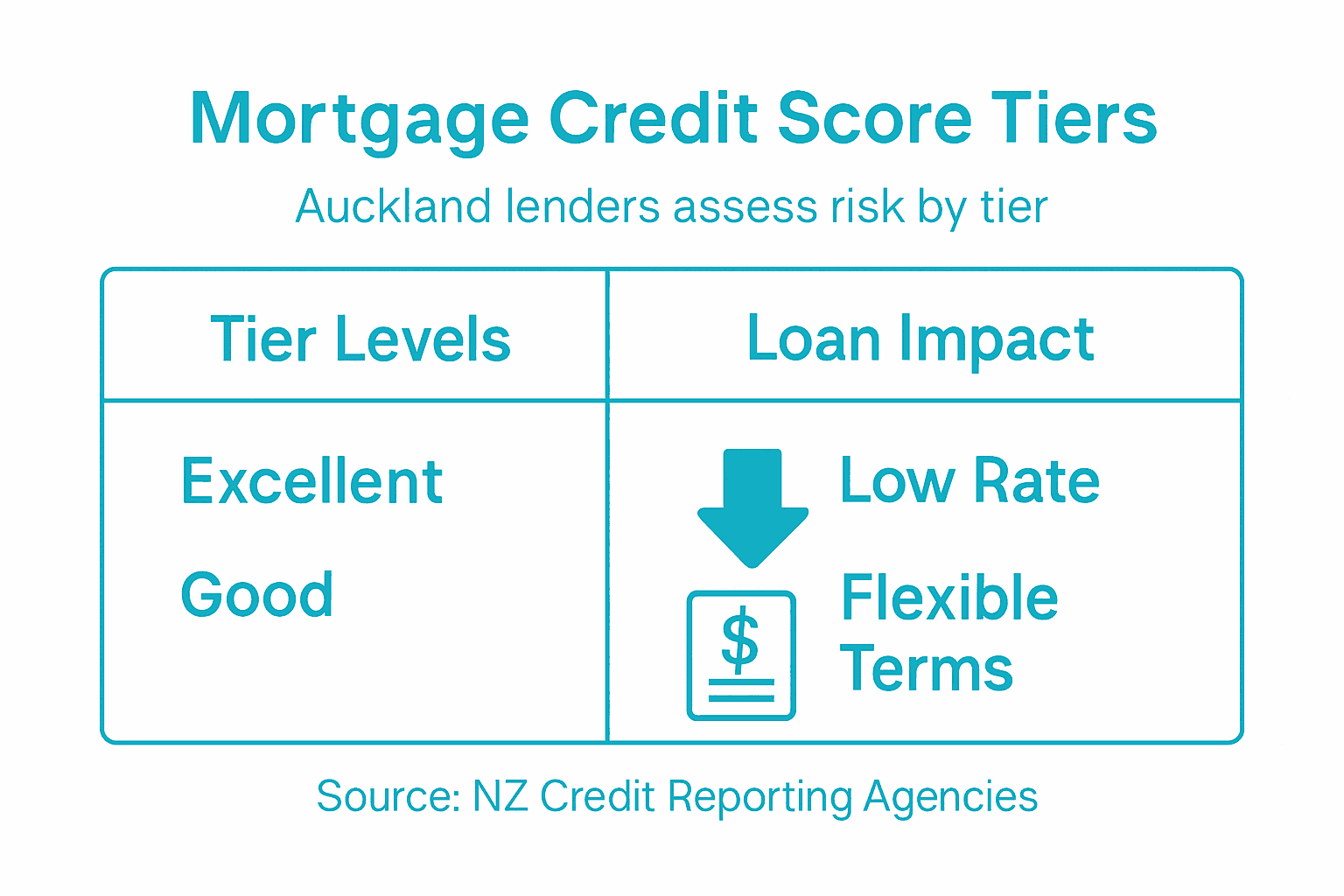
Your position within these tiers directly influences whether lenders approve you and what rate they’ll offer. Lenders view credit score tiers as risk indicators affecting approval chances and loan conditions.
Here’s a snapshot of how different credit score tiers can affect your mortgage prospects in New Zealand:
| Credit Tier | Approval Likelihood | Typical Interest Rate | Common Lending Terms |
|---|---|---|---|
| Excellent | Very high, fast approval | Lowest available | Flexible, high borrowing caps |
| Good | High, with basic checks | Competitive | Standard terms, moderate caps |
| Fair | Moderate, extra scrutiny | Higher than average | Larger deposit, extra proof |
| Poor | Very low, specialist only | Highest rates | Strict terms, low borrowing |
What Excellent Credit Gets You
If you’re in the excellent tier, you’re in the strongest position. Lenders compete for your business because you represent minimal risk.
You’ll typically receive the lowest interest rates available and more flexible lending terms. Auckland mortgage lenders see excellent-tier borrowers as straightforward approvals.
Good Credit—The Sweet Spot
Good-tier credit doesn’t mean perfect, but it shows consistent responsibility. Most first-home buyers fall into this range, and it’s more than sufficient for mortgage approval.
You’ll access competitive rates and reasonable loan terms. Lenders view good-tier borrowers as reliable without requiring extensive scrutiny.
Fair Credit—More Work Required
Fair-tier credit signals you’ve had payment difficulties, but you’re recovering. Lenders will approve mortgages, but expect stricter conditions.
You might face higher interest rates, larger deposit requirements, or more thorough income verification. However, approval is absolutely possible.
Poor Credit—Serious Challenges
Poor-tier credit means you’ve struggled significantly with past debts. Traditional lenders typically won’t approve mortgages without substantial intervention.
This doesn’t mean homeownership is impossible—it means you’ll need to work harder. Specialist lenders exist, but rates and terms will be less favourable.
Your credit tier determines your starting position with lenders—excellent and good tiers unlock easier approvals and better rates, whilst fair and poor require extra effort to secure a mortgage.
Improving Between Tiers
Moving from one tier to another takes time, but it’s achievable. Consistent, on-time payments gradually build your score upwards.
Each successful payment contribution is a small step toward a better tier. The debt-to-income framework also influences how lenders assess your overall borrowing capacity across tiers.
Pro tip: Target moving into the good tier (650+) before applying for a mortgage—this typically requires 6–12 months of perfect payment history and will significantly improve your approval odds and interest rates.
Improving Your Score Before Applying for a Mortgage
Don’t rush into a mortgage application if your credit score isn’t where it needs to be. Spending three to six months improving your score can save you thousands in interest over the life of your loan.
The good news? Your score isn’t fixed. With intentional action, you can move it upwards significantly before you apply.
Pay Everything On Time
This is the single most powerful action you can take. Payment history accounts for the largest portion of your credit score.
Set up automatic payments for all your debts—credit cards, personal loans, utilities, phone bills. Missing even one payment pushes you backwards.
Reduce Your Debt Burden
High debt levels signal risk to lenders, even if you’re paying on time. Focus on paying down existing debts before applying for a mortgage.
Prioritise high-interest debt first, then work on credit card balances. Lower overall debt improves your credit score and strengthens your mortgage application.
Avoid New Credit Applications
Each time you apply for credit, a lender makes an enquiry on your file. Multiple enquiries in a short period damage your score.
Pause new credit applications for at least three months before your mortgage application. This shows lenders you’re not desperately seeking credit.
Work With Financial Support
If debt feels overwhelming, don’t handle it alone. Financial mentoring paired with interest-free loans helps New Zealanders manage repayments and build better credit history before applying for larger mortgages.
Organisations offering mentoring provide practical guidance on budgeting and debt reduction strategies tailored to your situation.
Check for Errors on Your Report
Your credit file might contain mistakes—incorrect defaults, accounts you never opened, or payments marked as late when they weren’t.
Request your credit report, review it thoroughly, and dispute any errors immediately. Correcting mistakes can boost your score within weeks.
Improving your credit score takes time, but even a 50-point increase can lower your mortgage interest rate and save you tens of thousands over 25 years.
Build a Track Record
Lenders want to see sustained improvement, not a single good month. Aim for at least six months of perfect payment history.
Each month of on-time payments strengthens your application and demonstrates genuine financial responsibility to mortgage lenders.
Pro tip: Start your score improvement journey at least six months before your target mortgage application date—this timeline allows your payment history to rebuild and gives you room to address any unexpected setbacks.
Before applying, ensure you address these key mortgage prep steps for a smoother process:
| Preparation Step | Why It Matters | Typical Timeline |
|---|---|---|
| Check credit report | Fix errors, spot surprises | 3+ months before apply |
| Pay all bills on time | Most significant score factor | Ongoing, at least 6 mo |
| Reduce available debts | Boosts score, lowers risk | 3–6 months prep |
| Avoid new credit apps | Too many lower your score | Pause for 3+ months |
Pitfalls and Misconceptions for First Home Buyers
First-time homebuyers often fall into predictable traps that cost them thousands. Many of these mistakes stem from misunderstandings about how mortgages and property purchases actually work.
Knowing what to avoid puts you ahead of most Auckland first-home buyers. Let’s tackle the biggest misconceptions head-on.
“My Credit Score Doesn’t Matter Much”
This is dangerously false. Your credit score influences not just approval odds, but the actual interest rate you’ll pay.
A single percentage point difference in your rate translates to tens of thousands of dollars over 25 years. Your credit score absolutely matters.
“I Don’t Need Legal Advice”
Many first-home buyers try to save money by skipping property law advice. This backfires regularly. Property lawyers guide buyers through legal complexities including seller disclosures, LIM reports, and council requirements that protect your interests.
Investing in legal advice early prevents costly mistakes later in the transaction.
“All Mortgages Are the Same”
They absolutely aren’t. Different mortgage types—fixed, floating, and interest-only loans—vary significantly in costs and repayment structures.
Fixture rates lock in your payment for years. Floating rates fluctuate monthly. Misunderstanding these differences leads to borrowing mistakes that haunt you for decades.
“I Should Borrow the Maximum Amount”
Just because a lender approves you for $650,000 doesn’t mean you should borrow that much. Your approval amount considers lender risk, not your actual financial comfort.
Borrow based on what you can sustainably repay, not what the bank permits. Financial stress isn’t worth saving a few hundred dollars monthly on rent.
“A Large Deposit Isn’t Critical”
Lenders prefer deposits of at least 20% for competitive rates. Below 20%, you’ll pay mortgage insurance, which adds thousands to your loan cost.
Saving longer for a bigger deposit often saves more than rushing in with a smaller one.
The biggest pitfall for first-home buyers is rushing the process—taking time to understand mortgages, build your credit, and save a solid deposit prevents expensive regrets later.
“I Don’t Need Professional Mortgage Advice”
Mortgage brokers aren’t optional luxuries. They navigate lender requirements, compare products, and identify options you’d miss alone.
A good broker saves time, money, and stress throughout your application process.
Pro tip: Consult a property lawyer and mortgage broker before you even make an offer on a property—early professional guidance prevents costly legal and financial missteps that are hard to reverse later.
Take Control of Your Home Loan Journey with Expert Auckland Mortgage Advisers
Navigating credit scores and mortgage approvals can feel overwhelming, especially with the complexities around defaults, payment history, and scoring tiers. If you are an Auckland buyer seeking clear guidance on improving your credit health and securing the best mortgage terms, Mortgage Managers is here to support you. We specialise in tailored advice that helps you understand your credit report, build your repayment history, and access competitive home loans with confidence.

Don’t let credit confusion hold you back from your dream home. Visit Mortgage Managers now to connect with local mortgage brokers in Hobsonville who understand Auckland’s lending landscape inside out. Start improving your credit score today and get personalised mortgage solutions designed for your unique financial situation. Take the next step towards homeownership with expert assistance that puts you first.
Frequently Asked Questions
What is a credit score, and why is it important for obtaining a mortgage?
A credit score is a three-digit number that evaluates your reliability in repaying borrowed money. It’s crucial for mortgage applications as it influences approval chances, interest rates, and loan terms.
What factors are included in my credit report that lenders review?
Lenders examine your payment history, current and past loan amounts, credit card balances, defaults, and enquiries from creditors checking your credit. This comprehensive review helps them assess your financial behaviour.
How can I improve my credit score before applying for a mortgage?
To improve your credit score, make all payments on time, reduce existing debts, avoid applying for new credit, and request a credit report to check for errors. Consistently managing these factors can elevate your score significantly.
What are the consequences of having a poor credit score when applying for a mortgage?
A poor credit score signals to lenders that you have multiple defaults or ongoing repayment struggles, leading to a very low likelihood of approval and potentially the highest interest rates if approval is granted.