
TL;DR:
- Getting a mortgage in New Zealand requires thorough financial documentation and understanding the lender’s criteria.
- Using schemes like the Kāinga Ora First Home Loan allows eligible buyers to purchase with only a 5% deposit.
A mortgage is a loan secured against a property, repaid over 25–30 years, with interest charged on the outstanding balance. Knowing how to get a bank loan for a house in New Zealand means understanding lender criteria, gathering the right documents, and choosing loan options that suit your financial position. The Reserve Bank of New Zealand sets loan-to-value ratio (LVR) limits that regulate how much you can borrow relative to your deposit. Government schemes like the Kāinga Ora First Home Loan open doors for buyers with as little as 5% saved. This guide walks you through every stage, from preparation to settlement.
What documents and financial preparation do you need?
Banks assess your full financial picture before approving a home loan. Required documents include a valid passport or driver’s licence, recent payslips, an IRD summary, three to six months of bank statements, a liability statement, and evidence of your deposit. Lenders scrutinise income, debts, credit history, expenses, and savings behaviour during the application process.
Getting your paperwork in order before you approach a bank saves significant time. Missing even one document can delay your pre-approval by days.
Key documents checklist
- Identity: Passport or New Zealand driver’s licence
- Income proof: Two to three recent payslips, employment contract, or IRD income summary
- Bank statements: Three to six months showing income, spending, and savings patterns
- Liability statement: Details of existing debts, credit cards, and personal loans
- Deposit evidence: Savings account statements, KiwiSaver balance, or gifting letter if applicable
Financial preparation that actually matters
Reducing credit card balances and avoiding new credit applications before you apply strengthens your credit profile. Regular savings and limited discretionary spending improve approval chances because lenders read bank statements as a window into your financial habits. A pattern of consistent saving signals reliability to any lender.

KiwiSaver plays a meaningful role for first-home buyers. You may be able to withdraw most of your KiwiSaver balance for a first home deposit, which can significantly close the gap between what you have saved and what you need. Learn more about KiwiSaver deposit strategies before you start counting your savings.
Pro Tip: Avoid applying for any new credit, including buy-now-pay-later accounts, in the three to six months before your mortgage application. Even small new debts can reduce your borrowing power.
How does the mortgage application and approval process work?
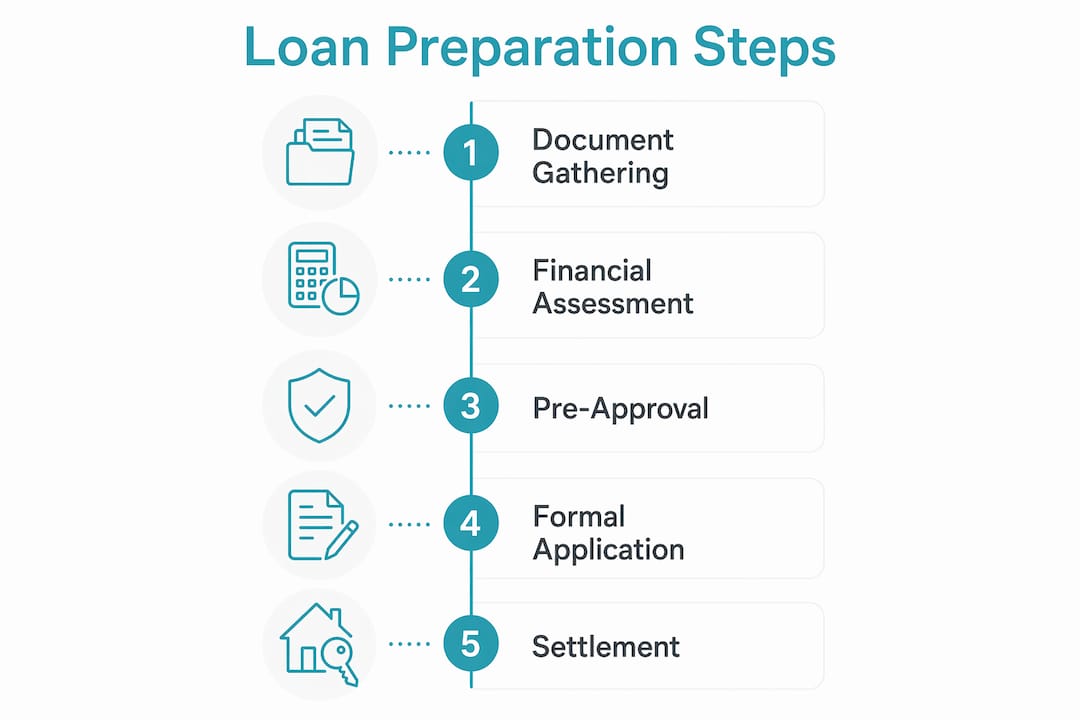
The mortgage process in New Zealand follows a clear sequence. Understanding each stage helps you set realistic expectations and avoid costly delays.
-
Get pre-approval. Submit your documents to a lender or mortgage adviser. Pre-approval takes 3–7 business days if your documents are complete. Pre-approval is valid for 60–90 days, giving you a confirmed budget before you start house hunting.
-
Sign a sale and purchase agreement. Once you find a property and agree on a price, you sign a conditional agreement. This triggers the formal loan application.
-
Formal application and property valuation. The lender orders an independent valuation of the property. They also run a full credit assessment covering your income, debts, expenses, and deposit source.
-
Lender credit evaluation. Banks cap owner-occupier lending at a debt-to-income ratio of about 6:1 and assess the Household Expenditure Measure (HEM) alongside your declared expenses. This ratio means your total debt cannot exceed roughly six times your annual income. Lenders use whichever is higher between your declared expenses and the HEM benchmark.
-
Unconditional approval. Once the valuation is confirmed and all lender conditions are satisfied, you receive unconditional approval. Formal approval typically takes 5–10 business days after the purchase agreement is signed.
-
Settlement. Your solicitor handles the legal transfer of the property. Funds are released, and you receive the keys.
Pro Tip: Do not make any large purchases or change jobs between pre-approval and settlement. Lenders can and do re-check your financial position before releasing funds.
What government schemes help buyers with a low deposit?
Saving a 20% deposit on a New Zealand property takes years for most buyers. The Kāinga Ora First Home Loan is the most direct solution for eligible buyers who cannot reach that threshold.
How the Kāinga Ora First Home Loan works
Eligible buyers can purchase with a 5% deposit through the Kāinga Ora First Home Loan scheme. The government guarantee protects the lender, which means you access standard interest rates without paying a low-deposit premium or lenders mortgage insurance. That saving can be substantial over a 25-year loan term.
Income caps apply. Individual buyers without dependants must earn under $95,000 per year. Joint buyers or those with dependants must earn under $150,000 combined. A 1.2% insurance premium applies on the loan amount. Properties must also fall within regional price caps, which the lender confirms during the formal application. Mortgagemanagers can help you check your eligibility and find properties within those limits. Read more about the Kāinga Ora First Home Loan process before you apply.
Deposit options compared
| Loan type | Minimum deposit | Low-deposit premium | Income cap applies |
|---|---|---|---|
| Standard bank mortgage | 20% | None | No |
| Low-deposit bank lending | 10% | Yes, varies by lender | No |
| Kāinga Ora First Home Loan | 5% | No (government guarantee) | Yes |
Other low-deposit pathways exist, including some lenders who offer 10% deposit products with a low-equity margin added to the interest rate. These carry a higher ongoing cost than the Kāinga Ora scheme for eligible buyers.
- Check your income against the current Kāinga Ora caps before assuming you qualify
- Confirm the property price falls within the regional limit for your area
- Factor the 1.2% insurance premium into your total loan cost calculations
- Speak with a mortgage adviser to compare low-deposit options side by side
How do you improve your chances of approval and get the best deal?
Approval is not just about meeting the minimum criteria. The quality of your application determines the rate and structure you are offered.
Practical steps that make a real difference
- Reduce high-interest debt first. Credit card balances directly reduce your borrowing capacity. Pay them down before applying.
- Demonstrate savings discipline. Three to six months of consistent savings, with limited large discretionary purchases, signals financial reliability to lenders.
- Check your credit report. Request a free credit report from Centrix or Equifax New Zealand before applying. Errors on your report can cost you approval.
- Understand your LVR. The loan-to-value ratio is your loan amount divided by the property value. A lower LVR gives you access to better rates and more lenders.
- Use a mortgage adviser. Mortgage brokers work with multiple lenders, negotiating rates and handling paperwork at no cost to you. A good adviser improves your loan structure and gives you access to competitive deals you would not find by walking into a single bank.
Pro Tip: Never accept the first rate a bank offers. Lenders have discretion to move on rates, especially for borrowers with strong financials. A mortgage adviser does this negotiation for you as a standard part of the process.
Working with an adviser also means your application goes to the lender most likely to approve your specific situation. That targeted approach reduces the risk of multiple credit enquiries damaging your credit score.
What mistakes should you avoid when applying for a home loan?
Common errors cost buyers weeks of delay or outright rejection. Knowing what to avoid is as valuable as knowing what to do.
“The biggest mistake first-home buyers make is underestimating how thoroughly lenders examine their financial history. Banks are not just checking your income. They are reading your spending habits, your debts, and your savings story.”
- Submitting incomplete documents. Missing payslips or unsigned liability statements stall the process immediately. Use a home loan checklist to confirm everything is ready before you apply.
- Ignoring credit report issues. An unpaid debt or incorrect default on your credit file can trigger a decline. Check your report at least 60 days before applying so you have time to resolve any issues.
- Applying for new credit before settlement. New credit applications reduce your score and can change your debt-to-income ratio after pre-approval.
- Misunderstanding gifting rules. If part of your deposit is a gift from family, the lender requires a signed statutory declaration confirming it is not a loan. Treating a family loan as a gift is a common and serious error.
- Missing lender conditions after pre-approval. Pre-approval is conditional. Failing to satisfy conditions within the validity period means starting the process again.
- Mismanaging KiwiSaver withdrawals. You must leave a minimum balance in your KiwiSaver account when withdrawing for a first home. Withdrawing the wrong amount can affect your eligibility for other schemes.
Key takeaways
Getting a bank loan for a house in New Zealand requires clean documentation, a clear savings record, an understanding of LVR and DTI limits, and the right loan structure for your deposit size.
| Point | Details |
|---|---|
| Prepare documents early | Gather payslips, bank statements, IRD summary, and deposit evidence before approaching any lender. |
| Pre-approval sets your budget | Pre-approval takes 3–7 days and is valid for 60–90 days, giving you a confirmed price range. |
| Kāinga Ora opens low-deposit access | Eligible buyers can purchase with 5% deposit at standard rates under the Kāinga Ora First Home Loan scheme. |
| DTI ratio caps your borrowing | Banks limit owner-occupier lending to roughly six times your annual income, so reducing debt increases your ceiling. |
| A mortgage adviser improves outcomes | Brokers access multiple lenders, negotiate rates, and handle paperwork at no cost to the borrower. |
Stuart’s take on getting the best home loan outcome
Most buyers focus entirely on the loan itself. That is understandable, but it misses the bigger picture. The most effective approach I have seen treats the mortgage as one part of a whole financial position, not the whole position itself. Your KiwiSaver balance, your insurance cover, and your loan structure all interact. A decision made in isolation on one of those can create problems in another.
For first-home buyers especially, the stakes are high because these decisions are largely irreversible in the short term. Fixing your rate at the wrong time, choosing the wrong loan term, or misunderstanding your repayment structure can cost you tens of thousands of dollars over the life of the loan. Independent financial advisers provide a whole-of-position perspective that a single bank simply cannot offer, because the bank’s adviser is limited to that bank’s products.
My honest advice: get mortgage advice before you start looking at properties, not after you have fallen in love with one. Knowing your real borrowing capacity and your best loan structure before you enter the market puts you in a far stronger negotiating position. It also removes the anxiety of wondering whether you can actually afford the home you are about to bid on.
— Stuart
How Mortgagemanagers can help you secure the right home loan
Getting mortgage advice before you start house hunting is the single most effective step you can take. Mortgagemanagers is a locally owned Auckland mortgage advisory business based in Hobsonville, servicing buyers across West Auckland, the North Shore, and remotely throughout New Zealand.

Mortgagemanagers works with multiple lenders to find the loan structure that fits your situation, whether you are a first-home buyer using the Kāinga Ora scheme or a buyer with a complex income profile. As your personal mortgage shoppers, the team negotiates rates, handles paperwork, and guides you from pre-approval through to settlement. There is no cost to you for this service. Reach out to Mortgagemanagers before your next property search.
FAQ
What is the minimum deposit to get a home loan in New Zealand?
The standard minimum deposit for a bank mortgage is 20% of the property value. Eligible first-home buyers can access the Kāinga Ora First Home Loan with a 5% deposit.
How long does mortgage pre-approval take in New Zealand?
Pre-approval takes 3–7 business days when all documents are submitted correctly. Pre-approval is valid for 60–90 days.
Can I use KiwiSaver for a house deposit?
Yes. Most first-home buyers can withdraw their KiwiSaver savings for a deposit, provided they meet eligibility criteria and leave a minimum balance in the account.
What does a mortgage broker cost in New Zealand?
Mortgage brokers in New Zealand are paid by the lender, not the borrower. Their service costs you nothing, and they provide access to multiple lenders and negotiated rates.
What is a debt-to-income ratio and why does it matter?
The debt-to-income ratio (DTI) compares your total debt to your annual income. New Zealand banks cap owner-occupier lending at roughly 6:1, meaning your total debt cannot exceed six times your gross annual income.