
Securing your first home in New Zealand feels overwhelming when you’re juggling deposit requirements, credit checks, and ever-changing lending rules. Many first home buyers struggle with limited savings or credit hiccups, wondering if homeownership is even possible. This guide walks you through every practical step to prepare for a 2026 home loan, including Kāinga Ora First Home Loan options that work with just a 5% deposit, strategies to strengthen your credit profile, and how to navigate lender requirements confidently.
Table of Contents
- Understanding First Home Loan Options In New Zealand
- Getting Your Finances Ready: Deposit, Credit And Income Requirements
- Step-By-Step Application Process And Tips For Approval
- Common Challenges And How To Troubleshoot Your Home Loan Preparation
- How Mortgage Managers Can Help First Home Buyers In New Zealand
Key takeaways
| Point | Details |
|---|---|
| First Home Loan accessibility | Kāinga Ora underwrites loans requiring only 5% deposit instead of the standard 20%. |
| Financial preparation essentials | Build your deposit with KiwiSaver withdrawals, fix credit report errors early, and understand debt-to-income ratios lenders assess. |
| Application success strategies | Follow a structured six-step process, prepare documents in advance, and consider using mortgage advisers for complex situations. |
| Overcoming common obstacles | Specialist lenders and Kāinga Ora backing provide pathways for buyers with credit challenges or limited deposits. |
Understanding first home loan options in New Zealand
The Kāinga Ora First Home Loan programme fundamentally changes the game for first home buyers in New Zealand. Instead of needing a hefty 20% deposit that takes years to accumulate, this scheme requires just 5% deposit for qualifying buyers. Kāinga Ora underwrites these loans, giving lenders the confidence to approve mortgages they might otherwise decline.
Eligibility centres around a few core criteria. You must be a New Zealand citizen or permanent resident purchasing your first home or buying again after a relationship separation. Income caps apply based on household size, and the property price must fall within regional thresholds. Meeting these requirements opens doors to homeownership far sooner than traditional lending paths.
Recent market shifts favour first home buyers even more. Easing mortgage rates and expanded low-deposit allowances help more buyers cross the finish line. Banks now have greater flexibility to approve loans with smaller deposits, responding to changing reserve bank policies in 2026.
Your KiwiSaver balance becomes a powerful tool here. You can withdraw funds to boost your deposit, combining savings with government backing to reach that crucial 5% threshold. This dual approach accelerates your timeline significantly.
Key advantages of First Home Loans include:
- Lower deposit barrier removes the biggest obstacle most buyers face
- Kāinga Ora underwriting lets lenders approve loans outside normal criteria
- Competitive interest rates match standard mortgages despite lower deposits
- Access to established lenders rather than fringe finance companies
Pro tip: Check your eligibility for the official First Home Loan programme before assuming you need a full 20% deposit. Many buyers qualify without realising it.
The programme works particularly well for buyers who earn steady incomes but struggle to save large deposits quickly. Young professionals, families with children, and those in high-rent areas benefit most. Even buyers with minor credit blemishes find approval easier when Kāinga Ora backs the loan.
Getting your finances ready: deposit, credit and income requirements
Building your 5% deposit requires strategic planning rather than just hoping savings accumulate. Start by calculating your target property price and working backwards to determine exact deposit needs. A $600,000 home needs $30,000 upfront, plus costs for solicitors, inspections, and moving expenses.

Managing your KiwiSaver strategically accelerates deposit growth dramatically. You can withdraw all contributions except the initial $1,000 government kickstart, potentially adding $20,000 to $40,000 to your deposit pool. Time your withdrawal to maximise employer contributions and investment returns.
Your credit score directly impacts approval chances and interest rates offered. Lenders scrutinise payment histories, outstanding debts, and credit applications from the past five years. A score above 700 positions you strongly, whilst anything below 500 raises red flags. Check your credit report through credit bureaus at least six months before applying to identify and dispute errors.
Common credit report mistakes include:
- Accounts belonging to someone else with a similar name
- Debts already paid showing as outstanding
- Duplicate entries for the same account
- Outdated information past the seven-year reporting limit
Pro tip: Check your credit report early and dispute errors immediately, as corrections can take 30 to 60 days to process.
Income requirements vary by lender, but most apply debt-to-income ratios capping total debt payments at 40% to 50% of gross income. A household earning $90,000 annually should keep total debt payments below $3,000 to $3,750 monthly. This includes your future mortgage, car loans, credit cards, and student loans.
Lenders verify income through multiple documents rather than trusting verbal claims. Expect to provide payslips covering the past three months, employment contracts, tax returns for the last two years, and bank statements showing consistent deposits. Self-employed buyers face stricter scrutiny, requiring additional business financials and often two years of steady income.
Recent market data shows KiwiSaver withdrawals and expanded lending allowances help more buyers succeed. Banks recognise the changing landscape and adjust criteria accordingly, creating opportunities for buyers who previously faced rejection.
Reduce existing debts before applying to improve your debt-to-income ratio. Paying off credit cards, consolidating loans, or closing unused accounts demonstrates financial responsibility. Even small improvements in your ratio can mean the difference between approval and decline.
Follow this home loan checklist for New Zealand buyers to ensure nothing slips through the cracks. Missing documents delay approvals by weeks, frustrating buyers and sellers alike.
Step-by-step application process and tips for approval
Navigating the mortgage application process systematically prevents confusion and delays. Understanding each stage helps you prepare documents, anticipate lender questions, and respond quickly to requests.
The six core stages are:
- Pre-approval research: Compare lenders, gather initial documents, and determine your borrowing capacity based on income and deposits.
- Formal pre-approval: Submit preliminary application with proof of income, deposit evidence, and identification to receive conditional approval.
- Property selection: Find your home within pre-approved price range, ensuring it meets lender property standards and valuation requirements.
- Full application submission: Provide complete documentation including sale and purchase agreement, building reports, and updated financials.
- Conditional approval: Lender assesses full application, orders property valuation, and issues approval subject to specific conditions.
- Final approval and settlement: Meet all conditions, complete solicitor reviews, and receive funds for settlement day.
Record numbers of first home buyers successfully navigated this process recently, with 28.8% of December purchases coming from first-timers. This demonstrates that preparation and persistence pay off.
| Application stage | Typical timeframe | Key documents required |
|---|---|---|
| Pre-approval | 2 to 5 days | Payslips, ID, deposit proof |
| Full application | 1 to 2 weeks | Sale agreement, building report, updated bank statements |
| Conditional approval | 3 to 7 days | Property valuation, insurance quotes |
| Final approval | 1 to 3 days | Solicitor sign-off, settlement confirmation |
Communicate proactively with lenders throughout the process. Respond to document requests within 24 hours when possible. Ask questions immediately rather than making assumptions. Lenders prefer engaged applicants who demonstrate organisation and reliability.
Common mistakes that delay approvals include:
- Changing jobs during the application process
- Taking on new debts or credit cards
- Making large unexplained deposits that raise money laundering concerns
- Failing to disclose all income sources or existing debts
- Waiting until the last minute to arrange building inspections
Pro tip: Use mortgage advisers or brokers to navigate complex applications and lending criteria, especially if you have unique income sources or credit situations.
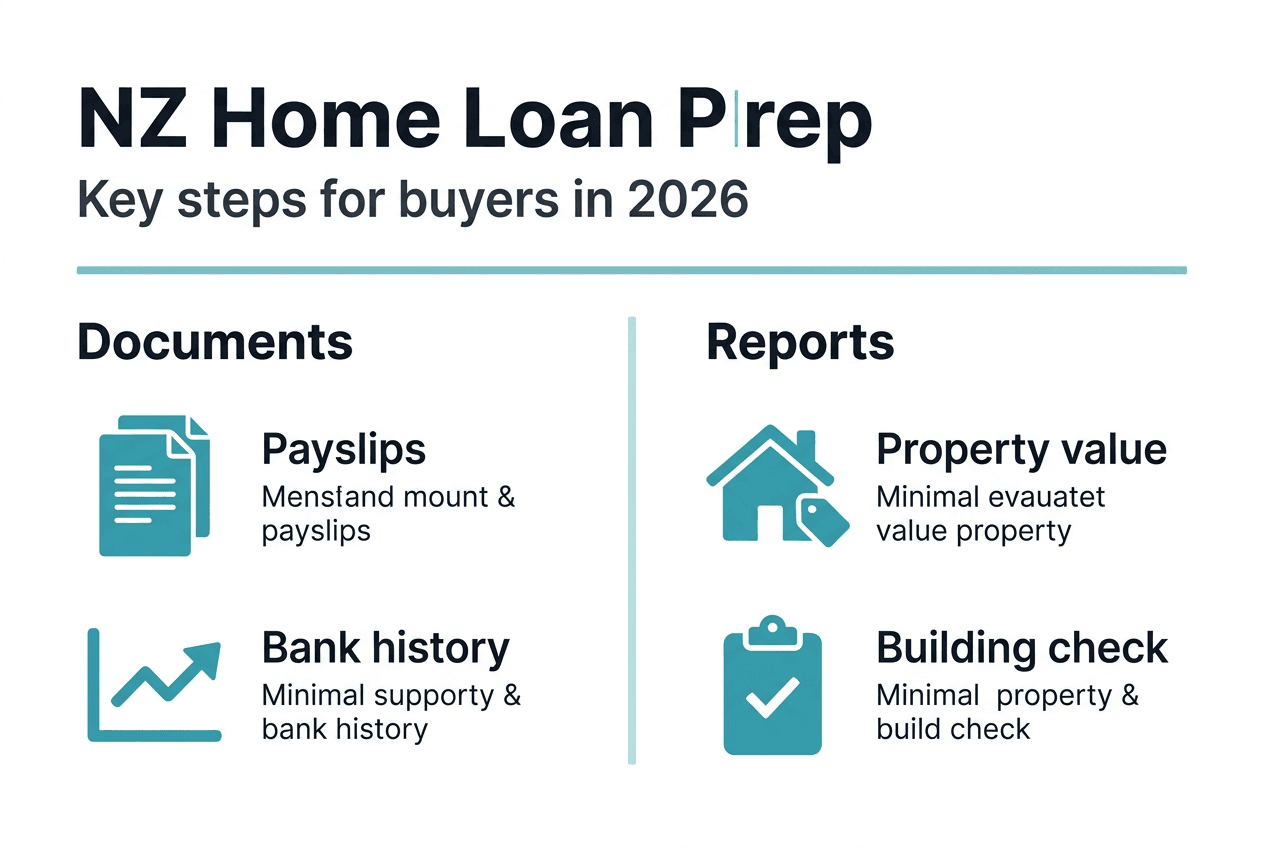
Your mortgage application checklist should include recent payslips, employment contracts, two years of tax returns, three months of bank statements, identification documents, and KiwiSaver withdrawal confirmation. Self-employed buyers add business financials, GST returns, and accountant letters.
Building reports and property valuations matter more than many buyers realise. Lenders won’t approve loans on properties with significant structural issues or values below purchase price. Order pre-purchase inspections early to avoid wasting time on unsuitable properties.
Timeline management becomes crucial when juggling property searches, application deadlines, and settlement dates. Build buffer time into every stage to accommodate unexpected delays. Rushing leads to mistakes that cost approvals.
Common challenges and how to troubleshoot your home loan preparation
Bad credit histories create the biggest anxiety for first home buyers, but solutions exist. Specialist lenders focus specifically on borrowers with credit issues, offering pathways when mainstream banks decline. Kāinga Ora underwriting enables loans that fall outside normal lending standards, giving you options even with past financial mistakes.
Improving your credit score before applying yields better interest rates and approval odds. Pay all bills on time for at least six months, reduce credit card balances below 30% of limits, and avoid new credit applications. These simple actions can lift your score 50 to 100 points.
Insufficient deposits plague many buyers despite lower thresholds. Beyond KiwiSaver withdrawals, consider gifted deposits from family members, though lenders require statutory declarations confirming gifts don’t need repayment. Some buyers successfully combine First Home Loan deposits with guarantor arrangements, where family members provide additional security.
| Challenge | Traditional solution | Alternative approach |
|---|---|---|
| Bad credit history | Wait 2+ years to improve score | Use specialist lenders and Kāinga Ora backing |
| Low deposit | Save for years to reach 20% | Access First Home Loan with 5% plus KiwiSaver |
| Irregular income | Provide extensive income proof | Engage mortgage advisers who know flexible lenders |
| Property condition issues | Pass on the property | Negotiate repairs or price reduction pre-settlement |
Changing lending policies create moving targets that frustrate buyers. Reserve bank rules shift quarterly, affecting loan-to-value ratios and deposit requirements. Staying informed through mortgage professionals ensures you understand current criteria rather than outdated information.
Paperwork errors cause avoidable delays. Double-check every document for accuracy before submission. Mismatched addresses, incorrect account numbers, or unsigned forms bounce applications back to square one. Create a checklist and tick off each item methodically.
Quick fixes for common documentation issues:
- Missing pages: Scan complete documents rather than selected pages
- Unclear copies: Use high-resolution scans or original documents
- Outdated information: Obtain fresh documents dated within 90 days
- Incomplete forms: Review every field before signing
Pro tip: Engage a mortgage broker early to explore specialised lending options, especially if you have non-standard employment, credit challenges, or complex financial situations.
Patience proves essential during application delays. Valuations take longer in busy markets, building inspectors get booked out weeks ahead, and solicitors juggle multiple clients. Building two to three weeks of buffer time into your settlement date prevents panic when inevitable delays occur.
Alternative lenders outside major banks sometimes offer solutions mainstream institutions decline. Credit unions, building societies, and specialist mortgage providers assess applications differently, weighing factors beyond just credit scores and deposit sizes. Your broker can access these options efficiently.
Kāinga Ora’s underwriting support fundamentally changes risk calculations for lenders. Government backing enables approvals that purely commercial assessments would reject. This safety net benefits buyers with genuine repayment capacity who simply lack traditional deposit savings.
Persistence matters more than perfection. Many successful buyers faced initial declines before finding the right lender, timing, or loan structure. Each application teaches valuable lessons about documentation, communication, and lender expectations.
How Mortgage Managers can help first home buyers in New Zealand
Navigating home loans alone leaves many buyers overwhelmed and potentially missing better options. Mortgage Managers provides expert advisers who act as personal shoppers, comparing dozens of lenders to find loans matching your specific situation. Whether you’re dealing with credit challenges, limited deposits, or complex income sources, specialist support dramatically improves approval chances.

Based in Hobsonville with easy access throughout Auckland and remote service across New Zealand, Mortgage Managers’ brokers handle every step from initial assessment through settlement. They explain Kāinga Ora First Home Loan benefits in plain language, prepare comprehensive applications, and negotiate with lenders on your behalf. Their local expertise combined with nationwide lender relationships means you access options unavailable through single-bank approaches, saving time and potentially thousands in better rates.
FAQ
Can I get a home loan with bad credit in New Zealand?
Yes, specialist lenders and Kāinga Ora-backed loans provide pathways even with credit issues. Improving your credit score before applying increases approval chances and secures better interest rates. Mortgage brokers specialising in complicated cases know which lenders assess applications more holistically rather than relying solely on credit scores.
How much deposit do I need for a first home loan in 2026?
You can qualify for a First Home Loan with just 5% deposit in 2026, dramatically lower than the standard 20% most loans require. Check eligibility criteria carefully including income caps and property price limits. This lower threshold makes homeownership accessible years sooner for buyers who earn steady incomes but struggle to accumulate large deposits.
Can I use my KiwiSaver to help with my home loan deposit?
KiwiSaver funds can be withdrawn for deposits if you meet withdrawal eligibility and conditions. Using KiwiSaver balances significantly boosts your deposit, improving application success in 2026. You can access all contributions except the initial $1,000 government kickstart, potentially adding substantial funds to reach your 5% deposit target.
What are the benefits of using a mortgage adviser or broker?
Mortgage advisers find optimal loan options tailored to your situation, saving time and potential costs. They guide you through complex paperwork, interpret eligibility criteria, and negotiate with lenders on your behalf. Using a broker increases approval chances dramatically, especially with non-standard employment, credit challenges, or unique financial circumstances that mainstream banks struggle to assess.