
TL;DR:
- Comparison rates provide a more accurate picture of a home loan’s true cost by including fees beyond the advertised interest rate. Since New Zealand lenders are not required to disclose comparison rates, buyers must research and use tools like the NZBA calculator to compare offers effectively. Ultimately, understanding total costs and loan flexibility helps first home buyers make informed decisions that suit their long-term financial goals.
Buying your first home in New Zealand is one of the biggest financial decisions you’ll ever make, and it’s easy to feel overwhelmed when lenders start throwing numbers at you. Most first home buyers naturally focus on the headline interest rate, assuming a lower number means a better deal. But that assumption can be surprisingly costly. The true cost of a home loan extends well beyond the advertised rate, and understanding comparison rates is one of the most powerful tools you have to protect yourself and make a genuinely informed choice.
Table of Contents
- What is a comparison rate and why does it matter?
- How are comparison rates calculated in New Zealand?
- Why comparison rates are crucial for first home buyers
- Real-world scenarios: Comparison rate impact explained
- The truth most Kiwis miss about comparison rates
- Next steps: Get a mortgage adviser on your side
- Frequently asked questions
Key Takeaways
| Point | Details |
|---|---|
| Comparison rates reveal real costs | They include both the interest rate and most lender fees, giving a more accurate cost for your loan. |
| Use calculators and direct offers | Rely on tools like the NZBA calculator and ask lenders for full breakdowns. |
| Suitability beats cheapest rate | Choosing a loan that fits your needs often leads to better outcomes than just picking the lowest rate. |
| First home buyers must be proactive | Since NZ lenders aren’t required to display comparison rates, you need to actively seek total cost details. |
What is a comparison rate and why does it matter?
A comparison rate is a single percentage figure that combines the base interest rate with most of the fees and charges associated with a home loan. Think of it as the loan’s true price tag rather than its window-display sticker. While the advertised rate tells you the interest component alone, the comparison rate gives you a far more complete picture of what the loan will actually cost you each year.
The reason this matters so much is straightforward. Two loans might advertise the same interest rate, but one might carry heavy application fees, monthly account-keeping costs, and valuation charges, while the other keeps fees to a minimum. If you only compare home loans using the headline figure, you could easily choose the more expensive option without realising it.
Here’s what a comparison rate typically includes:
- Base interest rate applied to your loan balance
- Upfront application or establishment fees charged when you take out the loan
- Ongoing monthly or annual account-keeping fees
- Valuation fees required by the lender before approval
- Legal or documentation fees associated with setting up the mortgage
- Cashback offers which reduce the effective cost (and can therefore lower the comparison rate)
- Discharge or exit fees in some cases
It’s worth noting that New Zealand does not mandate the disclosure of comparison rates for mortgages, unlike Australia where it is required by law. This is a critical difference. Because Kiwi lenders are not legally required to publish a comparison rate alongside their advertised rate, the burden falls on you as the buyer to do your own research. Relying solely on the base rate when shopping for a mortgage in New Zealand is like choosing a restaurant based on the entrée price while ignoring that every dish comes with a compulsory service fee.
The impact of interest rates on your long-term repayments is significant, but fees can add thousands of dollars to your total repayment figure across a 25 or 30-year term. Being proactive about understanding all the costs involved puts you in a far stronger negotiating position.
How are comparison rates calculated in New Zealand?
Because comparison rates are not standardised in New Zealand, calculating them requires a bit of detective work. You won’t always find a single published figure to rely on, but there are reliable tools and methods available to help you get an accurate picture.
The most significant development in this space came when the New Zealand Banking Association launched an online home loan comparison calculator that estimates an effective interest rate incorporating cashback, fees, and other costs for comparing up to three offers side by side. This tool is genuinely useful for first home buyers who want to move beyond the headline numbers without needing a financial degree to do so.
The table below shows the key elements that typically feed into a comparison rate calculation for a New Zealand home loan:
| Cost element | Included in comparison rate? | Notes |
|---|---|---|
| Base interest rate | Yes | Core component of the calculation |
| Application or establishment fee | Yes | Paid upfront when loan is approved |
| Ongoing account fees | Yes | Monthly or annual charges |
| Valuation fee | Often | Depends on lender and loan type |
| Legal fees (lender’s) | Sometimes | Varies by lender |
| Cashback offer | Yes | Reduces effective cost |
| Early repayment penalties | Rarely | Usually excluded from standard figures |
| Third-party costs (e.g., conveyancer) | No | These are your own costs, not the lender’s |
Understanding which costs are excluded is just as important as knowing what’s included. Early repayment charges, for example, are often not factored in, even though they can be substantial if you need to break a fixed-rate term early. Similarly, your own legal or conveyancing fees are separate and not captured in the comparison rate.
It’s also important to look at bank alternatives for home loans in New Zealand, because non-bank lenders may structure their fees quite differently to the major banks. When you compare lenders across the market, using a consistent calculation method becomes even more important.
Pro Tip: Always use the primary offer documents provided directly by each lender as your source of fee information. Secondary rate tables and comparison websites can be outdated or incomplete. Feed that data into the NZBA calculator for a reliable, apples-to-apples comparison.
Why comparison rates are crucial for first home buyers
For first home buyers in particular, the stakes of getting this wrong are especially high. You’re likely working with a tighter budget, a specific deposit, and less margin for financial surprises. Choosing a loan based on the lowest headline rate without investigating the full cost picture can erode your financial buffer quickly.

Consider this: a loan with an advertised rate of 6.5% but $3,000 in upfront fees and $20 monthly account costs might ultimately be more expensive over 30 years than a loan at 6.7% with no application fee and no ongoing charges. The difference in your actual repayments could amount to thousands of dollars. Understanding better interest rate strategies for your first home loan helps you avoid this trap.
Cashback offers are another area where first home buyers can be misled. A $10,000 cashback sounds fantastic, and it can genuinely help with moving costs or initial furnishings. But if the interest rate attached to that loan is 0.3% higher than the competition, you’ll likely repay the cashback amount and more in additional interest over the life of the loan. The cashback lowers the effective comparison rate in the short term, but a long-term total cost model tells a different story.
Here are the practical steps to compare loan structures effectively using comparison rates:
- Gather primary offer documents from each lender you’re considering, including the full fee schedule.
- List every fee associated with each offer, including upfront, ongoing, and exit charges.
- Input the data into the NZBA home loan comparison calculator to generate an effective interest rate for each offer.
- Account for cashback by factoring in how the lump sum affects your net cost, especially if you plan to hold the loan long-term.
- Model the total cost over your intended loan term, not just the first year.
- Re-evaluate at review dates, because fixed rates change and the best comparison rate at year one may not remain the best choice at refinancing time.
“Use tools like the NZBA/Interest.co.nz calculator or manual total cost modelling for accurate comparisons, prioritising primary sources like bank offers over secondary rate tables.”
The message here is clear. The tools exist to help you make smart, evidence-based decisions. Use them every time you evaluate a mortgage offer, not just when you’re signing on the dotted line.
Real-world scenarios: Comparison rate impact explained
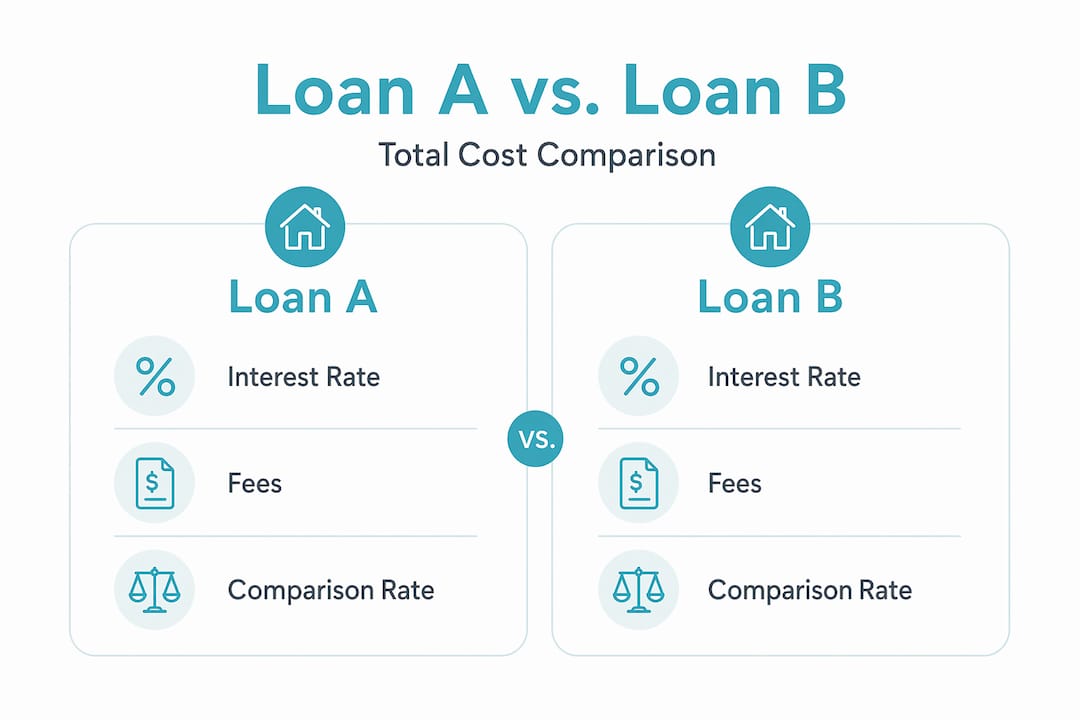
Sometimes the best way to understand a financial concept is to see it play out in a real scenario. Let’s look at two hypothetical loan offers for a $650,000 mortgage over 30 years.
| Feature | Loan A | Loan B |
|---|---|---|
| Advertised interest rate | 6.40% | 6.65% |
| Application fee | $1,500 | $0 |
| Monthly account fee | $15 | $0 |
| Cashback offer | $0 | $8,000 |
| Effective comparison rate (est.) | 6.52% | 6.44% |
| Estimated total interest (30 years) | $827,400 | $855,600 |
| Net cost after cashback | $827,400 | $847,600 |
At first glance, Loan A looks cheaper because its advertised rate is lower. But once you factor in the fees, Loan B’s effective comparison rate is actually lower. Add in the $8,000 cashback on Loan B, and the total net cost over 30 years tips in Loan B’s favour by a meaningful margin.
This is exactly why you can’t rely on headline figures alone. Getting the cheapest home loan rates in New Zealand requires looking at the whole picture, and there are several reliable ways to lower your home loan rates that go beyond simply chasing the lowest advertised number.
Key lessons from this kind of comparison include:
- Fees matter enormously over a long loan term, even when they seem small monthly.
- Total cost over the loan term is a far better benchmark than the advertised rate alone.
- Cashback offers can genuinely add value, but only when they are combined with a competitive interest rate.
- The best up-front rate is rarely the cheapest over the full life of the loan.
- Always request a full cost breakdown from each lender before making any decision.
The NZBA home loan comparison calculator makes this kind of analysis accessible to anyone, without needing a financial background to interpret the results.
The truth most Kiwis miss about comparison rates
Here’s something we see regularly in our work with first home buyers: people use the comparison rate to narrow their shortlist, settle on the “winner,” and stop digging. They treat the comparison rate as the finish line. In reality, it’s the starting gate.
Comparison rates are an essential filter. They cut through the marketing noise and give you a realistic view of cost. But they don’t tell you anything about loan flexibility, the quality of lender support when things get complicated, or whether the loan structure actually suits your life. A mortgage is a 25 to 30-year relationship. Choosing it purely on a single percentage figure is a bit like choosing a long-term business partner based solely on their hourly rate.
The factors affecting mortgage rates in Auckland and across New Zealand are layered and sometimes unpredictable. Your circumstances will change over time. You might want to make lump-sum repayments, take a repayment holiday for a family reason, or refinance after a few years. A loan with a slightly higher comparison rate but genuine flexibility might serve you far better than the technically cheapest option that locks you in without mercy.
Our honest view is this: borrowers who go beyond the comparison rate and think about loan structure, lender responsiveness, and total suitability tend to be far more satisfied with their mortgage experience over the long run. They’re less likely to face unexpected costs down the track and more likely to feel confident in their decisions. The best mortgage is not always the one with the lowest number. It’s the one that fits your financial life and your future plans.
Pro Tip: Use the comparison rate as your primary filter to eliminate clearly expensive options. Then spend equal time evaluating loan features, repayment flexibility, and the lender’s ability to support you when your circumstances evolve.
Next steps: Get a mortgage adviser on your side
Navigating comparison rates, fee structures, and lender offers doesn’t have to be a solo mission. You’ve now got a solid understanding of how to interpret these figures, but putting that knowledge into action across a crowded mortgage market takes time, access, and experience.

Working with personal mortgage advisers means having someone in your corner who can run these comparisons for you, access a wide range of lender offers, and translate complex fee schedules into plain language. Understanding the role of a mortgage adviser is the first step to realising just how much time and money professional guidance can save you. At Mortgage Managers, our team of Auckland-based advisers works with first home buyers across New Zealand every day, helping them move from confusion to confidence. Reach out to us and let’s find the right loan for your real life, not just your spreadsheet.
Frequently asked questions
Is a comparison rate always more accurate than the advertised rate?
Yes. A comparison rate shows the real yearly cost, including most fees, so it’s generally a more accurate reflection of total loan cost than the advertised headline rate alone.
Are comparison rates mandatory on New Zealand mortgages?
No. New Zealand does not mandate the disclosure of comparison rates for mortgages, unlike Australia where it is required by law, so buyers need to seek this information themselves.
What fees are included in a mortgage comparison rate?
Comparison rates factor in the base interest rate plus fees such as application charges, ongoing account costs, and valuation fees, though some costs like early repayment penalties may be excluded.
How can I compare home loans without a comparison rate?
Use the NZBA home loan comparison calculator or request a full itemised breakdown of all fees, charges, and cashback offers directly from each lender to build your own total cost comparison.