
Securing your first Auckland home often feels like a race against deposit hurdles and credit worries, especially when you need reliable mortgage advice. Understanding the basics of property valuation is vital because lenders depend on defensible valuations reflecting current market conditions to decide your loan amount and approval. This guide gives you clear insight into how registered valuers determine what your property is really worth, helping you avoid costly mistakes and boost your chances for a low deposit home loan—even if your credit record isn’t perfect.
Table of Contents
- Property Valuation Basics In New Zealand
- Main Types Of Property Valuations Used
- How Lenders Assess Valuations For Mortgages
- Legal Standards And Professional Requirements
- Common Valuation Pitfalls For First Home Buyers
Key Takeaways
| Point | Details |
|---|---|
| Understanding Valuation Importance | Property valuation in New Zealand is crucial for mortgage applications, as it determines the true market value of a property. |
| Different Valuation Types | Be aware of the various types of valuations (lender, council, independent) and their specific uses to understand what to expect in different scenarios. |
| Potential Pitfalls for Buyers | First home buyers should not rely on council ratings as true market values and should prepare for potential lower valuations than their purchase price. |
| Regulatory Standards | Ensure that your valuer is registered with the Valuers Registration Board to guarantee a reliable and professional assessment. |
Property Valuation Basics In New Zealand
Property valuation in New Zealand is a formal process that determines how much a property is worth. This valuation becomes critical when you’re applying for a mortgage, as your lender needs to know the property’s true market value to decide how much they’ll lend you.
The valuation process is conducted by registered valuers certified by the Valuers Registration Board. These professionals assess your property based on comparable sales, property condition, location, and market trends in Auckland and across New Zealand. The valuation isn’t about what you paid for the property—it’s about what it’s genuinely worth today.
There are several types of valuations you’ll encounter:
- Lender valuations – Required by your bank or mortgage broker before they approve your loan
- Council rating valuations – Conducted at least every three years for local body rating purposes
- Independent valuations – Requested by you if you want a second opinion on property value
Your lender’s valuation protects both you and the bank by ensuring the property is worth what you’re borrowing against.
The Valuer-General sets national standards for property valuations and audits council valuations to maintain consistency across New Zealand. This regulatory oversight means valuations follow strict guidelines, not guesswork. Understanding deposit requirements in NZ helps you see how valuation directly affects your borrowing capacity.
Valuations typically take 7–14 days after your property purchase is agreed. The valuer will inspect the property both inside and out, checking structural condition, improvements, and any issues affecting value. Once completed, your lender receives the report and decides whether the valuation supports your loan amount.
For first home buyers in Auckland, the valuation can sometimes come back lower than expected—this happens when the market value differs from the purchase price. If this occurs, you’ll need to renegotiate with the seller, increase your deposit, or withdraw from the purchase.
Pro tip: Request your valuation report copy from your lender immediately after completion so you understand exactly how the valuer assessed your property’s value.
Main Types Of Property Valuations Used
Not all property valuations are the same. Your lender might use one type, whilst councils use another, and property investors might request a completely different approach. Understanding which valuation type applies to your situation helps you know what to expect.
The main valuation types you’ll encounter include:
- Market value valuations – What your property would sell for in the open market today
- Rental value assessments – Used for investment properties to determine annual rental income
- Special purpose valuations – For unique or specialised properties that don’t fit standard comparisons
- Mortgage valuations – Specifically for lenders assessing loan security
Each type serves a different purpose. When you’re buying a home in Auckland, your lender will typically order a market value valuation. This shows what a willing buyer would pay a willing seller in current market conditions.
Valuers apply different methodologies depending on the property type. The comparative market analysis approach compares your property to recently sold similar properties in your area. This works well for standard residential homes where comparable sales data exists.

The income approach is used for rental properties and investment analysed based on the income they generate. The valuer looks at rental returns, vacancy rates, and market rental demand rather than just comparable sales.
The cost approach calculates what it would cost to rebuild the property from scratch, minus depreciation. This method suits newer properties or those with unique features that make comparisons difficult.
Different valuation methods produce different results—your lender chooses the method most appropriate for your property type.
For first home buyers, understanding which method the valuer uses matters because it explains why your valuation came back at a particular figure. A property in a developing suburb might be valued lower using comparative analysis if few recent sales exist in that area.
Auction results and private sales both influence valuations. Valuers weigh recent transactions to establish accurate market value for properties in similar locations with comparable features.
Here’s a quick comparison of common property valuation methods used in New Zealand:
| Valuation Method | When It’s Used | Main Factors Assessed |
|---|---|---|
| Comparative Market | Standard residential sales | Recent local sales, property features |
| Income Approach | Rental or investment properties | Rental yield, occupancy rates |
| Cost Approach | Unique or new properties | Rebuild cost, depreciation |
| Council Rating Value | Local government rating purposes | Mass data, not current market trends |
Pro tip: Ask your mortgage adviser which valuation method your lender prefers before the valuation appointment, then prepare a list of comparable recent sales to discuss with the valuer.
How Lenders Assess Valuations For Mortgages
Your lender doesn’t just look at the valuation number and approve your mortgage. They assess the valuation report thoroughly to understand the property’s true worth and whether it adequately secures their loan to you.
Lenders require defensible valuations that reflect current market conditions. This means the valuation must be based on solid evidence—comparable sales, market data, and professional assessment—not optimistic pricing. A valuation that can’t be justified if questioned later puts both you and the lender at risk.
Here’s what lenders examine in a valuation report:
- Property description and condition – Does it match what you’ve told them about the property?
- Comparable sales data – Are the comparisons fair and recent?
- Market analysis – Does the valuation reflect current Auckland market trends?
- Valuer’s reasoning – Can they defend why they arrived at this specific figure?
- Legal interests – Are there any mortgages, liens, or restrictions affecting value?
The valuation report must confirm the valuer’s instructions, define the valuation purpose, and state the valuation basis clearly. Professional valuation procedures ensure lenders receive standardised information for consistent assessment.
Lenders scrutinise valuations because they’re lending based on the property value, not your down payment.
Lenders also consider borrower creditworthiness alongside the valuation. Even if a property values well, poor credit history might result in higher interest rates or stricter lending terms. The valuation supports the loan amount, but your financial profile determines the overall mortgage approval.
If a valuation comes back lower than the purchase price, lenders may reduce their loan offer. This means you’d need to increase your deposit to proceed. Some lenders will renegotiate if market evidence supports a higher valuation.
Market conditions matter significantly. During rapid price growth, lenders scrutinise valuations more carefully to avoid lending on inflated figures. During slower markets, they may use stricter valuation methods to protect themselves.
Pro tip: Discuss the property’s recent sale history and any improvements with your mortgage adviser before the valuation so they can guide the valuer towards relevant comparables.
Legal Standards And Professional Requirements
Property valuations in New Zealand aren’t conducted by just anyone. Valuers must meet strict legal and professional standards to protect both lenders and homebuyers like you from unreliable assessments.
All registered valuers must be certified by the Valuers Registration Board. This means they’ve completed recognised qualifications, demonstrated competence, and committed to ongoing professional development. Registration isn’t automatic—it requires meeting rigorous criteria and maintaining ethical standards throughout their career.
The Valuer-General sets national standards for all property valuations across New Zealand. This role ensures consistency, quality, and fairness whether you’re in Auckland, Wellington, or Dunedin. The Valuer-General also audits council valuations to catch errors and maintain public confidence in the system.
Key professional requirements valuers must follow include:
- Conducting thorough property inspections before providing a valuation
- Using current, comparable sales data from the local market
- Disclosing any conflicts of interest or potential bias
- Maintaining confidentiality of client information
- Following established valuation methodologies consistently
- Documenting their reasoning transparently in written reports
Valuation rules and guidelines from LINZ provide the legal framework that all valuers must operate within. These aren’t suggestions—they’re mandatory requirements enforced through registration and audit processes.
The New Zealand Institute of Valuers (NZIV) reinforces professional obligations through ethical guidelines and continuing education. Valuers who breach these standards face disciplinary action, including loss of registration.
Professional standards exist to protect you. A registered, audited valuer gives you confidence the assessment is independent and fair.
For mortgage purposes, your lender requires valuations completed by registered valuers only. This protects the lender’s investment in your loan and protects you from overestimating your property’s worth based on subjective opinions.
When valuations are questioned or disputed, the valuer’s adherence to professional standards becomes critical. If a valuer deviated from established procedures, their assessment loses credibility—and your mortgage approval could be affected.
Pro tip: Always verify your valuer is registered with the Valuers Registration Board before the valuation appointment—ask your mortgage adviser or check LINZ’s register directly.
Common Valuation Pitfalls For First Home Buyers
First home buyers often make valuation mistakes that cost them money or derail their purchase. Understanding these common pitfalls helps you avoid them when buying your Auckland home.
The biggest mistake is relying on council rating valuations as if they’re market valuations. Rating valuations exist for council rating purposes only—they’re often outdated, updated only every three years, and deliberately conservative. They don’t reflect what your property would actually sell for today.
Here are common pitfalls to avoid:
- Assuming the purchase price equals the property’s true market value
- Ignoring that valuations can come back lower than expected
- Not understanding the valuation report or asking questions about methodology
- Relying on online estimates instead of professional valuations
- Overlooking how market fluctuations affect property value timing
- Trusting casual opinions from friends instead of registered valuers
Many first home buyers don’t realise council rating valuations are fundamentally different from lender valuations. This confusion leads them to expect a lender’s valuation to match the council’s rating—it often doesn’t.
Another critical pitfall is not preparing for a lower valuation. If the valuation comes back below your purchase price, you’re suddenly short on deposit or need to renegotiate. This stress could have been avoided with mental preparation.
Don’t assume your property’s value based on what your neighbour paid six months ago—markets move quickly in Auckland.
First home buyers also sometimes dismiss valuation concerns because they’ve already committed emotionally to the purchase. A low valuation feels like bad news, so they ignore it rather than address it strategically with their lender or the seller.
Misunderstanding what affects value is another pitfall. Cosmetic improvements might not increase value as much as structural repairs. The valuer assesses actual market value, not potential or sentimental worth.
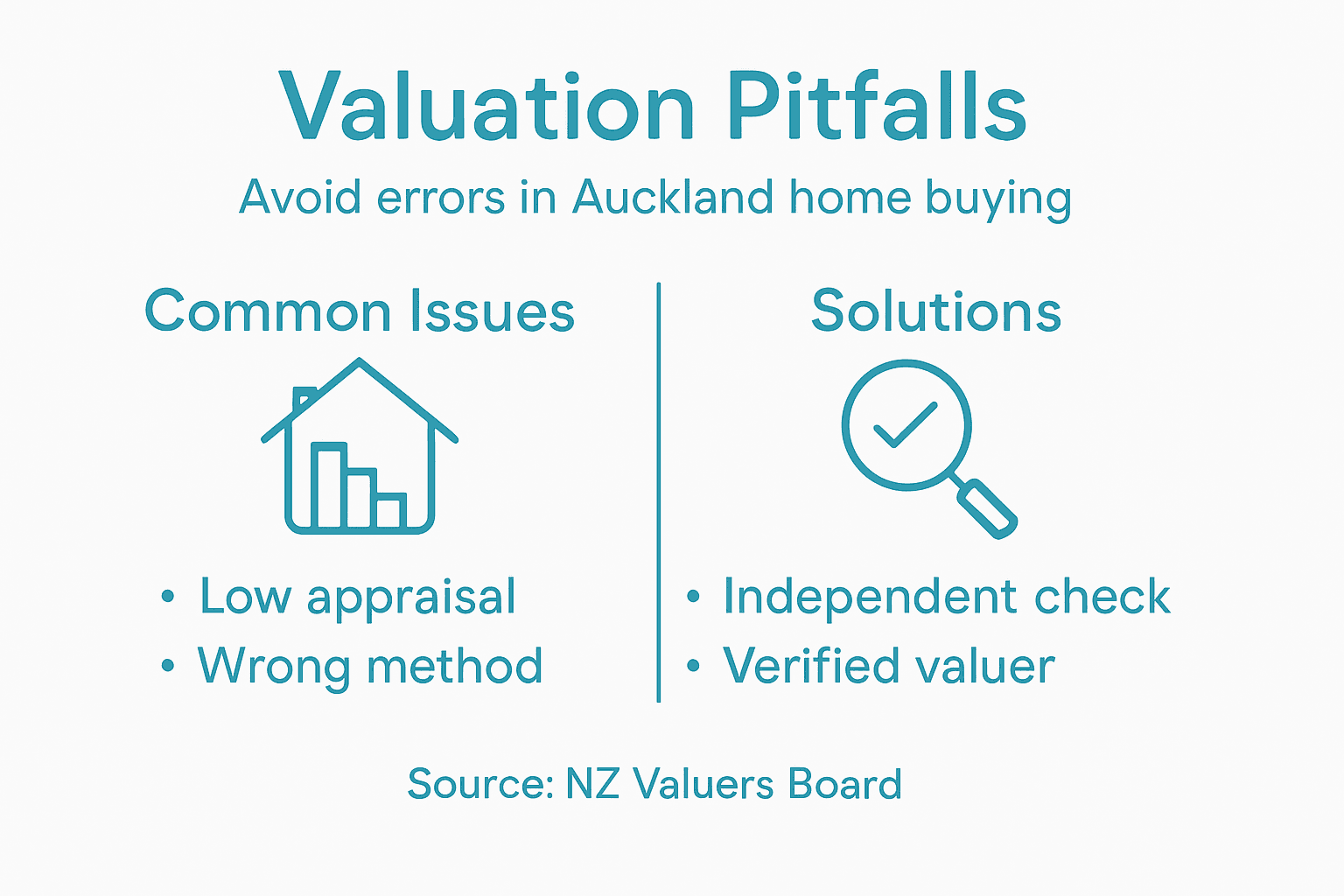
Failing to obtain your own independent valuation before making an offer leaves you vulnerable. Some buyers use the lender’s valuation as their first valuation—but by then, you’re already committed to a purchase price.
This table highlights typical challenges first home buyers face and ways to avoid them:
| Common Challenge | How to Avoid It | Positive Outcome |
|---|---|---|
| Relying on outdated council values | Request an updated independent report | Accurate property value assessment |
| Overestimating due to market hype | Compare multiple recent sales | Informed negotiation position |
| Assuming all upgrades add value | Confirm improvements with valuer | Realistic expectations on valuation |
Pro tip: Order your own independent valuation from a registered valuer before making an offer, so you understand the true market value before committing financially.
Take Control of Your Auckland Home Loan with Expert Valuation Guidance
Navigating property valuations can feel overwhelming especially when your loan approval and deposit depend on accurate figures and professional assessments. The challenges outlined in Property Valuation Explained highlight common pitfalls such as unexpected low valuations and confusion over valuation types. These issues affect your borrowing capacity and increase stress during what should be an exciting step towards home ownership.
At Mortgage Managers, we specialise in guiding you through every stage of your mortgage journey with clear advice tailored to Auckland’s property market and lending landscape. Our expert mortgage advisers ensure you understand how valuations impact your loan options and help you prepare effectively to avoid costly surprises. Partner with a locally owned business that offers personal support across West Auckland, the North Shore, and remotely throughout New Zealand.

Act now to transform uncertainty into confidence by connecting with our team. Learn more about how property valuation influences your borrowing power and get personalised support from Mortgage Managers. If you want to understand deposit requirements better or need expert advice on valuation methods before you apply for your mortgage check out our resources on deposit requirements in NZ. Take the next step and secure your Auckland home with smart mortgage decisions by visiting our homepage.
Frequently Asked Questions
What is property valuation?
Property valuation is a formal process that determines the current market value of a property, essential for securing mortgages and loans.
How long does a property valuation take?
Typically, property valuations take between 7 to 14 days after the purchase agreement, as the valuer inspects the property and prepares the report.
What factors do valuers consider when assessing a property?
Valuers consider several factors, including property condition, location, recent comparable sales, and overall market trends to determine its value.
What should I do if my property’s valuation comes back lower than expected?
If your property’s valuation is lower than expected, you may need to renegotiate with the seller, increase your deposit, or in some cases, withdraw from the purchase.