
Many first home buyers in Auckland overlook critical penalty clauses in loan agreements, leading to unexpected costs that can derail their homeownership journey. Research shows 32% of first home buyers miss these penalties during their initial review. This guide equips you with practical strategies to identify key terms, hidden fees, and penalty triggers while providing actionable checklists to confidently review your loan agreement and avoid financial risks.
Table of Contents
- Prerequisites: What You Need Before Starting
- Step 1: Understand Key Loan Terms
- Step 2: Identify Hidden Fees and Charges
- Step 3: Use a Loan Agreement Review Checklist
- Step 4: Seek Professional Advice
- Common Mistakes and How to Fix Them
- Alternative Approaches and Negotiation
- Expected Timelines and Outcomes
- How Mortgage Managers Can Help Auckland First Home Buyers
- Frequently Asked Questions
Key Takeaways
| Point | Details |
|---|---|
| Thorough review prevents costly surprises | Missing penalty clauses or hidden fees can add thousands to your loan cost. |
| Understanding key terms is essential | Know fixed vs variable rates, repayment schedules, and fee structures before signing. |
| Professional advice increases success | Mortgage advisers boost chances of securing better terms by 25%. |
| Checklists reduce oversight errors | Using a structured checklist reduces missed terms by 40%. |
| Allow adequate review time | Plan 1 to 3 weeks for complete review and professional consultation. |
Prerequisites: What You Need Before Starting
Before diving into your loan agreement review, proper preparation ensures you catch every important detail and avoid costly oversights.
Start by verifying your lender holds a valid license and complies with the Credit Contracts and Consumer Finance Act (CCCFA). The FMA compliance report reveals that 15% of loan agreements fail legal compliance checks under NZ law, making this verification step critical for protecting your interests.
Gather all essential loan documents before beginning your review:
- Complete loan contract drafts and final versions
- Term sheets outlining rates and repayment structures
- Fee disclosure statements covering all charges
- Any supplementary documents or addendums
- Pre-approval letters and conditional offer details
Familiarize yourself with basic NZ mortgage terminology using resources like our home loan terminology list to ensure you understand what you’re reading. Understanding terms like principal, interest capitalisation, and amortization prevents confusion during review.
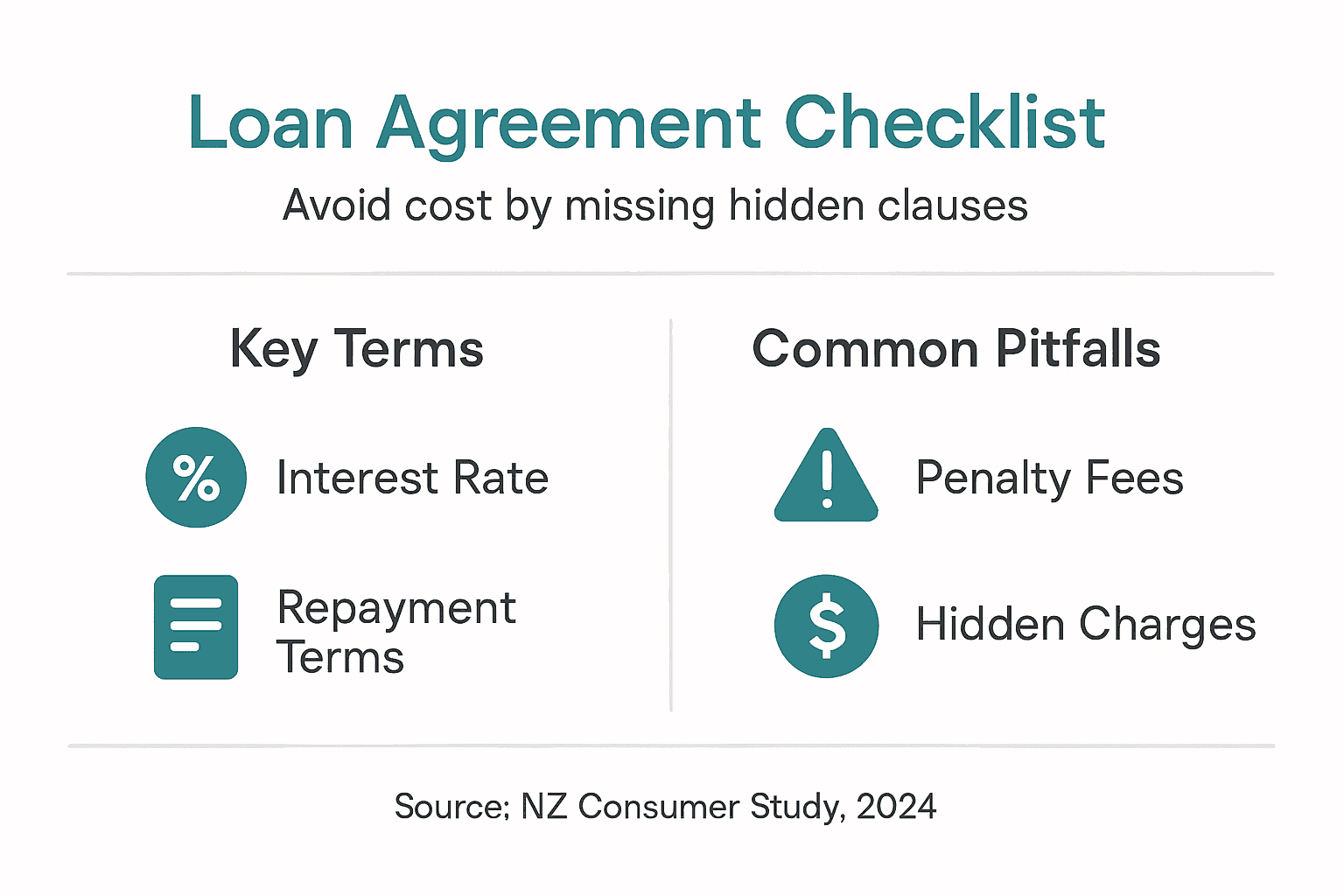
Set aside 7 to 21 days for a thorough examination depending on your loan complexity. Rushing this process increases the likelihood of missing critical clauses that could cost you thousands later.
Finally, obtain or prepare a comprehensive review checklist to guide your process systematically. Our first home buyer checklist provides a structured framework that ensures nothing slips through the cracks during your review.
Step 1: Understand Key Loan Terms
Mastering essential loan terminology empowers you to assess affordability accurately and identify potential risks hidden in complex contract language.
Start with interest rate structures. Fixed rates lock your repayment amount for a set period, protecting you from market fluctuations but potentially costing more if rates drop. Variable rates fluctuate with market conditions, offering flexibility but creating payment uncertainty. According to Managing Mortgage in 2025 for Auckland First Home Buyers, fixed vs variable rates have distinct impacts on repayments and long-term financial risk.
Understand these critical loan components:
- Loan amount (principal) and how it’s calculated
- Repayment schedule frequency (weekly, fortnightly, monthly)
- Loan term length and total interest payable
- Rate review clauses specifying when and how rates can change
- Conditions triggering rate adjustments or penalty fees
Identify all fee types clearly. Establishment fees cover initial loan setup costs. Administration fees apply to ongoing account management. Ongoing charges might include annual fees or service costs that compound over your loan term.
Pay special attention to early repayment conditions. Many agreements include penalty triggers if you pay off your loan ahead of schedule or make extra repayments beyond allowed limits. These penalties can reach thousands of dollars, significantly impacting your financial flexibility.

Pro Tip: Create a simple spreadsheet listing each fee type, amount, and when it applies. This visual reference makes comparing offers easier and helps you spot inconsistencies or unusually high charges that warrant questioning.
For deeper insights into loan terminology, explore our detailed understanding loan terms guide tailored for New Zealand first home buyers.
Step 2: Identify Hidden Fees and Charges
Hidden fees lurk in fine print, silently inflating your total loan cost and catching unprepared buyers off guard.
Start by scrutinizing every fee mentioned in your agreement. Common hidden charges include administration fees for routine account maintenance, application fees covering your loan processing, valuation fees for property assessments, and penalty fees for early repayments or missed payments. Research shows hidden fees can add 1% to 3% of the loan principal cost, translating to thousands of dollars over your loan term.
Early repayment penalties deserve special attention because they can cost up to $5,000 NZD in New Zealand, severely limiting your ability to pay down debt faster or refinance when better rates emerge. Always ask your lender to explain exactly when these penalties apply and how they’re calculated.
Question every unclear fee directly with your lender:
- Request itemized breakdowns of all charges
- Ask for written explanations of how fees are calculated
- Clarify whether fees are one-time or recurring
- Verify if any fees can be waived or negotiated
- Confirm what triggers penalty fees
“The devil is in the details. A $200 annual fee might seem small, but over a 30-year mortgage, that’s $6,000 you could have saved or invested elsewhere.”
Use consumer comparison portals to benchmark fees against industry standards. If your lender’s charges significantly exceed typical ranges, use this data as leverage during negotiations.
Calculate your total loan cost including all fees, not just the advertised interest rate. This true cost comparison reveals which offer genuinely saves you money over the long term. Our loan review checklist includes a fee tracking section to ensure you capture every charge.
Step 3: Use a Loan Agreement Review Checklist
A structured checklist transforms an overwhelming document review into a manageable, systematic process that catches details you might otherwise miss.
Apply your checklist methodically by working through each section of your loan agreement in order. Don’t skip ahead or rush through seemingly simple clauses, as important conditions often hide in unexpected places.
Follow these steps for effective checklist use:
- Print both your loan agreement and checklist for side-by-side comparison
- Highlight each item in your agreement as you verify it against the checklist
- Note any discrepancies or unclear terms for follow-up questions
- Mark items requiring professional review or negotiation
- Review completed sections a second time to catch missed details
Your checklist should comprehensively cover interest rate terms including fixed periods and review triggers, repayment flexibility options such as extra payments or payment holidays, all fee types from establishment to penalty charges, early repayment conditions and associated costs, and default clauses outlining consequences of missed payments.
Research confirms that using a checklist reduces missed loan terms by 40%, making this simple tool one of your most powerful risk reduction strategies.
| Checklist Category | Focus Areas | Why It Matters |
|---|---|---|
| Interest Rates | Fixed vs variable, review dates, caps | Determines long-term affordability |
| Repayment Terms | Frequency, flexibility, holidays | Affects cash flow management |
| Fees & Charges | All fee types, calculation methods | Reveals true loan cost |
| Penalties | Early repayment, default conditions | Identifies financial flexibility limits |
| Legal Compliance | CCCFA requirements, lender licensing | Ensures contract enforceability |
Pro Tip: Use different colored highlighters for different checklist categories. This visual coding system helps you quickly locate specific terms when reviewing multiple loan offers simultaneously.
Download comprehensive checklists from New Zealand consumer organizations or use our loan agreement checklist designed specifically for Auckland first home buyers. For additional guidance on managing your mortgage effectively, review our mortgage management tips and consider strategies from bridging finance tips if you’re managing multiple property transactions.
Step 4: Seek Professional Advice
Professional mortgage advisers and legal experts provide invaluable insights that transform a good loan review into an exceptional one, potentially saving you thousands.
Mortgage advisers specializing in Auckland home loans understand local market conditions and lender practices. They identify unfair clauses that seem standard but actually disadvantage you, negotiate better terms using their lender relationships, and spot non-competitive rates that you can improve through refinancing or renegotiation. Studies show professional mortgage advice improves chances of better loan terms by 25%, making their fees a worthwhile investment.
Legal professionals add another protection layer by reviewing contract compliance with New Zealand consumer protection laws. They catch legally questionable terms that could render portions of your agreement unenforceable, protecting you from predatory lending practices.
Engage advisers early in your review process:
- Consult mortgage advisers before signing any preliminary agreements
- Involve legal experts when reviewing complex or unusual contract terms
- Request professional review of any clauses you don’t fully understand
- Use adviser insights to strengthen your negotiating position
While professional advice involves upfront costs, consider the long-term savings. Negotiating even a 0.25% better interest rate on a $500,000 loan saves over $15,000 in interest over 25 years, far exceeding typical adviser fees.
Local Auckland advisers offer specific advantages because they understand regional property market dynamics, maintain relationships with local lenders, and stay current on New Zealand-specific lending regulations that impact your loan terms. Learn more about mortgage adviser roles and how they protect your interests throughout the home buying journey.
Common Mistakes and How to Fix Them
Even diligent buyers make predictable errors during loan reviews that cost them money and flexibility down the track.
Ignoring small print on repayment holidays or default penalties ranks among the most expensive mistakes. These clauses define what happens during financial hardship, yet many buyers skip them assuming they’ll never need such provisions. Read every footnote and definition section carefully, as these often contain the most consequential terms.
Overlooking early repayment fees creates problems when you want to pay down your mortgage faster or refinance to a better rate. These penalties can cost up to $5,000 NZD in New Zealand, effectively trapping you in an unfavorable loan. Always clarify exact penalty amounts and triggering conditions before signing.
Research shows 32% of first home buyers overlook repayment holiday penalties, discovering these costly terms only when they need flexibility most.
Failing to verify lender licensing and legal compliance exposes you to unenforceable contracts and predatory terms. Always confirm your lender holds current FMA registration and that your agreement complies with CCCFA requirements.
Common review mistakes include:
- Misunderstanding fixed versus variable interest rate impacts on long-term costs
- Accepting the first offer without negotiating terms or shopping competitors
- Failing to calculate total loan cost including all fees and charges
- Not reading definition sections that explain how key terms are interpreted
- Skipping professional review to save short-term costs
“I thought a ‘small’ administration fee was standard, so I didn’t question it. Over my loan term, that ‘small’ fee cost me an extra $4,000. Always ask if fees can be waived or reduced.”
Fix these mistakes by allocating adequate review time, engaging professional advisers early, questioning every fee and unclear term, comparing multiple loan offers systematically, and documenting all lender promises in writing. Our guide on first home buyer mistakes provides additional strategies for avoiding common pitfalls that derail Auckland home buyers.
Alternative Approaches and Negotiation
Negotiation transforms you from a passive loan recipient into an active participant who secures terms aligned with your financial goals.
Start by researching current market rates and competitor offers before approaching your lender. Armed with concrete alternatives, you gain leverage to request rate reductions, fee waivers, or improved repayment flexibility. Many lenders would rather negotiate than lose your business to competitors.
Fixed rate loans offer stability but typically cost more initially. Variable rate loans provide flexibility and potential savings when rates drop but expose you to payment increases. Understanding these tradeoffs positions you to negotiate the rate type that best matches your risk tolerance and financial situation.
Effective negotiation tactics include:
- Presenting competing offers as leverage for better terms
- Requesting fee waivers on establishment or administration charges
- Negotiating longer fixed rate periods at competitive rates
- Asking for offset account options to reduce interest charges
- Bundling services (insurance, transaction accounts) for package discounts
Professional mortgage brokers excel at negotiation because they understand lender pricing models and maintain relationships that give them inside knowledge of available deals. They often secure terms unavailable to individual buyers approaching lenders directly.
Timing matters significantly. Negotiate before signing any binding agreements, as your leverage disappears once you’ve committed. Most lenders expect some negotiation, building flexibility into their initial offers.
Research indicates negotiating terms can save up to 10% on interest costs over your loan life, making negotiation efforts highly worthwhile investments of your time.
| Loan Type | Negotiation Potential | Best For | Key Benefits |
|---|---|---|---|
| Fixed Rate | Moderate (rate locks limit flexibility) | Risk-averse buyers seeking payment certainty | Predictable budgeting, protection from rate rises |
| Variable Rate | High (rates adjust regularly) | Buyers comfortable with payment fluctuations | Potential savings when rates drop, early repayment flexibility |
For comprehensive guidance on selecting loan structures that match your circumstances, explore our resource on choosing the best home loan.
Expected Timelines and Outcomes
Understanding realistic review timelines helps you plan effectively and recognize when you’ve achieved a thorough, successful loan agreement assessment.
Typical reviews take 1 to 3 weeks depending on loan complexity, your familiarity with mortgage terms, and professional adviser availability. Simple loans with standard terms might need only one week, while complex agreements with multiple clauses or unusual conditions warrant three weeks or more.
Track your review progress using these benchmarks:
- Checklist completion percentage (aim for 100% verification)
- Number of unclear terms requiring lender clarification
- Professional adviser feedback and recommendations
- Comparison against competitor offers
- Written confirmation of negotiated improvements
A well-reviewed agreement shows clear characteristics. All fees are explicitly stated and justified. Interest rates are competitive with current market averages. No hidden charges lurk in fine print. Early repayment conditions are reasonable and clearly explained. Professional advisers confirm the agreement’s fairness and legal compliance.
Using professional mortgage advice significantly reduces your financial risk by catching unfavorable terms before they become binding commitments. This proactive approach prevents the costly mistakes that plague buyers who rush through reviews or skip professional consultation.
Align your review timeline with critical home purchase milestones. Complete your loan review before making unconditional offers on properties, as this prevents situations where you discover unfavorable loan terms after committing to a purchase. For guidance on managing mortgage timelines effectively, consult our article on mortgage timeline expectations.
How Mortgage Managers Can Help Auckland First Home Buyers
Navigating loan agreements becomes significantly easier when you partner with experienced professionals who understand Auckland’s unique property market and lending landscape.

Mortgage Managers NZ offers expert advisers specializing in Auckland home loans who guide you through every step of reviewing agreements and negotiating better terms. Our local knowledge and lender relationships help you secure competitive rates while avoiding the costly mistakes that catch unprepared buyers.
We act as your personal shoppers for a home loan, comparing multiple lenders to find terms that match your financial situation and goals. Our team reviews loan agreements alongside you, explaining complex clauses in plain language and identifying opportunities for negotiation that you might miss reviewing alone. For comprehensive insights into how we protect your interests, explore our complete guide to mortgage advisers and discover why thousands of Auckland buyers trust our expertise. Ready to review your loan agreement with confidence? Talk to Auckland mortgage brokers that can help you secure favorable terms and avoid financial pitfalls.
Frequently Asked Questions
How long should I allow to review a home loan agreement in Auckland?
A thorough review typically takes 1 to 3 weeks including time for professional advice and negotiation. Complex agreements or first-time buyers may need the full three weeks to understand all terms and compare alternatives. Rushing this process increases the risk of missing key terms that could cost thousands over your loan life.
What are the most common hidden fees in NZ home loan agreements?
Common hidden fees include administration charges for ongoing account management, valuation fees for property assessments, application fees covering loan processing, and early repayment penalties that can reach $5,000 NZD. These fees often add 1% to 3% to your total loan cost. Always ask lenders for transparent, itemized fee breakdowns before signing any agreement.
When is the best time to consult a mortgage adviser during loan review?
Engage a mortgage adviser early, ideally before signing any preliminary agreements or making unconditional property offers. Early involvement allows advisers to identify issues, negotiate better terms, and prevent costly mistakes before you commit. Professional advice at this stage can increase your savings by negotiating rates and fees, with studies showing 25% better outcomes when using expert guidance.
Can I negotiate my home loan terms with lenders in Auckland?
Yes, negotiation on interest rates, fees, and repayment terms is common and can save up to 10% on interest costs over your loan life. Lenders expect some negotiation and often build flexibility into initial offers. Using mortgage brokers or advisers significantly increases your negotiation success because they understand lender pricing models and maintain relationships that provide access to better deals unavailable to individual buyers.
What documents do I need before starting a loan agreement review?
Gather all loan contract drafts and final versions, term sheets outlining rates and repayment structures, complete fee disclosure statements, any supplementary documents or addendums, and pre-approval letters. Also verify your lender holds valid FMA licensing and CCCFA compliance documentation. Having these documents ready before starting your review ensures you can systematically verify every term and identify any discrepancies or missing information.