
TL;DR:
- Financial hardship in New Zealand specifically relates to unforeseen life events that make loan repayment impossible, such as illness or job loss. Early action with lenders and proper documentation improve chances of relief, while addressing emotional well-being is crucial for recovery. Formal support options include hardship applications and KiwiSaver withdrawals, with proactive communication and professional guidance key to managing financial difficulties effectively.
Money difficulties can arrive without warning. One month you’re managing your mortgage payments comfortably, and the next, a job loss or sudden illness changes everything. Understanding what is financial hardship, in both its everyday and legal sense, is the first step toward finding your footing again. This guide explains the financial hardship definition that matters under New Zealand law, the real-world triggers and wider impacts you may not have considered, and the practical steps and formal support options available to help you move forward.
Key takeaways
| Point | Details |
|---|---|
| Hardship has a legal definition | Under NZ law, unforeseen hardship applies specifically to loan repayment difficulties caused by life events. |
| Act early with your lender | Applying for hardship support before missing multiple payments significantly improves your chances of success. |
| KiwiSaver is a last resort | Significant financial hardship withdrawals have strict criteria and are only available after other options are exhausted. |
| Wellbeing impacts are real | Financial hardship affects mental health, relationships, and social connection, not just your bank balance. |
| Tailored advice makes a difference | Working with a financial mentor or mortgage adviser improves outcomes beyond simply deferring repayments. |
Understanding financial hardship in New Zealand
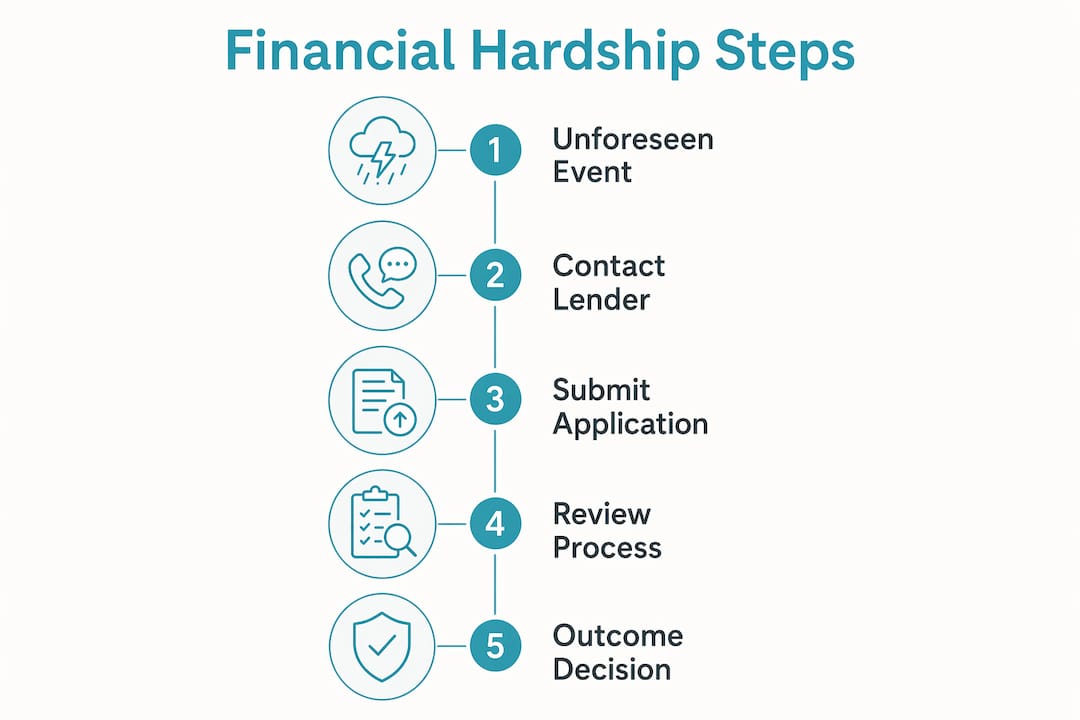
The phrase “financial hardship” gets used loosely, but in New Zealand it carries a specific legal meaning when it comes to lending. Unforeseen hardship refers to a situation where a life event you could not have predicted makes it impossible to meet your loan repayment obligations. That distinction between general financial stress and legally recognised hardship matters a great deal when you are seeking formal relief.
The causes of financial struggles that typically qualify include:
- Sudden illness or injury affecting your ability to work
- Redundancy or unexpected job loss
- Relationship breakdown, including separation or divorce
- A natural disaster or other unforeseen event damaging your property or income
General financial pressure, such as overspending or choosing a loan you could barely afford, usually does not meet the unforeseen hardship threshold. Lenders are not obligated to assist in those circumstances the same way they are when a genuine crisis strikes.
Under New Zealand credit contract law, if you experience unforeseen hardship affecting repayments, your lender is required to consider your request for changes to the loan contract. This might mean extending the loan term, temporarily reducing repayments, or granting a payment holiday. Lenders must engage with your request in good faith, though they retain the right to decline it. Knowing this framework exists is reassuring, but accessing it requires you to act deliberately and promptly.

How financial hardship affects your wellbeing
Most people think of financial hardship purely in terms of missed payments and mounting debt. The reality is far more layered. Financial hardship links closely to psychological distress, including shame, anxiety, and depression, and these emotional impacts can make addressing the practical problem even harder.
Signs of financial hardship extend well beyond your bank account. You might notice:
- Persistent anxiety about opening bills or answering calls from creditors
- Withdrawal from social activities due to cost or embarrassment
- Tension or conflict in close relationships, particularly with a partner
- Difficulty concentrating at work, which can then threaten your income further
- Physical health deterioration linked to chronic stress
“Financial hardship often has complex causes including limited financial skills, relationship issues, and mental health concerns, creating a cycle of debt and stress.” PMC 2025
The relationship between financial stress and relationships is particularly worth acknowledging. Couples under financial pressure often communicate less effectively, which compounds an already difficult situation. Addressing your emotional health alongside your financial situation is not a luxury. It is part of how you recover.
Research confirms that tailored financial support addressing both immediate needs and underlying causes produces better long-term outcomes than simply deferring a payment or two.
Legal options and support available in New Zealand
New Zealand provides two main formal mechanisms for people in genuine financial distress. Understanding both helps you choose the right path for your circumstances.
Applying for hardship under your credit contract
If you have a personal loan, car loan, or mortgage and you’re struggling due to an unforeseen event, you have the right to request contract changes in writing. Your written request must clearly state:
- What unforeseen hardship has occurred
- Why you are unable to meet your current repayment obligations
- What specific changes to the contract you are requesting
- Supporting documentation, such as a medical certificate, redundancy notice, or separation agreement
Lenders are obligated to review and respond to your request. They may agree to extend your loan term, reduce repayments temporarily, or provide a payment pause. They can also decline, but a well-prepared application with clear evidence gives you the strongest possible position. If your lender refuses and you believe the decision is unfair, you can escalate to a free dispute resolution scheme such as FSCL or the Banking Ombudsman.
| Hardship type | Key criteria | Typical outcome |
|---|---|---|
| Credit contract hardship | Unforeseen event, written request, supporting evidence | Payment holiday, term extension, reduced repayments |
| KiwiSaver hardship withdrawal | Cannot meet minimum living expenses; last resort only | Lump sum withdrawal from KiwiSaver balance |
KiwiSaver significant financial hardship withdrawals
Accessing your KiwiSaver for significant hardship is an option, but it comes with a high threshold. You must demonstrate that you genuinely cannot meet minimum living expenses, face mortgage enforcement action, or need funds for significant medical or funeral costs. The withdrawal is designed as a last resort, meaning your KiwiSaver provider will expect you to have already explored other avenues.
Pro Tip: If you think you might need a KiwiSaver hardship withdrawal, start gathering evidence immediately. Your provider will need documentation of your financial position dated within roughly the past month. Delays in gathering evidence mean delays in approval, and that extra time can cost you in penalties and interest.
Understanding the KiwiSaver withdrawal process before you apply reduces the chance of a rejected application or a frustrating back-and-forth with your provider.
Practical steps for coping with financial hardship
Knowing your rights is only useful if you act on them. Here is how to approach overcoming financial difficulties with a clear head and a practical plan.
First, get an honest picture of your finances. Write down every income source, every expense, and every debt. Distinguish between minimum living expenses (rent or mortgage, utilities, food, essential transport) and discretionary spending. This exercise is confronting, but it shows you exactly what you need to survive and what changes are possible.
Next, contact your lenders early. Submitting a hardship application before missing multiple payments dramatically increases the likelihood of a positive response. Lenders are more willing to work with you when you communicate proactively rather than going silent and falling behind.
When preparing your application, focus on what the contract allows lenders to change:
- Requesting a payment holiday of a defined period
- Asking for a reduced repayment amount while you stabilise
- Seeking a term extension that spreads remaining payments over a longer period
Asking for debt forgiveness is rarely an option under hardship provisions. Keeping your request focused on permitted adjustments improves cooperation from lenders considerably.
Seek professional support. Financial mentors and budgeting coaches play a meaningful role in helping people not just negotiate hardship, but build the financial skills to avoid similar situations in future. Free financial mentoring is available through organisations such as MoneyTalks (0800 345 123), and their support goes far beyond basic budgeting.
Pro Tip: Avoid waiting until a creditor contacts you. By then, your options are narrower and your negotiating position is weaker. Reaching out first signals good faith and keeps you in control of the process.
Consider the broader financial picture too. Mortgage stress in Auckland and across New Zealand is a growing concern, and a mortgage adviser can sometimes identify loan restructuring options you would not find on your own.
What to expect during the hardship process
One of the most stressful parts of seeking financial hardship assistance is not knowing what happens next. Here is a realistic look at what the process involves.
| Stage | Typical timeframe | What to watch for |
|---|---|---|
| Credit contract hardship application | 5 to 15 business days for lender response | Ensure your evidence is current and complete |
| KiwiSaver hardship withdrawal | 2 to 6 weeks for processing | Penalties and interest continue accruing during delays |
| Dispute escalation (if refused) | Varies; weeks to months | Gather all correspondence for your case |
Delays in KiwiSaver hardship approvals are a real problem. While your provider processes your application, arrears, penalties, and interest continue to accumulate. Submitting a thorough, well-documented application from the outset reduces the back-and-forth that extends processing times.
If your hardship application is refused, do not accept that as the final word without understanding why. Ask the lender for written reasons. If you believe the refusal is unjustified, escalate to your lender’s dispute resolution scheme. Having a written record of every communication you have had with your lender will be your strongest asset at that point.
Stay proactive throughout the process. A brief weekly check-in with your lender or KiwiSaver provider, by phone or email, keeps your application visible and signals that you are engaged.
My perspective: what I’ve seen working in financial hardship cases
I’ve worked alongside New Zealanders navigating some of the most stressful financial moments of their lives, and one pattern stands out every single time. The people who reach out early, even when they feel ashamed or unsure, consistently get better results than those who wait until the situation has spiralled.
There is a real gap between what the law says lenders must do and what actually happens in practice when you make contact. Lenders respond differently to a borrower who calls at the first sign of trouble versus one who has already missed three payments. The earlier conversation gives you dignity and options. The later one gives you limited choices under pressure.
I’ve also seen how important it is to treat hardship holistically. Getting a payment holiday is valuable, but if the underlying cause, whether it’s a health issue, a relationship breakdown, or a skills gap around money management, isn’t addressed, the same crisis tends to resurface. Working with a financial mentor alongside your lender conversations is not double handling. It’s how recovery actually sticks.
The stigma around admitting financial difficulty is real, but it holds people back far more than the difficulty itself. If you’re facing hardship right now, seeking help is not a sign of failure. It is the most practical thing you can do.
— Stuart
How Mortgagemanagers can help you through financial difficulty

If financial hardship is affecting your mortgage, or if you’re worried it might, speaking with a specialist early makes a genuine difference. Mortgagemanagers works with New Zealanders across Auckland, the North Shore, West Auckland, and remotely throughout the country, helping people find practical paths forward when their loan situation becomes complicated.
Whether you need help understanding your options with an existing mortgage, want to explore mortgage rescue advice before things escalate, or need guidance on how defaults might affect your borrowing future, the team at Mortgagemanagers brings both expertise and empathy to every conversation. As your dedicated mortgage advisers, they act in your corner, not the lender’s. Reach out today for a no-pressure conversation about where you stand.
FAQ
What is the legal definition of financial hardship in New Zealand?
In New Zealand, financial hardship under credit contract law refers specifically to unforeseen events, such as illness, job loss, or relationship breakdown, that make loan repayments impossible. Lenders are required to consider written hardship applications in these circumstances.
What are common signs of financial hardship?
Signs include persistent anxiety about bills, missing or struggling to make loan repayments, increasing debt across multiple obligations, and withdrawal from social or family activities due to financial pressure.
How do I apply for hardship assistance with my lender?
Submit a written request to your lender explaining what unforeseen event occurred, why you cannot meet your current repayments, and what contract changes you are requesting. Include supporting documents such as a medical certificate or redundancy letter.
Can I withdraw my KiwiSaver due to financial hardship?
Yes, but only as a last resort. KiwiSaver significant hardship withdrawals require you to demonstrate you cannot meet minimum living expenses or face mortgage enforcement, and that you have already explored other options.
What happens if my hardship application is refused?
Ask your lender for written reasons and review whether the refusal is justified. If you disagree, escalate to your lender’s external dispute resolution scheme, such as the Banking Ombudsman or FSCL, for a free independent review.